

In this Episode
- [02:28]Cameron shares how becoming a global nomad has transformed his life through extraordinary travel experiences while challenging him to constantly adapt to new environments every week.
- [04:26]Cameron reflects on how time with monks in Bhutan taught him the power of presence, while years of global travel shifted his focus from chasing business success to building meaningful human connections and leaving a lasting legacy.
- [09:42]Cameron explains how he stays productive while traveling by focusing on high-impact priorities and reveals the unique marketing challenge of serving both COOs and CEOs while building a community that maximizes long-term member retention.
- [14:13]Cameron shares how timeless concepts like Jim Collins’ flywheel, customer lifetime value, and his Vivid Vision framework continue to drive the growth and long-term success of the COO Alliance.
- [17:37]Cameron explains how a clear Vivid Vision turned the COO Alliance from a simple idea into a thriving community and reveals how he now uses the same framework to intentionally design his business, personal life, and marriage.
- [23:52]Stephan shares how AI can transform simple personal goals into a compelling life vision, highlighting ChatGPT’s ability to help people create inspiring vision documents from just a few bullet point
- [32:55]Cameron encourages people to overcome AI anxiety by investing in themselves, joining growth-focused communities, and directing their energy toward purposeful action instead of fear.
- [36:25]Stephan explores the idea of a “spiritual flywheel,” suggesting that completing or letting go of unfinished commitments frees tremendous energy, and invites Cameron to compare it with Jim Collins’ flywheel principle for building momentum.
- [45:46]Cameron shares why his current focus is strengthening his marriage, explaining how intentional growth through coaching, community, and personal development is just as essential for relationships as it is for business.
- [49:47]Cameron leaves listeners with a reminder to become a source of encouragement by practicing daily gratitude and appreciation, explaining that consistently recognizing others is one of the most powerful ways to strengthen relationships and leadership.
Cameron, it’s so great to have you on the show.
Hey Stephan, good to see you again.
We just saw each other not too long ago at Genius Network, not at the annual event. You missed that one. But how many years have you been on the Genius Network?
Yeah, I remember for eight years. I’ve actually been on that pause right now for about a year. Joe keeps hitting me every month or two, kind of pulling me back. But my wife and I sold everything three years ago to become global nomads. So we’ve been to 54 countries in the last 39 months, and we’re not going to really be in North America very much to be around the Genius Network. So, I’m pausing for a little bit, but I’ve been a member for eight years.
Gotcha. Okay. And how is it to be a digital nomad and go bopping around the planet?
It’s kind of like the glass is half full and half empty. Right. The half full is amazing experiences, opportunities to say yes to events all over the world, to explore different countries, to explore different cultures, just to have unbelievable experiences. Then, the half-empty is every 7 to 10 days, and we have to find a new coffee shop, a new trainer, a new gym, a new yoga studio, and a new grocery store, pack up our stuff, and move. So there’s this constant feeling of go, go, go. Which is half full and half empty, but we’re loving it.
Okay, awesome. What’s been a highlight? What pops into your mind when you think about the magic moments or the epiphanies that have really stood out for you?
I think some of the places we got to go to were Antarctica right towards the end of COVID-19. That was a pretty magical moment to spend a bunch of time down there with a great group of entrepreneurs going up to the North Pole this summer on a ship. We were north of all land on the planet. There was no land any further north than we were. It was neat to be on an icebreaker up there for 10 days, going to Uganda and spending time in the rainforest with these gorillas. Bhutan: living in a monastery with monks.
We’ve been checking off the bucket list pretty heavily—some pretty neat stuff.
Last summer, one of my big ones was driving a Porsche on the Autobahn. I was legally allowed to travel 268km/h on the Autobahn, which is pretty badass—that’s 171 miles/h.
Wow. What did you learn from the monks in Bhutan?
Wow. Presence. It was incredible. It was a monastery where these monk orphans were being raised as monks and kind of moving into that life, and to sit with them and how present they were and how they remembered our names on the third morning when we were leaving because we were asleep. We were only the second group ever to sleep at the monastery. We were getting up in the morning to leave, sitting and having breakfast with them, and one of these 10-year-olds came up to me and said, Mr. Cameron, it was so nice to spend time with you at dinner last night. I loved you teaching me how to make a paper airplane.
The reason for being is the connection with people. Share on XI was like, “How do you even remember my name?” But they all were so present because they were just not distracted by everything else. That was a beautiful moment. And then having a little dance party with them at the campfire the night before. They’re not allowed to dance, but the head monk let them dance with us. They’re only allowed one bonfire a year, and they got to have the bonfire with us. That was a pretty magical hour to just hang out.
Wow, that’s wild. How did you end up at a monastery?
We were with a group called Wayfinders. We’ve been spending a lot of time with these entrepreneurial groups worldwide for the last 15 years. And a guy named Mike Brcic from Toronto, Canada, who I met at an event maybe 10 years ago, who organizes these small groups of 25 entrepreneurs and takes them into pretty kind of out-of-the-way places. So we’ve gone to Uganda with him. We just came back from Laos and Vietnam about 10 days ago with a small group. Then he took this group to Bhutan and got us into these places where he’d do some advanced trips, try to meet people, and just go two or three steps off the beaten track. So he’ll go kind of off the beaten track, and then he’ll find the place that’s just off that beaten track, and then he’ll go even deeper to kind of take you to places you just can’t get to on your own. And it’s kind of weird.
We laughed about it in Laos a few weeks ago, saying, “I can’t believe I pay all this money to sleep on these 1-inch mattresses in the middle of nowhere in these villages that people don’t go to. Why am I doing this when I can stay at any nice hotel?” But the experience is pretty rich.
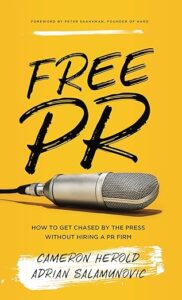
Yeah. Wow. You were on this podcast five years ago, and we spoke a lot about Free PR. Five years is a long time. Internet years, dog years, or whatever, it’s an eternity. So, what have been the biggest insights, epiphanies, or paradigm shifts you have either come up with or experienced over the last five years?
Wow. Well, I guess one of the biggest ones. And it’s interesting. I just got a tattoo to commemorate this. I’ll try to show this on YouTube right now. But it’s a Hindi saying: “We’re walking each other home.” And a Ram Dass quote has just really stuck with me over the last few years: that none of this really matters. We are just kind of walking each other home.
We’re growing together and supporting each other. And at the end of the day, what matters is, I guess, the legacies we leave behind, the people we touch, and our connections. I’m less focused on business, and I’m more focused on everything else. I think that’s probably become very omnipresent for me as we’ve spent a lot more time living in Europe and Asia, where, if you meet someone and you ask them, “What do you do?” They probably say, “I like cooking, hiking, and skiing, and I spend time with friends, exploring myself, and I do a lot of reading in North America.” When you say, “What do you do?” People talk about work, and nobody in Europe and Asia talks about work. And I think that’s become beautiful for us if we don’t focus on it as much as we used to. I still do it, am still passionate about it, and still have my core purpose, but it’s no longer my reason for being. The reason for being is the connection with people.
I love that quote from Ram Dass. I actually heard him speak many years ago, in the 90s. Yeah.
That’s cool.
Yeah.
Where’d you see him?
What matters is the legacies we leave behind, the people we touch, and our connections.
He held an event in Madison, Wisconsin, and I remember the Combat Blindness Foundation sponsoring it. Then, they got donations. I actually offered to help them build a website and help them with Internet marketing, so I did that for a while. Yeah. Way, way long ago.
That’s neat. We just had some friends from Madison, Wisconsin, coming to spend time with us at a festival in Montenegro this summer. So the world collides, going from Ram Dass in Madison to Madison to Montenegro.
Yeah. Well, it’s a small world, as you’re experiencing, even though you’re traveling the world. You know this idea in Kabbalah that time, space, and motion are all illusions and part of the simulation. So you’re hopping on planes, or you’re getting on trains and renting cars and whatever you’re doing, but you’re not actually going anywhere. We’re all just playing this video game, and it’s more like a blank room, like the holodeck on Star Trek, than anything else.
Yeah, it’s pretty neat. We were in Vietnam, up on this mountaintop, sleeping in these tents, and we were looking up at the Milky Way, which was so bright, like a cloud of stars. And yeah, we just realized how small we all were. And the path that we’re all on is pretty beautiful.
Yeah, that’s awesome. So let’s get into some marketing because this is marketing speak, and we better not get too metaphysical, or we’re going to lose some people.

Or gain some.
Yeah. Or gain some. So what is, I guess, the biggest challenge in running the COO Alliance or doing really any kind of business venture while you’re traveling the world? I get really distracted by hopping on planes, finding hotels or Airbnb, and moving from place to place. It’s hard for me to focus on business while doing that. So, consequently, I don’t do that a lot. I used to be a road warrior, speaking at a lot of conferences every year, and it was exhausting.
Yeah. So I’m not speaking as much as I used to. I mean, I’m speaking to 6,000 people in Dubai this January, and to another small group of entrepreneurs there, which will be nice. I’ve been working remotely from home for 17 years since I left 1-800-GOT-JUNK as their chief operating officer in 2007. So the fact that I’ve worked from home for 17 years, I’ve gotten into that groove that’s been probably, I guess, part one, part two is because I’ve really prioritized all parts of my life now. I don’t get caught up in the busywork of running a business’s day-to-day operations. I definitely focus on goals and priorities, and I flywheel my focus on the big things that are going to move the needle, staying very focused on those.
I don’t let the rest of the busyness get in my way. The harder part right now with marketing the SEO Alliance isn’t necessarily the travel. We’re marketing to two people, which is different from anything I’ve ever marketed to before. The analogy I’ve worked on with my team is that we market to the COO, who then joins the COO Alliance as a member. So we have this large Mastermind community of second-in-command from 17 countries that meet online and in person to help each other grow their skills. And their confidence in their companies and their connections. Very different from an entrepreneurial mastermind group where it’s just entrepreneurs. We have to market to the COO and to the entrepreneur.
I created a company that was a little bit more than a business and a little bit less than a religion. Share on XThe entrepreneur writes the check, and the COO attends. Very similar to a husband and wife going out and buying a vehicle. If he’s buying the car, she definitely has to say yes. If she’s buying the car, he definitely has to say yes. Even though one person is driving the car, there are two decision-makers. When you’re selling to a CEO, let’s say someone like you, to join the Genius Network, you just have to get engaged, get excited, and write the check. But if it’s your COO, two decision-makers are involved in that process.
So that’s been number one. The second thing that’s been really different is that 30% of our clients quit their jobs or get fired every three years, which is really kind of weird to think about. Entrepreneurs don’t get fired; they don’t quit their jobs and always write the check for themselves.
However, it seems that the life cycle for mid- to senior-level people involves moving every three to five years. So we’re losing our base 30%. We lose 30% of our base every two to three years, even if they’re super happy.
So, how do you deal with that?
We just have to stay ahead of the curve. The first part of dealing with it was understanding it, right? I just understood the numbers that we were working with. So if we’re working with that 70% base and look at it as 70% of the base annually, we can really market to our net promoter score of 100% and then ask what percentage of the 70% we can get back? So our goal is to get 90% or 80% of the 70 to return, which is very high.
So we’re looking for about a 55-60% renewal rate on the 100 every year. So it’s a really high net promoter score, making sure our members know each other and have friends, because they actually aren’t going to leave their friends. They might leave a group, but they won’t leave their community.
So we’re working hard to get them to attend a couple of in-person events a year, so the online events and the Slack community can stay powerful. Then, the next one really connects with their CEO, who doesn’t show up at the events, and who the CEO is.
It’s not for them, but making sure the CEO gets value. So we’re trying to explain it every month. Here’s what we just covered. Here’s the value your CEO just got. Here’s how you and your CEO can debrief, almost like sending a report card home to the kid’s parents. You know the kid’s going to school, but you need to let the parents know what’s happening at school so they can communicate. So we’re starting to figure that out now, too.
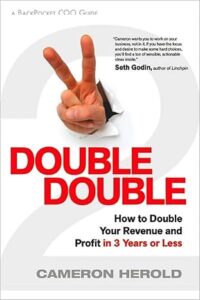
Gotcha. And what are some of the points? Perhaps let’s pick one of your books, Double Double. What are some of the key points that help you to grow and evolve your business? Your COO alliance, now that you wrote about years ago in Double Double. When did that book come out?
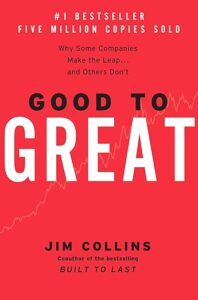
Yeah, it came out in 2010, I think. So, about 14 years ago. Double Double was all of the systems and tools I used to scale 1-800-GOT-JUNK. College Pro Painters, Gerber Auto Collision, and Ubarter.com were the four companies I got known for building, and it was the systems and processes we used to scale them. So, one of the systems, and some of them weren’t even my tools. They were tools that I learned from someone else. I really worked hard on the flywheel concept from Jim Collins in Good to Great. And that was a process that we really obsessed about at 1-800-GOT-JUNK.
We are absolutely obsessed with it at Ubarter.com and at College Pro Painters. That flywheel approach of finding that one thing that, if you focus on it constantly, will start to create more momentum, and that momentum will create more momentum. We’re really focusing on that flywheel approach for the Seal alliance.
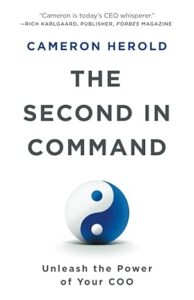
And for us right now, the flywheel is getting everyone that we know to listen to the Second In Command podcast. The more we get people engaged with that podcast, the more they want to become members. Once we have them as members, it creates a really positive environment for them. They have a positive net promoter score and are just keeping them in there. And then I think the second part is really understanding the lifetime value of a customer, so we know what we can pay to acquire them and what they’re worth to us over their lifetime.
And then what’s that payback or cash conversion cycle of that number? So, we are learning from digital marketing companies and applying those lessons to our business. So, in Double Double, I talked about the Concept of R&D, which stands for rip-off and duplicate.
I was never the smartest person in the room, but I can take the best systems from the best companies and put those in place. And we definitely do a lot of that for the CEO alliances.
I didn’t come up with the ideas of the cash conversion cycle, cost of acquisition, or lifetime value, nor do I ever really hear people in Mastermind communities talk about them. But I’ve taken that concept and focused on building our business around that number and formula.
Yeah. And did you have the concept of Vivid Vision from back then that you wrote about in Double Double or not yet?
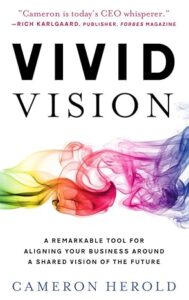
The first chapter of Double Double deals with the Vivid Vision concept. When I first wrote the book, we used to call it A Painted Picture. But after about seven years of speaking all over the world, people started to get confused- confused about what the term painted picture meant. They thought it was like creating a vision board or drawing pictures. So I changed the name to Vivid Vision, which is a four– or five-page written description of what your company will look like, act like, and feel like in the future.
Then, share that written description of your company with your customers, shareholders, suppliers, employees, potential employees, and potential customers. So everybody can see what the entrepreneur can see the future looking like, and then they can help you make that come true. But yeah, that was the book’s first chapter, Double Double.
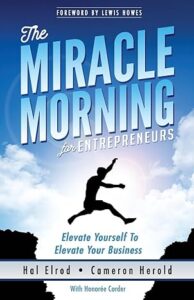
It then got so much traction that people wanted me to write a full book about it, which became Vivid Vision. I also wrote a chapter in the Miracle Morning for Entrepreneurs that I co-authored with Hal Elrod.
I was never the smartest person in the room, but I can take the best systems from the best companies and put those in place. Share on XYeah, that’s awesome. Was Vivid Vision a key part of the Growing COO alliance, and is that still part of it?
It really was, and it’s interesting. I was sitting in a Genius Network event, Joe Polish’s mastermind for CEOs in Scottsdale, Arizona, probably nine years ago. Now. I remember where I was sitting. I could literally show you the spot in the room. It was kind of where Joe and Eunice used to sit towards the back of the room. I was sitting right there, watching somebody up at the front of the room do a speaking event. I said, “Oh, I could just do this for COOs.”
I just realized that there are all these groups for entrepreneurs, but there was nothing like this, like the genius network for COOs. So, I put up a one-page landing page. The next week, I was going to host an event in Arizona. I’d met this guy on a plane three weeks earlier, who owned a ten-bedroom hacienda. Ten bedrooms and five kitchens. It’s called the Royal Arcadia Hacienda.
I put up a one-page landing page, and I said, the first 10 COOs that sign up to spend two and a half days with me, we’re going to mastermind about how to grow you, how to grow your skills, how to grow your confidence, how to grow your companies. And the price is 6500 or $6700.
The first ten have got a spot. There was no agenda, no speakers, no more information than that. And 25 hours later, ten people had paid 6,700 bucks. So I’m like, “Oops, I guess we have a business model.” Then, after running that event, we had all 10 attendees give a 10- or 15-minute talk on something they were strong in. Then, on the second day, they all presented a problem they were having, and the group helped unstick them from it. And that was the two-and-a-half-day agenda. And after two and a half days, nine of the ten people wanted to continue meeting.
And that was the genesis of the COO Alliance. So, I had to get the vision of what I felt that day and articulate it in a way that everybody else could see what I could see. People who had not been to the Genius Network could see it. People who were not part of a mastermind would understand it, or entrepreneurs who had seen it could explain it to somebody else who was then going to attend. So I then wrote a five-page description of the COO alliance every three years since. I’ve revised that. The one that we’re now working on, kind of completing, is the one that ends December 31, 2025. And that Vivid Vision is on our website.
It’s shared at speaking events. It’s a really great description of what I see the company looking, acting, and feeling like in the future.
Yep, gotcha. But you have other ventures that you either have now or previously had in recent times; since we’ve known each other, you have had other Vivid Visions. Right? Cause I recall that, what was it, Conscious Copy had shared several examples of your Vivid Visions and not just your COO Alliance one, but maybe one for you personally or something. I don’t know. Can you refresh my memory of that?
Yep, exactly. So, over the years, I came to realize that not only could I craft a Vivid Vision for the COO Alliance, but I could craft one for the other businesses I run. So, I have my speaking events, books, and online training called Invest in Your Leaders. I also have my one-on-one and group coaching. So, I crafted a Vivid Vision that kind of described Cameron Herald Enterprises. And then I thought, what if I could do one for me? What if I could craft a Vivid Vision for myself? And I’d been exposed to John and Missy Butcher, who wrote Lifebook, and that becomes like a five-day session where you end up with this full workbook describing your future as a person or as a couple. I thought maybe a four-pager would work a little better for me as a human. So, I wrote a Vivid Vision for myself.

And that one actually now expires December 31, 2024. So, in December of this year, I’ll be in Bali at the Time Chamber, and I’m writing my 2027. Cameron Harold’s Vivid Vision describes me as a dad, a father, a friend, a lover, a parent, a traveler, a human, and a member of society. What I deal with- my travel and fitness and finance and spirituality- it kind of describes me. And then I share that with everybody, and they help hold me accountable for that. My wife Ashley and I also crafted one for our marriage. So I went off and described myself as a husband, and then she described herself. And we described every aspect of our marriage.
So how we vacation and how we use fitness and what our food is like and sexuality and use of substances. We merged all the points into this shared Vivid Vision document and shared it with the world. As you mentioned, Jennifer Hudye from Conscious Copy is a member of the Genius Network. She and I met at one of the Genius Network events. Oh, gosh, probably 10 years ago, maybe longer. She saw me rolling out these Vivid Vision concepts and started helping companies write their own. And now she’s my partner on all things. So we send her hundreds of companies she’s written.
She and her company have, I think, written 800 Vivid Vision documents for companies worldwide. Now, they’re helping CEOs write their personal Vivid Visions, too.
Oh, that’s awesome. So, could we share with our listener/viewer some of these examples that are not just for the COO Alliance but maybe for you personally? I don’t know if that’s too personal, but what about your relationship or what it’d be like? It’d be very inspiring for listeners to see that, so they might write something similar for their own relationship.
Yeah, we can link. Once I craft my 2027 personal one, we can flip that out for the expiring version. It’s pretty interesting to go through that process of hitting the end of the three years. I like to go back through the document in Word, highlight every sentence that has turned green, and see how much I’ve grown as a person over those three years. And then, I can take the sentences that aren’t quite green yet and figure out whether I still believe in them. And can I then stretch those into my next document?
Super cool.
It’s a fun exercise.
Yeah. This exercise is a little bit related here because you mentioned the founders of Lifebook. I took the AI Mastery program with Mindvalley. So Vishen Lakhiani was one of the instructors and the founder of Mindvalley, and he showed how to upload a sample vision document to ChatGPT as a prompt. This was actually from John of Lifebook, which he used as a sample. He then prompted ChatGPT to write a new vision based on a bunch of bullet points for the person being written about. So, don’t use John’s goals, visions, etc. Use mine.
But here’s mine in rough form. I used John’s write-up as inspiration. It turned out really impressive. So, I don’t know ChatGPT, so I didn’t know how to do that sort of thing before the world.
It is colliding in a really crazy way right now. So, I love that you just mentioned Vishen Lakhiani. Vishen and I were texting each other 15 minutes before you, and I hopped on this call. The 6,000-person event I’m speaking at in Dubai in January is Vishen’s MindValley event, Future Human. They paid me four or five years ago to do a quest on the MindValley app on the Vivid Vision concept. The way Vishen and I first met around 12 years ago. He’d heard about the Vivid Vision, or painted picture I was calling it at the time. He wrote about me in his book The Buddha and the Badass.
So we’ve done a lot of work together, and I love the program that they’re putting together, but I love that you just mentioned that he’s doing that, too. I’m going to try something when I get off this call with you. I will take my Vivid Vision document, pull it into ChatGPT4, ask it to strip it backward for me, and build it into a project list to see if I can actually have it. Help me create a list of projects that I can do to make each sentence come true.
My core purpose is to help entrepreneurs make their visions come true.
I’ve done a lot of that manually, but it just gave me an idea that maybe I can help it; see if I can use it as a tool to help me speed this thing forward because I work with companies now all over the world. My core purpose is to help entrepreneurs make their visions come true. So, I coach people to reverse-engineer their Vivid Vision document.
I just started coaching Tommy Mello from A1 Garage Doors. He and his second-in-command have 850 employees and a $180 million company, so we do one-on-one calls with them monthly. And I’m helping Tommy reverse-engineer the Vivid Vision for his company over the next three years, and then figure out the steps to make it come true.
So even though their current state is this 850-person company, we reverse-engineer the vision for where he’s taking the company over the next three years. And that Vivid Vision concept is how he can get his suppliers and customers, employees, potential employees, and everybody else to see what he can see. And then it’s complete alignment. Right? That almost allows the entrepreneur to step back and stay as the chief visionary, the chief culture officer, and the person cheering, you know, stirring the Kool-Aid. And everybody on the team can then figure out the plans to make that come true.
So, it really frees up the entrepreneur to work in their unique ability.
Yeah, that’s super cool. Of course, all these worlds are colliding. I just noticed, 12 hours ago when I was looking through my calendar, that there’s a shared calendar set up with my wife Orion, who also podcasts. And I just noticed 12 hours ago that I guess this is Vishen’s ex-wife, Kristina Mänd-Lakhiani. She’s going to be interviewed by my wife next week.
Crazy.
I just saw a vision at the Genius Network annual event about two weeks ago, so that’s another.
Oh, great. I spoke to him.

But yeah, I saw him there.
That’s cool. Yeah. Great guy. Yeah. It’s a small world.
Okay, so one thing that I thought of when you were talking about what you’re going to do with ChatGPT after we get off this interview is: What if you also asked it to evaluate the feasibility of each of your goals and then anticipate potential roadblocks or hindrances and come up with contingencies and workarounds for each of the potential roadblocks it finds?
Yeah, I think the roadblocks would be interesting. I think the feasibility you want to place in that question or the prompt you’re putting in is kind of what your boundaries are for it to decide the feasibility. Right. So, you must let it know your core values, budget, and skill set. Because if Kennedy had asked ChatGPT, “Can I put a man on the moon by the end of the decade?” it would have said, “No, it’s not happening.” You have a bunch of guys with slide rules, so it won’t happen. And, well, I guess they did it where it was still up for debate. Right.
But, you know, they put a man on the moon. So I think it’s dangerous to ask some. It’s like asking a lawyer or an accountant: “Should I do something?” They’re always going to say no. But then, if you give them the boundaries to make that decision within, they might say yes, and here’s how. So I think it’s more. But, yeah, I think something is interesting there for sure.
Yeah. I mean, I wasn’t asking you to ask ChatGPT for, I don’t know, percentage feasibility or something, but more like a prioritization based on feasibility.
I think the prioritization, the roadblocks, like thinking through something and helping you establish a plan. There will be some really cool stuff in here that people can use. I told a leadership team that I was coaching about six months ago that the only people who should be afraid of losing their jobs to AI are those who are not using AI in their jobs.
A great dashboard is one of my favorites, and there’s an AI for that. It also shows that 15,000 different AI tools can perform about 20,000 different AI tasks. I like the employees and leadership team to spend one to two hours a week playing with different AI tools, trying to use the different AI tools in their tasks, watching videos on AI, and then showing up on Monday and doing a five-minute book report on one thing that they used AI for last week and how it made their life easier. And it’s this constant kind of sharing because it’s just a really new tool.
It’s almost like the tool StumbleUpon back in 1998, where we had to go and stumble around the Internet to learn that a restaurant has a website. I remember seeing the first gas station website or restaurant website. Whoa, this is so cool. We just don’t know what exists until we start trying it and sharing it. I think we need to let our people play with AI as companies. In fact, make our people play with AI very frequently, weekly and report back what they’re learning. That Kool-Aid is starting to kind of swirl.
Yeah, what’s possible now with AI is mind-blowing. What will be possible in two years? It’s a tectonic shift for our society. We just are not really prepared for it, I don’t think.
No, we’re not at all.
Yeah, it’s Tony Robbins’ quote, something along the lines of If you can recognize patterns, you have an edge. Right. But it’s not enough just to recognize the patterns; you have to be able to use them. So it’s about pattern recognition and pattern utilization, and I think having ChatGPT and Claude and whatever other LLMs are your Llama, Gemini, et cetera at your disposal and knowing their strengths and limitations. But it’s just an extension of you. It’s in your muscle memory to use it in different ways all the time and to push the boundaries because the tool gets better and better each day. And to use prompt engineering to identify patterns, then use those patterns to get an edge. I think that’s how you will thrive in this next decade.
I’m writing my seventh book right now, and my executive assistant and I are writing it together. We’re leveraging AI to do 100% of the book, including the drawings, the illustrations, and the layout. And it’s what my grandmother knew about business- lessons from a grandmother about running your business. It’s all the sayings that we heard from our grandma. Right. Like, don’t put all your eggs in one basket. How do you apply that to business? Or better, a bird in hand than two in the bush. How does that apply? We’re creating a book based on all those. It’s going to get punched out by January.
We all have to-do lists, but what should we stop doing?
And leveraging AI. I heard a quote years ago that has always resonated with me, and I guess it ties in a little bit with Andrew Grove’s “Only the Paranoid Survive” idea. But the quote I heard was if the rate of change outside your business is greater than the rate inside your business, you’re out of business. And I think right now AI is coming at such a fast pace that if companies are not embracing it and leveraging it and trying to adopt it and understand it fast, you’re out of business in two years because too many of your competitors will, and they’ll literally destroy you. Right? Somewhere, I saw this on a Nike T-shirt 20 years ago. It said, somewhere right now, someone is practicing, and when they beat you or meet you in head-to-head competition, they’ll beat you.
Yeah. What do you tell somebody who’s maybe anxious, intimidated, or freaked out about AI and all this change?
Invest in yourself.
I’m sure you’ve read Who Moved My Cheese. Yeah. Change is scary.
It is scary, and I think it’s very scary if you’re alone. I think it’s the reason why you and I both value mastermind communities, right? I’ve been in the Genius Network for eight years, Strategic Coach for seven years, Baby Bathwater for five years, five Mastermind Talks events, a bunch of War Room events, a couple of Intelligent Change events, and four Wayfinders events. I go on and on with all these mastermind communities all over the world because I surround myself with a community of people who are progressive, who are thinking forward, who are sharing resources, who are sharing tips, and who are sharing their fears and insecurities.
But I think if you’re worried, you should join a couple of communities and invest in yourself. That way. You should get yourself a business coach who’s done it before. Not just some online coach, but someone who’s actually built companies before. Get involved in a group coaching program.
Invest in your people, right? Invest in your leadership team’s skill set and communities so they can scale, and you’ll be perfectly fine. But if you sit back and worry and get nervous, you’re in trouble. I talked to an entrepreneur in the fall of 2009, and he spoke about the global financial crisis and how hard it hit his restaurant business. And there was a global financial crisis. This is global. And I’m like, “Stop. You’ve got six locations. Why don’t you take every location you’ve got and create a marketing plan so that every man, woman and child in every zip code?
Just market to every man, woman and child in the zip code of each of your six locations, and you will knock the COVID off the ball if you do that for six months because of the global financial crisis, you’re not operating in 193 countries. And he sat down, he thought about it, and he goes, “Yeah, I’m only operating in six zip codes of one city.” Fast-forward from 2009 to 2024: the chain is called the Cactus Club, and they are absolutely crushing it. They’re probably about 40 times bigger than they were in 2009. But every man, woman, and child in the city of Vancouver knows about the Cactus Club brand. So this was somebody who decided not to freeze, took some coaching advice and focused on getting that real flywheel right. Just that one thing that will move the needle. But, yeah, if you’re going to sit in your home office or office or sit on social media and worry about AI and not do anything about it, then you’re pretty much out of a job or out of your business.
I love this definition of worry that I got from my wife, Orion: worry is praying for what you don’t want.
Whoa. Yeah. And, well, when your focus goes, energy flows, right? If you keep thinking about your worry, your energy will go there. If you focus on your goals and your Vivid Vision, you’ll make that come true. It’s that saying from Napoleon Hill’s Think and Grow Rich: conceive, believe, and achieve. And if you can kind of focus on that. We had that saying on one of the walls at 1-800-GOT-JUNK. We so firmly believe in that concept of vision, plan, and execution.
Right. Vision without execution is a hallucination. That was Thomas Edison.
And so the full quote from Napoleon Hill is, whatever you conceive and believe you can achieve, or something like that.
Yeah, yeah, we shortened it.
Yeah.
At least I try. I try to give credit. But you’ve got more details than I do.
I want to go back to this concept about the Flywheel and Jim Collins because I heard a similar concept, but it’s more metaphysical. And it’s the spiritual flywheel, what he calls it. He was a past guest on my other podcast, Get Yourself Optimized, about spirituality and personal development. So, David Ghiyam is the guest I’m referring to here. Came up with a spiritual flywheel. We didn’t talk about it in the episode. Still, I learned about it from a class he teaches, where he taught me how to grow a business. He’s been very successful with his wife and growing the MaryRuth Organics brand, which has 25 million customers and is just a huge brand. Now, he’s a full-time teacher at the Kabbalah center. But he also has a successful global business, as does his wife.
So, the spiritual flywheel. Clearly, something’s working, right? So I think he’s onto something here, the concept of it. And let’s see how this ties into your understanding of the Flywheel from Jim Collins and how you’ve applied it. If you are working on, let’s say, 500 different tasks in your to-do list, which isn’t abnormal, that’s because we have a lot of things going on in our lives. There are not 500 projects, but 500 to-dos, and maybe there are 50 different projects. You want to sell your home, you want to buy a new car, I don’t know, whatever. And each of these unfinished projects is draining your energy. It’s draining energy.
If you were to complete some of these projects, all that potential energy that’s stuck would be converted into kinetic energy. And then you’ll be able to really take on incredible, impossible goals and achieve great things. But while this energy is stuck, you’re going to have to do something about it. And he said, kill those projects off. If you’re not going to finish them, just kill them off. The hanging around is not good. He gave this great analogy. If you had, let’s say, a project 90% complete and hypothetically, let’s say you get 90 points of energy for what you’ve done so far with that 90% complete project, you’re not going to get ten more points of energy for completing the project.
For the remaining 10%, you’ll get 10,000 units of energy by completing that project. It will unleash so much energy for you that this is where Satan the Devil gets involved when you’re getting close to finishing. He’s not. You get as far as you want to that 90-some percent, and then he’s involved because he doesn’t want you finishing it. After all, that’s where all the juice is. What do you think about all that, and how does that apply to Jim Collins’ Flywheel?
I’ll talk about all of those tasks that are on your list. And then I’ll go back into the Flywheel and combine the two. So, Jim Collins also talks about a “stop-doing” list. We all have to-do lists, but what should we stop doing? I was actually working with one of my team members yesterday. He’s been with me for about seven years and manages all the IT projects, websites, and my online course. He handles a lot of stuff, and he did. I had him do an activity inventory of about a hundred things he works on over the average week and month.
It will take a lot of effort to get that up. But once that satellite’s in orbit, it pays dividends for decades.
Then we looked at them line by line and decided what to kill, what to actually optimize, what to automate, what to delegate, and then what he should actually keep. And we realized that many items on the list were just busywork, yielding diminishing returns. We’d done enough. Or maybe it was old projects that were just continuing that we didn’t need anymore. So, killing those allowed him to focus on the critical few things. Then we took the ones that were almost like launching a satellite into orbit. And I said, “You know, it will take a lot of effort to get that up. But once that satellite’s in orbit, it pays dividends for decades.”
So which projects will pay dividends over the long term if we can just get them completed now? So, there’s going to be a good ROI on that effort. And we prioritize those projects. I think that kind of ties in with that flywheel approach. So, the concept of the flywheel is based on the manufacturing world. A flywheel is a massive metal disc in a factory. It’s this huge, massive metal disc. That part of these machines and the thing in the machinery is to get that flywheel to start turning.
And it’s heavy. So you have to put all of your energy into pushing that flywheel. And you might spend days trying to get it to make one turn. And then, as it’s slowly turning, you keep pushing your energy into it. It makes a second turn. You keep putting your energy on; it makes a third turn. But as it slowly starts to turn and you keep pushing on it, it gets easier, faster, and faster, and it starts spinning on its own weight. That’s the concept of the flywheel.
So, in the business world, it’s picking that one core thing: if you put all of your energy into it and you keep focusing on it, it’ll spin, and then that’ll pay massive dividends. So, the example that I use is going back to 1-800-GOT-JUNK. We picked two areas of the business to obsess over for five years. Number one was getting free public relations and press coverage for the business. We did it because I had done a lot of it at College Pro Painters, Boyd Autobody, and Ubarter.com. Brian has had some good early success with what was called The Rubbish Boys. And we had no marketing budget; we had no money.
The only people who should be afraid of losing their jobs to AI are those who are not using AI in their jobs. Share on XSo, if we could get the press to tell our story, we had something to share. So we pushed hard to get media. We pushed hard to get media, and we started getting it. We got Bloomberg and the Associated Press, and then we hired a PR guy. At the end of six and a half years, I’d hired six people with no PR experience. They were basically cold callers and full-time salespeople and with them, phoning journalists, TV stations, radio broadcasters and magazines. This was before social media even existed. We’d landed 5200 individual unique stories about the company in six and a half years.
That flywheel propelled us. We got on Oprah, and we were in every major newspaper and magazine, including the physical editions. That’s what grew the company. If we had been able to land that press today, when Facebook and LinkedIn existed, they would have been an $800 million company faster than they got right. I took them to a hundred million. They’re now 800 million. 14 years later. We probably would have been 800 million 10 years ago.
So that was flywheel number one. Flywheel number two was turning the company into a globally admired brand. So, I created a company that was a little bit more than a business and a little bit less than a religion. We wanted to get into this cult-like zone and create a culture to attract great employees for less money than we normally paid. We could keep employees so we didn’t have turnover, and we didn’t have training costs. We could keep employees to produce more. We’d have happier employees who would produce more, and then we’d have happy employees who would create really happy franchisees and really happy customers, and we could charge a lot. We became the number-two company to work for in Canada.
We have been ranked twice as the number-one company in British Columbia in which to work. We became a cult. When I left the company in 2007, there were only three companies in Vancouver that anybody wanted to work for. One was Lululemon, which was based out of Vancouver. The second was the Vancouver Olympics, coming up in 2010, but everybody wanted to work for Van Hawk. And number three was 1-800-GOT-JUNK. We’d become a cultural icon in the city. So those two flywheels paid dividends, allowing us to say no to a bunch of busy work that wasn’t necessarily attached to those kinds of end goals or end flywheel approaches. So, yeah, I think there’s some tie-in there. For us, it was more of a decision filter. It allowed us to say, “Hell yes, like a full body.” Yes. Or see how it’s going to move one of those two needles. Let’s just push it aside for now.
Every single one of us is a leader in our life.
Yeah. So it seems to dovetail quite well with David Ghiyam’s spiritual flywheel concept. If you invest all that energy in getting the flywheel started by finishing some of these loose-end types of projects that are stealing your energy instead of giving you energy, then you get 10,000 units freed up each time you finish one of these little projects. Now you’ve got so much energy to direct towards impossible goals.
That’s all those satellites now in orbit, right? Like getting on Oprah, it took us almost two years to get on Oprah, but now they can talk about it for 21 years. Right. All that press coverage still lives on, and they’re resharing the online links on social media. For the last 17 years, all the Google reviews have stacked up. All the Trustpilot reviews have stacked up. Word of mouth has stacked up.
We won the awards for best call center and number-one franchisor on the planet. We beat out every franchisor with the Highest grid and a 98% positive net promoter score of their franchisees. All of those became like satellites. So, yeah, that first 90%, it was hard to get really good, but it was really hard to get unbelievable. But man, boom, that was another satellite in orbit once we were there.
Yeah. What’s your next satellite?
I think if we can ground, then everything grows from there.
I think the next step is to work on my relationship with my wife. We’ve gone through a really incredible and a really tough three-and-a-half-year period. So it’s just kind of not committing but refocusing our travel and life on finding a couple of forever homes. We’re trying to find places with some homes where we’ll be able to spend half a year. So we’re thinking of northern Italy. We’re thinking of Cape Town and Bali as maybe three places. So, really spending some time in those places to find out if we like it? Does it feel right? Can we get that grounding? I think if we can ground, then everything grows from there. So it’s a lot less about business right now, and it’s a lot more about that primary relationship in my life.
My two boys are kind of off and running. My youngest is running his own business. He just ran his first marathon at 21 years old—a sub-four-hour marathon. He’s going to school and starting in Singapore in January. My oldest works in the film industry in Vancouver and works part-time at 1-800-GETt-JUNK in the Trucks. But he’s obsessed with investing. He has multiple six-figure investments at 23 years old.
Both are good kids. They don’t do drugs; they don’t drink. They’re like a good connection with them. So, my legacy project is doing well. It’s time to get my relationship project with my wife back in the center again.
Well, good luck with that. That’s awesome.
Thank you. Thank you.
Yeah.
And I mentioned coaching. I’m even working with a couple of coaches on relationship stuff. My wife and I attend a couple of masterminds focused on relationships. I’m working with a men’s coach, Nic Warner, and we do calls every month about, you know, and I’m reading books around hilarity and around masculinity and just understanding the role of the masculine in the relationship of the healthy masculine, you know, the way the superior man and no more nice guys. So, I’m leaning into that part of growth just like I would tell people to lean into it in the business world. Right. Get a coach, join a mastermind, get group coaching, and read books. That’s how you’re going to grow. We have to drink our own Kool-Aid.
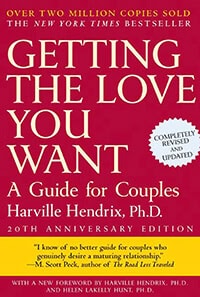
That’s right. Yep. I’ve interviewed some of the best relationship coaches and experts on the planet, too, for my other podcast, obviously. Okay. Harville Hendricks wrote Getting the Love You Want. He’s been on Oprah. He’s the founder of Imago Couples Therapy. So he’s been on Get Yourself Optimized.
Dr. John Gottman is phenomenal. He pioneered the research on microexpressions. He was able to tell, within five minutes of watching couples on video, whether they would get divorced five years later. He was 95-plus percent accurate with his predictions because he just looked for micro-expressions of contempt and what he calls The Four Horsemen.
Right.
Contempt, criticism, resentment, and stonewalling.
What’s stonewalling?
It’s kind of like crazy. Making or just not being cooperative, belligerent and uncooperative and seeing them as adversaries. That’s my understanding.
Yeah, that makes sense.
Not being accommodating or acknowledging the truth or the potential truth of your partner’s position.
So you say contentment, criticism, resentment, and stonewalling.
Yeah. Contempt.
Yeah, contempt. Yeah, it makes sense. Interesting.
If we can be that chief energizing officer in every role of our lives, I think we’re going to see way more dividends, and everything gets a lot more fun.
Yeah. So, if you have a chance, listen to those couple of episodes.
I will, for sure.
Yeah. All right. Well, I know we’re at a time, so we went a little more philosophical than maybe our listener wanted. But you know what? It’s all perfect.
As our friend Joe Polish says, “We sell them what we want; we give them what we need.”
Exactly. And so, if we can leave our listener with one last nugget of wisdom, what would that be? And probably something that we haven’t even talked about at all. So, really bring it out of left field.
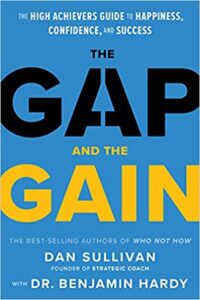
So, I normally say none of this matters. We’re all just walking each other home. But if we’re going to do something a little different, I think every single one of us is a leader in our life. Whether we’re leading a business, leading each other, leading ourselves, or leading a family, we need to spend much more time sharing praise, positive reinforcement, gratitude, and celebration. I think we’re always so focused on growing. I know Dan Sullivan and Benjamin Hardy wrote the book The Gap and The Gain. And we’re so caught in the gap, trying to get to those goals.
But if we can say thank you for hitting projects, for living the core values, and for a great job getting that project done, if we can be that chief energizing officer in every role of our lives, I think we’re going to see way more dividends, and everything gets a lot more fun. So, yeah, I would be focusing on that.
So, there is a great synergy here with what we were talking about a minute ago with Dr. John Gottman and Harville Hendricks. Harvel Hendricks promotes this technique that he calls the Daily Appreciations, and he has done it for decades, literally decades, with his wife not missing a single day. Wow. At night, before they go to sleep, they share three things they appreciate about each other. And they’re not just the same ones each time. Sometimes, they’re repeated, but they try to come up with fresh stuff. And they’ve been doing it without fail, without missing a day for decades.
It was so inspiring to hear that, back in 2016, when I first interviewed them, my wife and I did this ourselves for about three or more years and maybe missed eight or so days during that time. Yeah, it was really special. So we might try it with your wife.
Yeah, we’ve done it a bunch of times. It’s time to recommit to that because we fell off the wagon a little bit, and we felt it was contrived. But I think we need to be a bit more deliberate about reinforcing those things so we don’t get caught up in the day-to-day. So, yeah, I’ll be bringing it back.
A way to think about it, maybe, is prayer isn’t contrived. Do you have structured prayer that is in the prayer books and that? And you use those too because they’re tried, true, proven, inspired works. And then you have your personal prayer, which you come up with out of the ether. You come up with things that you’re grateful for and things that you’re challenged by, as well as pleas for help and whatever. So maybe that same principle applies here, that it’s not contrived if you’re using a structured, proven system, like a structured prayer, but you’re also coming up with the impromptu things as well. That keeps it fresh and not so constrained. I don’t know. Maybe that helps.
And it is showing up with that intention. I love it.
Yeah. All right, well, this was great. Thank you so much, Cameron. If we could share with our listeners the best place to follow you, learn more from you, and perhaps work with you through your COO alliance, coaching, and the courses you offer, where should they go?
For sure. Yeah, check out the Second in Command podcast. You definitely want to subscribe to that. Then go to cameronherold.com. It has links for everything, including my online training co-alliance. All the books are obviously available on Amazon, Audible and iTunes.
Awesome. All right, thank you, Cameron. And thank you, listener. Make it a great week. We’ll catch you on the next episode. In the meantime, I’m your host, Stephan Spencer, signing off.
Important Links
Connect with Cameron Herold
Second In Command
Invest in Your Leaders
Future Human
Vivid Vision – COO Alliance
Vivid Vision – Cameron Herold
Vivid Vision – Ashley & Cameron Herold
AppS and Tools
Books
Businesses/Organizations
Film
People
Previous Marketing Speak Episode
Previous Get Yourself Optimized Episodes
YouTube Videos