



In this Episode
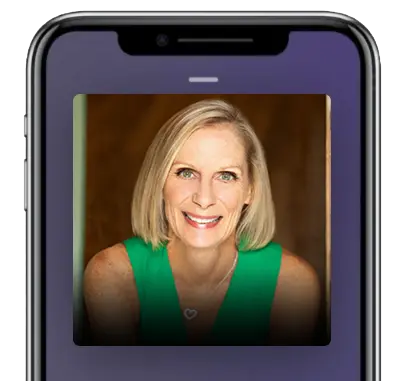
- [02:28]Dr. Patty shares how she joined Genius Network through trusted referrals and explains that her clinical psychology background shapes her belief that lasting success in business and life depends on building and sustaining healthy relationships.
- [04:42]Dr. Patty explains that her clinical psychology background enables her to solve the relationship and trust issues that often masquerade as business problems./li>
- [11:05]Stephan highlights the power of addressing people’s unspoken emotional struggles, while Dr. Patty explains that lasting change happens only when a person’s internal beliefs align with the external results they want to achieve.
- [15:02]Dr. Patty explains that our beliefs shape how we interpret reality and determine our potential, emphasizing that success comes from cultivating an empowering mindset and surrounding yourself with people who reinforce it.
- [19:19]Stephan observes that AI-first companies will define the future, while Dr. Patty explains that AI is exposing underlying leadership and organizational weaknesses.
- [22:43]Stephan and Dr. Patty discuss how AI should amplify human values, creativity, and growth rather than replace critical thinking.
- [26:36]Stephan raises concerns about AI creating misaligned incentives in the workplace, while Dr. Patty emphasizes that long-term career security depends on continuously developing expertise, embracing AI, and taking personal responsibility for adapting to change.
- [34:50]Dr. Patty explains that rebuilding trust requires taking responsibility, changing behaviors, understanding what motivates the other person, and consistently demonstrating through actions that the relationship is worth restoring.
- [38:17]Dr. Patty shares that embracing her authentic self has been key to her success, encouraging others to stop trying to fit in and instead lead with the qualities that make them unique.
- [40:13]Dr. Patty invites listeners to continue learning by connecting with her through her website and LinkedIn, while Stephan encourages them to take meaningful action that aligns with the life they want to look back on with pride.
Dr. Patty Ann, it’s so great to have you on the show.
I am so excited to be here. We have been trying to schedule this for forever. So I’m glad we finally made it happen. Well, you finally made it happen. So thank you.
Well, thank you for being a partner in this. Yes. I’m very happy to have this come together. We’ve known each other for I don’t know how many years, but we met through Genius Network, Joe Polish‘s community mastermind. I know he doesn’t like that term for his Genius Network, but I don’t know what else to call it. So how long have you been in the Genius Network, by the way?
Gosh, I joined during COVID when Joe Polish was on sabbatical. And so that was back in 2019, maybe 2021. I don’t remember the exact year, but that was what was going on in the world. And the way I got here is Cameron Harold, who I’m pretty sure you know, right?
And so for the listeners, he’s like a very successful serial entrepreneur. He was one of the co-founders of 1-800-GOT-JUNK. He currently is with the COO Alliance. Anyway, I’ve worked with Cameron a lot. I’ve coached him; he refers to me, and every time he does, he writes an email saying, “Why are you not in Genius Network?” And then, for some reason, somebody who I was coaching was in Genius Network and said, ”You really should be in Genius Network.”
All success is predicated upon the ability to create, nurture, and sustain healthy relationships.
And you know, you just have to be ready. And this is true for most things in life. I was just ready. And people said, “Well, why don’t you wait till Joe gets back from sabbatical?” Or “why don’t you wait till COVID is over and there are in-person events?” And I was like, “No, I’m good. Let’s go.” So that’s when I joined.
That’s awesome. And by the way, Cameron, he’s such a great guy. He was on my other show on Marketing Speak. And in fact, there’s a lot of relevant stuff in that episode. I think I might republish it here on Get Yourself Optimized, ’cause there’s stuff that’s not just marketing-related. It’s just general business and life-related. And yeah, I think people will find that helpful. So, anyways, and that’s
And leadership
And leadership, yes, speaking of leadership. Isn’t that something that you advise people on? Leadership and relationship, life in life and business and so forth. Like, what are your main claims to fame, I guess?
Okay, so, well, my main claim to fame is being married to the love of my life for forever and raising four children. But separate from that, I really believe I am a clinical psychologist who does high-level executive and business coaching for entrepreneurs and corporate professionals, right? And so I bring that clinical psychology background, which is really a differentiator. From someone who has a certification in coaching, which I’m not slamming; that’s the breadth and depth of my work, I’ve been told really is a differentiator. And I believe very strongly, very strongly, that all success is predicated upon the ability to create, nurture, and sustain healthy relationships. So, if you think about it, I’ll ask you: what percentage of your business do you think is about relationships and people, rather than the actual business itself?
Inevitably, business problems are not really business problems. They’re relationship problems that show up as business problems.
All of it. People do business with people, not with corporate faceless entities. Then if I wasn’t likable, they wouldn’t hire me. If I wasn’t relatable, they wouldn’t hire me.
Exactly. So it’s the no, like, and trust. So when I work with companies, I work with all kinds of companies, and it doesn’t matter what their business is, because you know your business. Inevitably, business problems are not really business problems. They’re relationship problems that show up as business problems. And that’s where my expertise lies. And usually it’s built around. Trust: creating it and how to repair it if it’s been damaged, which happens all the time. And then this is what we call soft skills or the human skills of communication: communication is huge, emotional intelligence and how to have the difficult conversation, which happens less often than you would think because of the trust variable and the politics of business.
I believe the word politics comes from either Greek or Latin, meaning people. So everything, and it’s almost as if the higher up in a company that you go, the more complicated the business relationships are. And so I do that at a really high level, like C-suite, founders, co-founders, and then maybe SVP levels. And then, for example, during COVID. There was a company in Silicon Valley that created phone apps. They should have been crushing it. It was COVID. Everything was online, and they weren’t. And someone like Cameron goes in there, and the processes are great. Like he goes in, he says, “Nope, these processes are great.” He goes, “You have a people problem.” So this company called me in. It wasn’t through Cameron, but I’m just giving an example. This company called me in, and what I found.
Was that the head engine gross oversimplification, but the head engineer and the head salesperson despised each other? It was a trickle-down of mistrust and miscommunication. Neither one of those two people spoke to each other. That permeated their organization. So if you’re creating an app and trying to sell it. And your engineering department and your sales department are not talking to each other, no wonder why your sales are going to be in the tank. So that’s the area of expertise that I bring to the equation. Does that make sense?
It does. And when you shared that story, I was thinking almost immediately, like, hmm, that sounds like a past life spillover into this lifetime. Those two people, those two souls probably had a soul contract to resolve things in this lifetime because they didn’t do it last time.
AI will reveal incompetence, lack of leadership and ineffective decision-making. It's not creating those issues. It's merely revealing it. Share on XYes. And it had an impact, and from a business perspective, even though what you’re saying is true from a personal and spiritual perspective, that’s not why the business brought me in.
Right. They probably didn’t even realize what the true cause was- the root cause.
I’d done that also because I do a lot of work with CEOs and COs and co-founders, like two people that are not rowing the boat in the same direction for whatever reason, right? It can also be a legitimate philosophical difference in the direction that the business was going. But the other thing I think you’ll appreciate is that I want to keep it anonymous as much as possible. You know, when you watch TV or radio, not online, and you have co-anchors or whatever the right term is.
If that relationship is not, they don’t have to be BFFs, which they appear to be, but they do have to be able to get along and respect each other. If that starts to deteriorate behind the scenes, it often infiltrates the on-air relationship, and that’s not good. So I was brought in by an executive VP to work on that. And it turned out that something had happened and one person was upset. I don’t mean to be disrespectful, but it almost sounds like kindergarten. One person was upset that the other person hurt their feelings, but they didn’t apologize. And when they did apologize, it wasn’t genuine, blah, blah, blah. Anyway, so I worked with them, and we put it all out on the table because, you know, write this one down. Nothing changes until the unspoken is spoken.
Nothing changes until the unspoken is spo
ken. And many times when working with people and thinking about all relationships, including your marriage or your intimate relationship, they should know, or I just assumed, or I shouldn’t have to tell you. It’s the kiss of death. So I was able to get them to put it all out on the table, to say what they didn’t say for many different reasons. And I will tell you: five years later, they are genuinely best friends. And the executive producer is so grateful to me. And it’s just my job. And it was great.
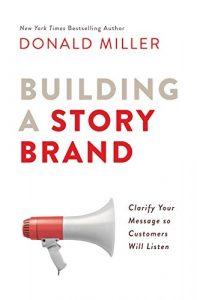
Awesome. Yeah, when you’re talking about the unspoken needs to be spoken, what came to my mind was this whole framework that I learned from the book Building a StoryBrand. And there’s what the author calls the internal problem, but I call it the unspoken problem.
Exactly.
So if the internal problem is that I hate the way I look in this particular outfit, but the spoken problem is I want to hit the gym and lose weight because I want to feel better and I want to look better, but there’s this particular outfit that they want to fit in. If you can hone in on that unspoken internal problem and relate to them in that way, I don’t know where I heard this example from.
I don’t think it was from the book, but you know, women who are struggling with weight problems, they’ll have a dress, some of them, in the closet that they’ll call the fat dress. When nothing else fits, when the jeans don’t fit, they can wear the fat dress. And they hate having the fat dress that if you speak to the unspoken problem and say, “Hey, burn that fat dress, you’ll never need it again.” Wow. It just gets right to the heart, you know, instead of “hey, I look better this summer on the beach” or whatever; it didn’t speak to that unspoken process.
So their external reality has to be consistent with their internal reality. And when it’s not, inevitably, invariably, your internal reality will win.
Right. And it’s the concept of burning the boats, right? So to tag along to what you just said, two examples. Research shows that if somebody wins these major jackpot lotteries, like millions and millions of dollars, within three years, they’ve lost it all. Now you have the outliers, right? You have the person who wins, who calls their accountant, who gets financial advice, who creates a trust.
But most don’t. And they lose it all. And the reason they lose it all is that, internally, they do not see themselves as wealthy. And therefore, even though they receive this wealth, there’s also an element of they haven’t earned it. That’s a little bit of a different conversation. But they don’t see themselves as wealthy. That when it comes to them, they can’t hold it. The same also, using the weight analogy you just gave. I don’t know how GLP-1 are going to impact this, but this was certainly true before them. People would inevitably lose weight and, within X amount of time, gain it back. Like you remember, right? You’d meet people, they’d be heavy, you’d see them, they’d lose weight, and then you don’t see them again in two years, and they’re back to where they were. That’s because of the same reason.
No matter who they look at in the mirror, they don’t see themselves as thin. So their external reality has to be consistent with their internal reality. And when it’s not, inevitably, invariably, your internal reality will win. So if you don’t believe in yourself, if you don’t think you can build a business, if you don’t think you can be happy in a relationship, if you truly believe that, the main- n, you know, Stephan, you know what the main purpose of our brain is? The main purpose.
Keep us alive. Yeah.
Protect us, to protect us, right? So if we see ourselves as someone that is, and you protect us by validating what we believe. So if you see yourself as unsuccessful, your brain will look for evidence to support that view. And that’s why, three people, this is really fascinating. There was an old movie years ago called 12 Angry Men. Are you familiar with it?
Okay, I’m not a great storyteller with movies, but there was a murder, and there was a jury, and everybody was convinced based upon what they heard from the witnesses that spoke that the guy was guilty, right? Because the people that saw what happened saw it through the lens of what they were looking for, whether they were aware of it or not. Turns out he was not guilty. And he was found not guilty. He wasn’t guilty. And here’s a great example.
One of the women said she got up and she looked out her window, and she saw the guy murder the guy. We’ll find out. By the way, we didn’t plan this prop for the listeners; she was practically blind. And she did not put her glasses on to see what was happening. So she created a story in her head to go with what she believed to be true. Absolutely fascinating from a psychological perspective.
Right.. And it reminds me of a quote from Henry Ford: whether you think you can or you think you can’t, you’re right.
If you can, you’re right. Great. And listen, the best example of this, and we don’t want to get political, but look at Elon Musk. My goodness. Everybody believes he can’t do something, but he fervently believes he can. And look at what he’s accomplished.
Yeah. I think part of the reason why he’s so successful, like crazy successful beyond all possible logic, is because he so fervently believes that we are in a simulation. So why not push the limits? Why not take outrageous chances and do anything and everything because it’s all a game?
Okay, so that reminds me of, and I’m not a big sci-fi reader, but is it Player One?.
Ready Player One. Yeah.
Love that. That’s what you’re saying, right?
Yeah, so, by the way, the book is so much better than the movie. So much better.
I never saw the movie. I rarely watch a movie while reading a book. Rarely. But let’s just take this to another level, though. What you’re describing, forget the simulation, right? The mindset is also an aspect of what you can do. Why Musk believes he can do something is almost secondary to the fact that he really does.
If you look at history, look, I am a diehard American patriot, obviously from New York, okay? This country is an absolute miracle. Meaning, if you looked at the American Revolution on paper, we fought the greatest army in the world and defeated them.
We were a ragtag militia. On paper, we should not have won. So that happened. And then you can look at the Civil War. Thank God the North won. And then you could look at World War II. On paper, we’d be living in a Nazi state, God forbid. Right? But the leaders bring this full circle.

Adamantly believe that they will succeed. And they don’t believe they will succeed because they’re delusional or they deny reality. They believe they will succeed despite that. Right? I’m sure this is recorded, but as a native New Yorker, look at what the New York Knicks just won: the basketball team. Against all odds, Jalen Brunson is 6’2. Wemby is like seven-something, right?
Yeah.
So, what differentiates success from failure? It’s all psychological; it’s all what you believe and the environment that you put yourself in. That is another topic, but this is why we care so much about who our kids hang out with. Right? They say you’re the total of the five people you hang with. Yeah. So you want to surround yourself with A-players, certainly at work.
And in your life as well, because I think this is one of Cameron’s favorite expressions. Wherever you go, there you are.
Right. And now, with this AI era upon us, being around B players in your workplace, or as a business owner, having them work for you, will lead to the end of that business. I think I might be wrong, but only the AI-like, native or AI-first companies will survive these next few years.
So I’m glad you brought up AI because I created a whole new business on AI. I’m going to get to what you said, but AI adoption is really low after a company has bought the tools. And everybody approaches it from, well, let me buy another AI tool, which is not the problem, right? You’re looking at the symptom. We’ve been in paradigm shifts before, historically.
If you see yourself as unsuccessful, your brain will look for evidence to support that view.
Right. In the Middle Ages, we went from serfs to the Industrial Revolution; it’s the start of the Industrial Revolution, which is easier to relate to. We went from the farms into the cities with the factories, right? This is another paradigm shift. But here’s the difference: this paradigm shift, and this is what’s not being addressed by businesses. And that’s where you’re hearing them start to complain that they’re not seeing the ROI on the tools.
Companies are not addressing the fundamental reality that when people hear the word AI and have to use it at work, it makes them, for the first time, question: Am I relevant? Do they need me? And that’s an area that needs to be addressed. Now I am so excited about AI, and I feel like I’m in the minority.
Like when I’m out socially, and especially a lot of the women, especially if their kids just got laid off, supposedly because of AI. Maybe yes, maybe no. I don’t know. To me, again, this is an opportunity. You can either act like the train’s not coming down the tracks and get run over by it, or jump in and take it where you want it to go. But it will: AI will reveal incompetence, lack of leadership and ineffective decision-making. It’s not creating those issues. It’s merely revealing it. And it’s revealing it at the speed of light, so to speak. But I actually find it exciting because we’re entrepreneurs, right? Like, this is an opportunity.
Yeah. It’s a time of great upheaval and chaos, but it’s a time where you can build something great from just a small rag team and very little funding or no funding even. This era will have, you know, the unicorn companies that are one- or two-person companies. Now there was one that got a lot of press, but they ended up doing fraudulent stuff. So I won’t talk about them. Yeah. I don’t want to give them any further press, but they were featured in the New York Times, and then it turned out they were scamming to get there, like making fake doctor reviews and all sorts of things.
Nobody is responsible for your career, for your financial reality. You are. Share on XThere’s always a downside. But what you’re saying is it was the best of times, it was the worst of times. Right?
Right. Yeah. Great way of framing it. Yeah.
I mean, and isn’t that life though? Like, there are wonderful things; there are always unintended consequences. It’s just part of it. But that’s the other thing with AI, that I’m not sure I really understand, but you want to make sure that if you’re using AI, it represents your values and your ethics. So you don’t do what you just said, right? I mean, I’ve been studying AI very in-depth recently. And what I have found, and I’m not new at my skill set, right? It’s only as good as what I give it.
So if you don’t know anything, your AI won’t know anything either. So you can’t just open up your laptop and think, now I’m going to be the best at whatever. You have advantages if you know how to use AI. But we still need our brain. And what they say the opportunity with AI is, is that, okay, so here’s what happened. When we left the farms and went into the cities, I don’t know if you heard or read this.
Our muscles decreased in size, and our brain’s critical thinking capacity increased. Because we didn’t need that hard labor, and that’s amazing how the body works, right? So now what we’re seeing is that we won’t need that critical thinking skill to the extent we did before, which I don’t think means you shouldn’t have it, right? Because your whole life isn’t going to be run by AI. I mean, pray to God we’re not gonna be marrying AI people, right? I mean, it’s still human relationships. But the opportunity is creativity and innovation. And I find that really exciting.

Yeah. Me too. And I know that everything comes from God. You know, even if it’s something that seems quite dire, dystopian, ultimately it’s for our soul’s refinement. And if we can see the silver lining in whatever we’re facing, or we can see it as a positive that changes not only our experience, but it changes the reality that we get, the timeline that we get. That’s my understanding.
Well, the other thing is that they say that when you’re dealing with a challenge, or an issue, right, you create a certain neural pathway. But they say that until you’ve learned what you need to learn from that experience, it will continue to repeat itself. So I think that’s a different way of saying what you were saying. Right? Like, if we don’t change our behavior, we can complain all we want about life not being fair. But if we don’t change what we can change, you might be right.
Life will continue to not be fair. Guess what? I went to college for 13 years. I never once took a course in life that is fair. Life isn’t fair. But then what are you going to do about it, right? Are you going to be a woe-is-me and play the victim? Like John Maxwell, one of the greatest leadership gurus around, you can be; you have a choice. You can be a victor, or you can be a victim. But it’s your choice.
Yeah, and another thing, too, I think, is that there are misaligned incentives with the AI adoption problem. People are being incentivized to produce more output, paid more bonuses, etcetera, but they also know that what’s behind that or what’s gonna follow from that is a layoff.
The person that will become invaluable to a company is the person that develops their expertise and uses AI.
Right, because ultimately they’re gonna replace themselves, and a high-priced copywriter isn’t needed anymore. He or she can be replaced by an AI pretty quickly once that AI has been trained on all their best stuff.
So tell me more about what you’re saying about this: the wrong incentive- is that what you were saying?
So misaligned incentives. I, as the business owner, am incentivized to increase profits, cash flow and so on. The employee is incentivized to increase their own personal income, not the business’s, right? Unless they’re also an owner of the business. Probably they’re not. Right. And so if they get a bonus for training an AI.
And they do it really well, they know that they’re gonna be replaced. I mean, it’s the writing’s on the wall, like, yeah, I just trained your AI to be as good of a copywriter as me. There you go, I’ll take my bonus now. And it’s like, yeah, and you know in the next sentence it’s gonna like again, I don’t need you anymore, so why don’t you find a new career?
Well, okay, two things there. Yes, you could be let go. So we are kidding ourselves. All right, this is one of my pet peeves. It drives me crazy when companies say we are a family. We are not a family. We are a company. There are plenty of times raising my children where I would have loved to have fired them because either I didn’t like their behavior, they disappointed me, they drove me crazy, right? They’re kids, they’re growing up. But families, if they’re somewhat healthy, do not do that. Right?
When you work for an employer and employee, there’s a contract. You produce, I pay you. I get that. If you look at AI, and this is what the research is showing more and more now, although obviously copywriting is an example, first-level accounting, you are going to be replaced, right? But again, if that writing is on the wall, you have to do something about that.
You can either act like the train's not coming down the tracks and get run over by it, or jump in and take it where you want it to go. Share on X
My point is, nobody is responsible for your career, for your financial reality. You are. I’m not a socialist. Nobody is responsible for that. I’m a diehard capitalist. You are. Okay. What the research is showing, though, and I do believe this, and I could be wrong, is that the person that will become invaluable to a company is the person that develops their expertise and uses AI.
So it’s not quite doom and gloom if you learn how to use AI. So I feel like that’s a differentiator. The other thing is, you might not remember, or your listeners might not remember. Remember the movie The Graduate with Mrs. Robinson? Okay. What was the profession in the field everybody was told to go into then? I can hear the guy say, do you remember?
I don’t remember it. It was decades ago I watched that movie, so I don’t remember.
Me too, but it’s just like how this stuff comes in my brain; I have no idea. Plastics, son, plastics. Right? That was the profession, which we now know, like, you know, it’s caught half co don’t want to get in trouble, but not so good for you. Suppose it’s in your food. So that was the profession of the day, du jour of the day, right? Plastics. And then it’s gone; then not that long ago it was engineering and software.
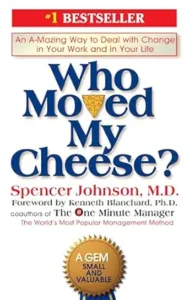
Right. So remember the book, Who Moved My Cheese? Right? It’s always moving. Now, I will agree that the difference here now is the unbelievable speed at which this change is taking place. But if you think, and this is true for any business owner, for you and I, anyone that’s doing business today, if you were doing business today the way you were doing it three years ago, you’re probably out of business.
And if you’re doing business today, in two years from now, one year from now, you better be doing it differently than you are today. Hence, taking very immersive AI courses. I want to learn that. So I can sit there, and you can sit there and say, “Whoa, woe is me.” Okay, so then you are going to be irrelevant. But you had a role in that. That might be sounding really harsh.
You really do have a role, and you have a responsibility for your career. And to be honest, if somebody is going to lose their job, you have to have integrity. They already know what you need to tell them, and then say, “If you can do this, there might be an opportunity.”
Yep. You know what this reminds me of? You know, in relationships and in, let’s say, a spousal relationship. You could say, well, the other person’s doing this, this, this, and this, and this is causing all sorts of problems in our relationship. But I know Tony Robbins talks about this, and I’m sure he got it from others too, that you need to take a hundred percent responsibility, not fifty-fifty. Right.
So that means I have to be proactive; I have to be the person who does whatever needs to be done to save that relationship. I need to be the person who saves my career or my business in this AI era, because the buck stops with me. If you know, the quote I think it says in the Bible is: if not me, then who and if not now, when?
Okay. All right. Far be it from me to disagree with Tony Robbins. But I will tell you, the perspective that I bring to this is that in any relationship you have to, and I do this because I work with entrepreneurial company couples. And when I work with people, inevitably, your personal stuff wherever you go, there you are. So I end up doing some other types of coaching, right? But you must be in any kind of conflict; you, the individual, must be willing to take responsibility for your role in the conflict. I tend to say it might be the lion’s share, or 1%. But if you’re not willing to admit that you had a role in it, good luck to you.
And what I love to tell people is there is no such thing as a one-handed clap. Right? Any relationship is about two people. And even if you played a minor role, if you remember our chemistry labs from high school, if you add one thing into the equation, you can change the whole equation.
Right. So the other thing is that a tool I help people with is if they’re having struggles at work or in their personal relationships. Think about what you can do differently. And here’s usually what happens. It would be, I wish somebody would be more respectful to me. Right. Whatever, wherever you are. So I would tell them, take that wish, and now you demonstrate it.
Who said it: Maya Angelo or Mother Teresa? You be the change you want to see in the world.
Mm. Maybe it was Gandhi. It might have been Gandhi.
And you bring that to Gandhi. Okay. I knew it was somebody important. But if you think about it, like when somebody is rude to us, many people tend to be rude back to them, right? You meet fire with fire. But if somebody is rude to you and you’re kind. It resonates differently. And this coach I know, who’s an amazing guy, talks about his grandmother when they were little kids, all running around, and being nasty. He would say she would say, “Come here, come here.” And like you didn’t know what she was gonna do.

And she opened up the refrigerator, and she would take out whipped cream, and she’d say, Open up your mouth, and she would give the kid whipped cream. And she would say, “Sometimes it just takes just a little bit of sweetness to get rid of the rudeness or the sourness,” Right? But we tend to reflect to people what they give to us. And honestly, that’s sort of what got the world in the condition we’re in today. It’s not so pretty.
For our listener, whatever they’re struggling with in their relationship or business, where trust has been broken or eroded, and yeah.
Okay. So the short answer is high-level coaching with someone like me. I’m not joking. I’m dead serious. But the way to restore trust, and some people will say you can’t, I believe you can. First, you have to realize you are responsible for your role. Right? Normally it’s not so one-sided. You have to realize that perception is subjective, right? And then you have to be willing to change your behavior.
‘Cause sometimes people do things and they’re like, “Yeah, but I’m gonna do it again. I don’t care.” But people overeat, right? Not that I’m talking about a huge issue, but I know I shouldn’t have that, and it looks so good. Well, if you know you shouldn’t have it and you know you’re not gonna feel well after you have it, well, I just wanna do it anyway. Right? But you can restore trust, but it takes work.
Trust is built through small actions that build on each other.
Okay, so trust is built through small actions that build on each other, right? And we lose it in one behavior, in one. We lose it in one situation, right? So then it can get restored. The person that you have wronged or that you have hurt has got to be willing to forgive you. And you, we talked about incentive with business, right? In our personal relationship, you have to make it worth it. You have to incentivize her to want it again. Because what happens is people leave companies, they leave relationships. I’m just tired. It’s not, you’ll hear them say, it’s just not worth it.”
So how do you make it worth it? What are some of the actions, activities, strategies that will help?
Find out what incentivizes her. Okay, so let’s say you have three; how many children do you have?
With her? One, and with my previous marriage, three.
Okay, so you have four kids. Great. We are the same person. We are who we are. But each child is motivated and incentivized differently. Some it’s the carrot, some it’s the stick, right? And everything in between. That’s what a great coach does, a great athletic coach. You know when to hold them, when to fold them, who to yell at, who not to yell at. Now this is hard.
Because we have our own style, it is your responsibility to determine what I need to do in your relationship with your wife. What do I need to give? Who do we need to be to make it worth it? To make me worth it for you to rebuild this relationship with. Does that make sense?
Yeah.
Now, I don’t think she will, but some people will say, and I don’t recommend this, well, I shouldn’t have to tell you. That’s nonsense. We should have world peace too, right? But if they do say, “well, I shouldn’t have to tell you,” say, maybe you shouldn’t, but clearly I need you to.

I need you to help me help the situation. Right. And now this is where you go back into the vault of all the good deeds and all the positivity of the relationship prior to the trust being broken.
But if it’s the first flagrant foul, if you will, then a lot will depend on how much you loved each other before, how much you trusted each other. Right?
When people share their flaws, they become more relatable and more real and more of a leader.
Well, because you’re authentic. So obviously by now, if people have been listening for more than a second, they know I’m a New Yorker, right? And at one point we moved from New York to Greenwich, to near Connecticut. We were in Stanford, Greenwich, Connecticut, right?
You know, it was the promised land at the time. So, well, you’re in the real promised land, so I shouldn’t say that, but you know what I mean. And I professionally speak around the world, and I do a lot of TV, a lot of radio. And I remember saying to my husband, gosh, we’re around all these people, they’re so smart, which is not necessarily true, but they have a lot of money, and you know, I’m just this kid from Brooklyn, and I have this accent. And my husband said, “Don’t change a thing.It makes you who you are”.
And the older I get, the more comfortable I’m with that. But what happened is when I embraced it, I was not born to the manna. Some people love it, and some people don’t. That’s truly okay. Like, I truly understand who wants to listen to this accent, if you don’t. But it’s who I am, and I can’t be anybody else.
Yeah, you gotta you gotta be willing to polarize because if you’re not, then you’re not gonna take up much space in the world. You’re not going to change many lives if you’re avoiding being disliked or disapproved of. Yeah. So this was fabulous. Thank you, Dr. Patty Ann. Thank you for all the wisdom, all the great insights.
So if our listener wants to work with you or learn from you, where do they go? How do they, for example, learn how to get their team to adopt AI? How do they work with you to get coaching on their relationships or on their business, or with you know, their role as an executive or as a business owner?
Okay, great. Thank you. And thank you for having me; I hope it was helpful. So basically what I’d love people to do is just sign up for my newsletter. It’s drpattyann.com. I always encourage people; my website’s drpattyann.com. I encourage business people to go on LinkedIn, Dr. Patty Ann, and you know, just reach out.
Yeah, thank you. Yes. Awesome. Thank you. And thank you, listener. Now do something that feels uncomfortable, but you know you’re gonna be proud of yourself when you have your life review. We’ll catch you in the next episode. I’m your host, Stephan Spencer, signing off.
Important Links
Connect with Dr. Patty Ann Tublin
Books
Films
Businesses/Organizations
People
Previous Marketing Speak Episode
YouTube Videos