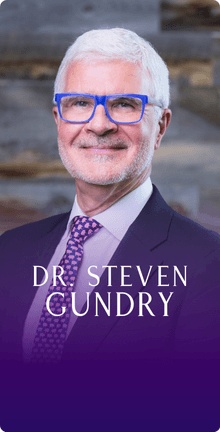



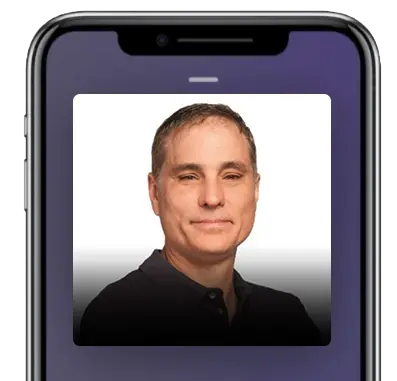

In this Episode
- [00:56]Stephan introduces the surprising role of the skeletal system beyond simply providing structural support.
- [03:18]Peter shares his journey from mechanical engineering and spinal implants to discovering and developing Juvent.
- [06:45]Stephan asks why osteoporosis and osteopenia are becoming increasingly common among younger people.
- [07:10]Peter explains that bone is a highly metabolic organ system involved in stem cells, hormones, immunity, and overall health.
- [14:30]Stephan shares his uncomfortable experience with high-energy Power Plate devices and why he is interested in a gentler alternative.
- [16:36]Peter explains how Juvent uses precise, low-energy micro impacts to stimulate bone and muscle without excessive vibration.
- [19:05]Stephan asks Peter to share real-world examples of the life-changing benefits people have experienced with Juvent.
- [20:49]Peter introduces the concept of “mechanical scurvy” and describes Juvent as a “vitamin of exercise” that addresses a fundamental need for skeletal health.
- [30:42]Stephan explores the connection between leg strength, blood flow, exercise, and cognitive health.
- [50:07]Peter explains the scientific research behind Juvent, including studies conducted with NASA, NYU, and St. Jude.
Peter, it’s so great to have you on the show.
Hey Stephan, great to be here.
Yeah, so we know each other through Maverick Mastermind. Yanik Silver is the founder of Maverick Mastermind. Yanik has been a guest on this podcast. And I’ve been in Maverick for 6 or 8 years, something like that. It’s been great. So get to meet really cool people like you. I was really impressed with your technology and your drive to make a difference in the world to help people, especially the elderly, with the technology. And I’d love for you to maybe start by sharing your origin story: how you ended up with a company that has this technology, what the technology is, and, you know, what keeps you excited and engaged in this business and on this mission.
Sounds great. Well, you know, I started studying engineering. So academically, I have a degree in mechanical engineering from Georgia Tech. In many ways, I tend to be an engineer, but I also have a very strong business side. And my second job out of college- my first was selling factory automation- but then I started selling spinal implants. And so many times I’m in the surgery watching these doctors kind of do a difficult task, and it was way more difficult than it needed to be. So my engineering brain kicked in, and I invented a better mousetrap, which became one of the top-selling spinal systems in the world. Medtronic, the largest medical device maker in the world, sold it, and I traveled around the world teaching surgeons how to use it and training sales reps to teach surgeons how to use it. So I had amazing exposure to doctors in fifty states and thirty countries around the world.
As part of that, I met a doctor who had an idea for a paper he wanted to write. He said, “I think I found the source of joint pain.” And I listened to his idea, and I said, “Well, that’s not really a paper; that’s a company.” So my brother and I helped him start a company around that. And his idea, his discovery, was different than what we thought. And so that company became invested in by J&J. It’s in phase two or three trials now for a treatment for joint pain. That experience showed me how far ahead science is of medicine.
And people kind of think they’re the same; they’re very different. It’s like two sides of the Grand Canyon. And many things in the science world can be used safely and effectively, but they’re not used clinically. So my brother and I were putting together what would become a functional medicine clinic, and we were about 15 years ahead of our time, so no one had a name for it or knew what the hell we were talking about. But part of that was researching modalities that were effective but not widely used. And that’s where we came across this company called Juvent.
Bone is a full-fledged member of the endocrine system. It’s not just structural support—it’s an active organ with far-reaching effects. Share on XJuvent was started by a guy named Jack Ryaby. Jack had developed two previous bone-healing technologies that we knew of in the orthopedic OR world. He used low energy to stimulate bone growth. One used ultrasound, and the other used EMF, or electromagnetic fields. And Juvent was Jack’s shot at the Holy Grail for osteoporosis. And Jack did everything right: put together an amazing team, did what Jack was known to do. The only problem is he died. And so the company went dormant.
And that’s where we were introduced to the technology. So my brother and I picked up the company’s assets, reformed it and re-created it because it had been run into the ground by the team after Jack left. So I’m not the inventor, and in many ways, I’ve invented a lot of cool things, and people sometimes assume I did this. This is not me. In many ways, it’s over my pay grade.
The technology was focused on osteoporosis. It turns out it was way more than that. And that’s where the plot gets really, really interesting. It took me several years to really understand how significant the technology they developed with Juvent was, and that’s where I think your audience will be amazed, as I was.
Yeah, well, I’d love to hear more about it. Maybe you could just explain why osteoporosis and osteopenia are becoming such an epidemic problem for so many people, and it seems to be happening to younger people and not just the extreme elderly now.
I don’t really look at osteoporosis as a disease; I look at it as a symptom or a syndrome.
Absolutely. You know, we’re on the board of The National Osteoporosis Foundation, which has now been renamed, but the point is osteoporosis is associated with being an elderly disease. It’s not. It’s really a manifestation of poor skeletal metabolism. And believe it or not, some of the earliest studies with Juvent were done in pediatrics. And so if you take a young child who is born with a condition, say spina bifida, cerebral palsy, or muscular dystrophy, they don’t have a normal childhood.
And they don’t have that normal activity level. Well, bone is extremely mechanosensitive and dependent. So it really has nothing to do with age. It’s just the conditions that will allow bone to become metabolically dormant. And that can happen at a very young age.
Now, of course, we see more of it as people get older, but it’s by no means an old-person indication. And I don’t really look at osteoporosis as a disease; I look at it as a symptom or a syndrome. And really what’s happening here is improper skeletal metabolism. And what most people don’t realize is that the skeleton is an organ system.
Each bone’s an organ, and together that forms one of our 12 to 14 organ systems, depending on how you want to classify them. And it’s the second most important organ system in the body. Now people go, “well, what do you mean by that?” I go, “well, it’s funny, every medical specialist thinks they’re the second most important.” Everyone’s fighting for second; the brain’s number one, so that one that solves that argument. But I have to educate a lot of doctors because the skeletal organ system’s primary functions aren’t structural. That’s about third on the list. Its primary functions are metabolic. And so let’s talk about that for a minute because it’s amazing when you hear it, and then it’s even more amazing when you realize it doesn’t even have a medical specialty. So let’s talk about it.
Yeah, so you’re referring to bone marrow and how stem cells and so forth are created in the bone marrow, and it’s like that’s a critical function to live another day, right?
Absolutely. It’s for all of us. And so, in the way I explain it to orthopedic surgeons, because they think, you know, the bone is structural. And believe it or not, they do. I mean, I know hundreds of them, but I’ve asked them, what’s the primary purpose of bone, and they give the hold-up. And I have to laugh because I go, “it’s really not.” And they go, “Yeah, well” and the way I point it out to them is that if I could structurally replace every bone in your body with steel, you would structurally be superior and unbreakable, and you’d be dead in minutes. So, what’s more important? Structure or metabolism? So, what metabolism are we talking about?
If I could structurally replace every bone in your body with steel, you would structurally be superior and unbreakable, and you'd be dead in minutes. Share on XWell, stem cells. Perfect. So there are two major types of stem cells; let’s call them liquids and solids. On the liquid side, bones produce all of our red blood cells for oxygen, our white blood cells for our entire immune system, or platelets to stop us from bleeding. That’s pretty important. There’s a second type of cell, which is structural, and those cells can be one of about, we think, just bone- bone builds bone, right? No.
That’s one of nine paths that a cell can become. So that same cell that can become bone can become muscle, fat, cartilage, connective tissue, and selective organ tissues around the body. It’s just amazing, including nerve and sensory tissue. So we start to look at bone stem cell functions; it eclipses the structure. But it gets even more interesting. Bone is a full member of the endocrine system.
So our endocrine system is the body’s chemical communication. It’s kind of like the body’s chemical World Wide Web. And bone talks to every organ in the body chemically with the first or second conversation. And two, it produces several hormones itself. So it’s not just an associate member of the endocrine system; it’s an endocrine organ.
And so we started seeing people in Juvent, and what we’re doing with Juvent, just so everybody knows, is mechanically stimulating skeletal metabolism. So we started to see things way beyond osteoporosis. Reports. Now we’re not making claims. I have to say that. We don’t market these things that we’re gonna be talking about today. I’m just sharing anecdotes from users. But these users don’t know each other. There are thousands.
So we’re not making any medical claims. This is not like, yeah, we’re all being FDA compliant right here.
Yeah, absolutely. You know, and listen, I’m just sharing, and I try to be accurate. It’s, you know, when you do medical sales and spinal implants with neurosurgeons, you have to learn to just stay accurate and separate speculation, but also be accurate in your observations either way. But we’re seeing all these indications that people you would think are completely unrelated. And they’re like, I bought this for this, but my other thing is getting better. And I’ve had several phone calls.
I get one about every three months, and someone will call me up and say, My indication that I’ve never heard of is getting better. And I’m like, I have to go look it up. I’m happy. But the root common denominator in most of these indications is that they’re endocrine-related. And so that starts to explain the skeletal organ system’s integration to the rest of the body. Now, what is Juvent? Let’s talk about that real quick. Juvent is a platform you stand on, and it gets confused with whole-body vibration. Now there’s a reason for the confusion. These researchers spent two decades and about 40 million dollars to come up with Juvent. And when you stand on a Juvent, it’ll feel like a vibration, but it’s actually more accurately called microimpact.
And it’s extremely underwhelming. You get on it, you can talk on the phone; no one knows you’re on it. And the reason that’s the way it is, so low in energy, is that’s what’s safe. And a lot of companies are selling- and I’m not kidding when I say this- Chinese rock shakers. I mean, they’re literally taking motors, putting them on the bottom of a platform sold for industrial rock shaking, and vibrating a platform way beyond even ISO standards for safety. And those are written around able-bodied workers and much less a patient.
And there have already been injuries, and there have been white papers published on vitreous injuries of the eye, detached retinas, and vascular injuries. So, one of our biggest jobs is explaining to people we are not that. And the market is flooded with these; we just call them Chinese rock shakers or paint shakers. And so your audience must know that. And a Juvent buyer has done so much homework, and they get it.
A lot of these companies like to say, “We’re more powerful, so we must be better. No, that’s not the case. You know, dosing is everything. I need water. Water’s a wonderful thing, but if I drink from a fire hose”
Yeah, I’ve used power plate-type devices, and I found them very jarring and not fun. So I’m glad to hear this is a much smoother ride. Because I used to go to a chiropractor, and they had one of the Power Plate, or they had several of them, in the waiting room area. And I tried it a handful of times, and I was first exposed to it at some Tony Robbins events, the Platinum Partner events, where Tony was really into those for a while. I didn’t really enjoy that. So I never got into it, never bought one. And yeah, I’m glad there’s an alternative that gets the benefits without the downsides.
Yeah, the irony is this is where it gets a little confusing: the tissue of bone itself doesn’t really care; bone can take a lot of abuse. Still, it’s the rest of the body you’ve got to look out for; even cartilage has a very narrow bandwidth of what it considers therapeutic versus destructive, not to mention major organ systems like the brain. It’s funny, you can literally take a bowl of water and put it on one of these high-energy plates, and the water will just explode with these things called Faraday spikes. And it’s where waves are colliding. Conversely, when you put that same bowl of water on a Juvent, you get these nice, gentle waves that are non-destructive. They come, they go, they don’t collide. I mean, it’s like, and we have a video on our site at juvent.com, and I’ve had many clinicians look at those bowls of water and go, ” That’s it, I’m done. I’m never putting another patient on that.
And the brain is very sensitive. You know, our skull is like an echo chamber. And there’s actually a study where they used a porcine brain. You know, pigs are actually very similar to humans in many study contexts. They put high energy into the brain, but they got spikes inside at 5x what they put in. So our brain is like an echo chamber inside our skull. And when you stand on it, you don’t want to subject yourself to that. See, our body can handle fairly high loads. Okay, and this is where it gets a little nuts and bolts. Let’s get down to it. I’m an engineer, sorry.
We’re limiting the patient’s exposure to 0.3 G. That’s one-third of gravity. Okay, that’s very low energy. The movement is 5% of a millimeter. Okay? And that’s safe. These other platforms are 2, 4, 5 millimeters. That’s 40, 50, 60 times more powerful. And the problem is, it’s not that the body can’t take high Gs, because when we walk, that’s 1.2 G. Okay? But the body never experiences high load or high G force at high frequency. That’s completely different. That’s a different set of math equations. You cannot just- those numbers are not interchangeable. And so the scientists at Juvent discovered that bone is mechano-resilient.
But it’s also very mechano-sensitive. I don’t need to beat the bone up. I don’t need to do that. I can do this. I may have to do it more times, but bone can respond. That way, I can safely exercise the bone and also stimulate some muscle. There’s another interesting mechanism there, and it doesn’t disrupt the rest of the body. It’s safe. And that’s what took so much money. And these things are machined to the thousandths of a degree.
They have a very custom-built linear actuator that is off the charts in precision, and a PhD in controls engineering. Now I’m an engineer, and if you’re an engineer out there, you know those guys are at high church. They speak a language we don’t even understand. But he has several software patents that optimize treatment for each person, each time. That way, you don’t need a lot of energy. So you have the safety of low impact, but the efficacy of what would be a larger signal. And so you get it down to somebody standing on the Juvent for ten to twenty minutes a day, but it’s game-changing.

Game-changing in what ways? What are some of the stories that you’re maybe allowed to share and still be compliant?
Well, you know, it’s interesting. I just got an email the other day, this morning, five minutes before, while I was waiting for you to log on. I just got an email from a guy whose mother got on a Juvent and is now dismissed from her nursing home. She’s back to being independent. And these are the types of stories we see. We see huge. We’ve had great stories of each of those. We have stories of better, easier blood pressure management, diabetes management, restless leg syndrome. And let’s just call it pure coincidence.
Again, I don’t even want to get near making a claim. Lower limb edema, that has been studied for people with swollen feet. We have studies on that. Improved balance- we have studies on that- and better bone density. But bone density is actually one of the longer-term resolution improvements because bone measurements are, you know, measured in single percentages over ten, twelve months or a year. And so obviously that’s the primary goal. But what happens in the other cases is actually shorter term. So what we do is we don’t want to make the claims. So what we do is anybody who buys a Juvent, at six weeks of unlimited usage for them and their whole family, we don’t mind. If they don’t think it’s worth the money, we’ll buy it back.
Wow. Yeah, that’s amazing.
And so who does that? You know? Yeah. And many times, the reason they’re keeping it isn’t even the reason they bought it. Because we know what we’re doing is providing one of the fundamental requirements: impact loading. Bone actually requires that. That’s why walking is such a magical exercise. We’re giving a fundamental requirement to the second most important organ system in the body.
What day does a cut heal? What day does a fracture heal? What day does hair grow? It’s a process.
And if that’s been dormant, or I call it mechanical scurvy, for years, you see big changes, but it’s not immediate. And that’s why it’s best described as a vitakin, a vital kinetic. The word vitamin was vital amine. And it actually wasn’t an amino, but the first one was vitamin C. It was discovered in the mid-1700s. And that was going after.
The treatment of scurvy. And James Lind, a Scottish surgeon,divided 12 sailors into six groups of two. It was a very small group on a sailing voyage. Those who got lemon in their diet, plus a few other little pieces of fruit, reversed their scurvy. And so that became, actually, ironically, the world’s first clinical trial: the discovery of vitamin C.
But it would be silly to look at vitamin C as a scurvy drug. It’s not. It’s a fundamental daily requirement. And so scurvy is the clinical presentation of a chronic deficiency. And scurvy, you could classify soft tissue, tooth loss, and you’re a train wreck. But when vitamin C gets there, guess what? Scurvy goes away. If you stop using vitamin C, scurvy will come back. So Juvent, the Vitakin is similar. It’s a vitamin of exercise, or a vital kinetic. And when people address this requirement, it’s mechanical, not chemical, but it’s like a vitamin of exercise, and things get better. And it’s the same dosing as a vitamin; it’s the same response, meaning it’s not immediate. What day does a cut heal? What day does a fracture heal? What day does hair grow? It’s a process.
It has the same dosing, meaning I can’t do one day for the year and I’m done. And it has the same retention. If I miss a day. Okay, I’m fine. But that’s why we’re very patient with new users. It takes six weeks. And we ask them to catalog their pain, write down anything that’s going on, and look at it in six weeks, and these stories are amazing. And it’s why I do what I do, because my implants are probably in a million patients around the world, and that’s great, and I’m proud of that. But compared to Juvent, this is nothing. Because I watch people’s activity levels go back years. I mean, in my opinion, this is not a study. You know, we can add five years to anyone’s health span. And when I thought about that and that hit me, I realized, what do I have to do better than that? What am I gonna do to have a bigger impact than that? So I’ve shelved a lot of my other projects to just focus on this.
We can add five years to anyone’s health span.
And you know, it makes a difference. Our return rate measures our success rate, so when people buy it, they have a six-thousand-dollar motivation to say it doesn’t work. Our return rate is 1.5%, so we have a 98.5% success rate by that metric. And that’s why we’re optimistic.
Wow. Yeah. And what if somebody is elderly and walks with a cane or a walker? Are they able to use the device? Because, you know, they would usually need to get some support to continue to stand up.
That’s a great point. Many times, for a clinical unit, we’ll sell a set of bars that somebody with balance issues can hold on to. However, for the consumer, we just say you probably don’t need that because many times they can put their, like, a walker around the Juvent and stand on it or put it next to a counter and stand on it. And many times they find that after a few weeks on the Juvent, they kinda don’t need that walker or gain so much. And so we don’t encourage buying these extra things. If you need one, someday you might. But for most people, the balance improvement is significant. And, you know, that’s why we say just be patient, get on it.
And a lot of people, their friends will notice it before they do. They’re like, you know, you’re carrying your cane, but you’re really not using it that much. You know, you’re kind of carrying your walker instead of relying on it. Or you’re walking upstairs normally. And remember, it’s a gradual process. It’s not this miraculous thing. It’s literally giving the body exercise. It’s the benefits of exercise. I’m working on a talk called The Luxury of Walking. And you know, if anybody hears this episode and walks away with no pun intended and comes away with nothing else, just remember walking is a luxury. If you have the ability and the time to walk, you are a lucky person.
Cherish it. And that’s nature’s perfect exercise. And it’s no coincidence that in every blue zone, walking is a common trait and generally involves incline walking with hills. So what I’ve done is use these little headphones; they are one of my little life hacks. I’ll give you two. Whenever I’m on the phone, I’m walking. Because I’ve noticed I get my free steps in with no extra time, my mental acuity goes up. But let’s just say 10%. I’m making the number up, but I realize it’s because our calves are like second hearts. They pump blood. So my brain’s getting more blood. That’s my theory. Cardiologists agree with me, but that’s not a study. The second thing I do is mentally eliminate or convert the term “I have to walk” to “I get to walk.”
And it really makes a difference. So if you get a bad parking spot, that’s not a bad parking spot. That’s a great walk. If you forget something in the car or forget something upstairs, I get to walk. Use it. If you have time at my Tesla Charger, I walk. After your meal, walk ten minutes. Add those steps a day; it starts to make a huge difference. Because guess what?
My implants are probably in a million patients around the world, and that’s great, and I’m proud of that. But compared to Juvent, this is nothing.
Yeah, like I went to the gym; it’s ten minutes away. I didn’t take the car. I walked for ten minutes there and back. Yeah.
Absolutely. And look for it. Say I get to walk and smile and laugh and just go, This is great. I’m at the airport. I don’t need to take the train. I’m gonna walk and I see because Juvent is really a vitakin or the vital kinetic that we would get in a walking step. Just as I would get vitamin C from an orange. Okay, the vitamin supplement is not better than the actual food. So Juvent is the vitamin of exercise, but the best exercise is walking. And for many people, it’s the bridge back.
I’ve had two or three patients who’ve called me. One was a dear, dear friend of mine, and he called me and said, “Peter, I’m never getting out of bed again. I’m done.” He literally had given up on life. And I said, “Look, dude, you have a Juvent; just set your feet on it for one minute in bed, and I want you to add one percent a day.”
And he told me, “Well,” I said I got him to agree to it, and we’re gonna do a story on him. But he said that was my bridge back. He started with his feet on it, then he started putting a little weight on it. And he started gradually getting stronger and stronger and stronger, and now he’s walking, and he’s, but that was the bridge back. Did you cure him at all? No. It was the lifeline to get back to normalcy. And so for a lot of us, if we have a severe dormant period, whether it’s age and injury, or for a lot of women, stress incontinence. And about thirty percent of women will have postmenopausal women. If there’s any violent action, they’ll have a urinary involuntary release.
Well, in all these situations, you can get your impact with a Juvent. And even if you’re on a walker, cane or wheelchair, with a physical therapist, they can get you in there. And we’ve actually had people in wheelchairs use the Juvent by standing up on it. And we have a video on our site that we didn’t publish for years because it sounded too fantastical. But as a paraplegic, he got feeling back in his legs. Now that’s not walking again; that’s very different. Sensory nerves are regenerative; motor nerves are not. But my point is there’s a lot of metabolism that we don’t understand yet. The skeleton is an organ system; it’s as complicated as any other, but it doesn’t even have a medical specialty.

There’s no medical specialty focused on bone metabolism. We have orthopedic surgeons, but that’s like having a heart surgeon and no cardiologist. Or a brain surgeon and no neurologist. So, so much of this has not been studied. We’ll study it for another hundred years. And you know, it’s funny when I talk to a lot of doctors, and you know, they’re skeptical, and I’m fine with it. And they point out, well, you don’t know how all this works. I go, You’re absolutely right, doctor. We don’t. We don’t understand sleep. We’re still studying sleep, but we know it’s safe and effective, so let’s use sleep. You know, of course we’ll study for another hundred years. And you know, does that make sense? When you study an organ system, especially as an engineer, you get really humble really quick.
Because you realize the body is way more complicated than we understand. But there are two key principles that you can adhere to that make all the sense in the world. Number one, address deficiencies. Number two, remove toxins or harmful factors. Every other treatment is subservient to that, especially in the chronic world, not necessarily acute. So does that make sense?
Yeah, absolutely. Now I’m curious where leg strength comes into play here, because some studies show that stronger leg muscles are linked to a lower risk of cognitive decline and dementia. And does your technology help with I mean, certainly walking would help with leg strength. If you’re sedentary, that’s not a good thing for your cognition. But my understanding is that your legs provide a lot of the oxygen your brain needs to function. Or maybe I’m oversimplifying, or maybe I’m not remembering correctly.
Okay, so there are actually two things you bro touched on, and let’s talk about them in a little more detail. Yeah. Does Juvent help leg strength directly? No. Okay, but with an asterisk, so we’ll get down on that. And then yes, to your point, let’s talk about that. The legs are sometimes called the second heart. Okay? Our calf muscles, our major leg muscles, and our thighs pump blood. And there’s actually a technology where they’ll use fast-acting cuffs. It’s called I’ll come up with it in a minute- where they’ll actually pump the legs and synchronize it with the heart.
That was my bridge back.
And that will actually act as a second heart. It optimizes that. But when we walk, our leg muscles pump blood. Okay? Now, let’s marry these two together: this muscle pumping activity and Juvent. So Juvent stimulates muscle activity, but calling it stronger isn’t really accurate because muscles have different fiber types. And these different fiber types are used for different types of activities. So a strength muscle is different from a balanced muscle. So balanced muscles are called fast-twitch and super-fast-twitch. Their job isn’t to be strong; it’s to be accurate and on time. You know, when the brain or the spinal cord issues an order, it carries it out, it puts it all together, and we’re balanced. That’s the muscle that Juvent is activating, that muscle fiber.
So that’s one mechanism for improving balance. Not all balance issues, but the muscular ones where those muscles are atrophied or aren’t carrying out the commands. So, yes, it is activating that. They’re becoming more robust. But that muscle activity is enough to pump lymph and blood. And so, with patients and studies, we have studies on this of lower limb edema; the lymphatic system is our body’s transport for good and bad things it wants around, especially trash. It wants to get it out of the body. Okay? It’s nearly as complex as our blood system, but it doesn’t have a heart. It relies exclusively on muscular activity, like our legs, to move the fluid, and one-way valves prevent it from flowing back down. So for a patient in whom that activity isn’t happening, their feet get bigger and bigger. Juvent’s activity is enough to change that. Some of those pictures on the website are dramatic. And so that it helps us understand.
Yeah, remember Tony Robbins would tell everybody about, like, at these platinum partner events, to jump on the rebounder, which is like a little, gosh, what’s the word? Yeah, a little tiny trampoline that you just gently jump on, and it helps move the lymph around. So it helps keep you healthy. So that sounds like the Juvent does something similar in terms of moving the lymph around.
Absolutely. Moving the one far. Absolutely. So but guess what? If you have joint pain or you’ve got range-of-motion issues, that will keep you from using your legs. Well, if by coincidence you get on a juvenile that gets helped, that can help you grow your legs, and it’s very important. Our legs are the biggest muscles in our bodies. And there have been studies showing you can predict somebody’s potential lifespan by their leg activity. Can they get up from a seated position, stand up without being aided? And it’s not that if I increase my leg muscles, I mean that’s the key fountain of youth, but it’s a hell of a big indicator. And so, you know, Sten Ekberg– I love this video– he just did one the other day on the life-changing things of doing twenty-five squats a day. You know, and a squat is, you know, anybody can do a squat. They cannot do a deep one, but you can start.
That experience showed me how far ahead science is of medicine. And people kind of think they're the same; they're very different. It's like two sides of the Grand Canyon. Share on XAnd that’s what I do in the morning when I brush my teeth. I do my squats while I’m brushing my teeth because it always reminds me. I keep doing it. And of course I’m on my Juvent, but I do that when I’m having my morning coffee and/or surfing the web or talking on the phone. But my point is, I want us to get healthy. We’re not the magic bullet. We’re a vital extra vitamin of exercise. And you can supplement it, but you wouldn’t make your vitamin cabinet replace your food cabinet.
Yeah, speaking of foods, like I guess certain foods deplete the minerals. Like there’s this marketing campaign you may have heard of that says milk does the body good. But in actuality, all that calcium actually steals the mineralization from your bones. And I don’t remember the exact process, but there’s a biochemical process by which, if you flood your system with too much calcium, it’s actually bad for your bone health. And yeah, so that’s like, I don’t drink milk, but you know I think that other vegetables and things will increase the the minerals that you need in a more wholesome way, a more effective way. So I don’t know the details around that. I’m curious if you have anything to share around that.
Yeah, so there really isn’t a shortage of calcium. It’s just that calcium isn’t being assigned to the right location. Okay, and that’s where vitamin K comes in. And my brother has done a deep dive on that, and he created a bone supplement, HydroxyBMD³. It’s on our site, and that’s its own show, and I’d actually have him on to talk about it. He sourced all the key components for bone metabolism and put them together. When you try to source things, it’s hard to get everything in one pill, so to speak, but he really found the best ingredients of all of them. And the people in the industry look at his list and go, “My God, how did you get this all together?” You know, and we sourced everything from ethical sources and that sort of thing.
And so, from that standpoint, see, the thing you gotta look at with bone growth is it’s not this magic bullet of Juvent or this supplement, or it’s in biology. Look at bone growth, for example, as a chain. And if I’m missing a link in the chain, I don’t have bone growth. Okay? Well, Juvent with the impact loading is one of the links. The proper supplements are another link. But there could be other missing links. It could be endocrinological, genetic and that sort of thing. And so if you don’t have those links, you don’t have a chain. But you’re gonna need those links anyway. Does that make sense? And then when you’re the last link, somebody calls you the cure, you know, but it’s not. It’s not that simple. So we worked with doctors all the time to find the other ingredients for proper bone health.

And so the supplement is one part of that. But you know, you want to work with your doctor and endocrinologist to find out there are other things if you’re dealing with osteoporosis, because it’s a syndrome. It’s not really it’s not quite,I use the vitamin of exercise a lot, but it’s not that simple. But you’re going to need that vitamin anyway. And from that standpoint, why wouldn’t you address the deficiency? Number one, remove toxins; number two, address the underlying things. And so what Juvent’s doing is addressing the mechanical deficiency.
It also helps remove toxins because of the lymphatic fluid it promotes. And that’s actually part of some of the leading detox protocols: using Juvent. Because they know when they get the impurities into the lymphatic system, they need to get them out. And so we have patients who, when they get on Juvent, sometimes they’ll have the effects of a lymphatic drainage massage, because some of those toxins will get their punches in on the way out. Either way, that’s just a fun side note.
But I encourage you to peruse our site. We have a lot of resources on science and clinical studies. There are a lot of user testimonials that might be informative. We’re also available to answer questions. And a Juvent buyer is the most informed person you can imagine. That’s how they find us. And a lot of people, when they get lazy, and they go buy a Chinese pain shaker and spend a lot of money, you know, that hey, that’s our job. We gotta do a better job explaining how micro impact is very different from whole-body vibration shakers. But a good rule of thumb is if you can see it moving, that’s so far beyond ISO standards. Don’t even get on it. There’s also a well-established body of literature on vibration safety. It’s just that doctors don’t look at it. It’s in the industrial safety literature.
And I talk with these engineers, and they don’t believe people are buying these. The first ten minutes of the conversation, I gotta give the websites, show the statistics, and they, ’cause they really look at me and they go, “You gotta be kidding.” My whole job is to prevent companies from getting sued by letting an employee be exposed to that level of toxic vibration. And they’re amazed that people are buying platforms, and some doctors are still recommending them. And so either way. Yeah.
Wow. What about poor circulation, like Raynaud’s syndrome, you know, get whole cold hands and feet in the cold weather, like what about that? How does that get ameliorated through a device like Juvent?
I don’t know what it does. I don’t know what it does. There’s probably other issues there. I mean, we’ll help circulation, but that’s a condition and I don’t have any experience with. You know, yeah, so I’d have to say I don’t know. I wouldn’t be surprised, but in the strictest sense, I don’t know.
Yeah. Okay.
We do see a lot of patients with radiculopathy getting better. There’s an ongoing study at NYU in New York City doing that, and they’re excited. And so that’s actually plausible because the mesenchyme, the stem cells that become structural, part of their path, one of their paths is sensory nerves. And so we think it’s better circulation and maybe nerve regeneration. We don’t know. But the point is, it’s not here; I’m gonna give your audience an interesting tool to think about.
When a doctor sees a new therapy, or we look at any therapy, everyone wants the double-blind, multicenter, randomized studies. That’s the gold standard. And that’s a great thing. And that is important for three reasons. One or more of three reasons. Something that’s high risk, something that’s high cost, or something that may not be as efficacious as a known therapy. For example, if I have something that works 51% of the time and a treatment that works 30% of the time, it’s not ethical to use that. That’s just what these studies figure out. Okay? So if a treatment isn’t high cost, isn’t high risk, and doesn’t displace a known therapy, why not use it?
Number one, address deficiencies. Number two, remove toxins or harmful factors. Every other treatment is subservient to that, especially in the chronic world, not necessarily acute.
Especially when we’ll buy it back. You know, because there is no risk. And you know, Juvent costs about six thousand dollars, and that’s a lot of money if it doesn’t help you. If it does help you, that’s nothing. I mean, if it keeps one parent out of a nursing home for one month, it’s paid for itself.
You know, and yeah, you’re generously offering a discount for our listeners: $500 off if they use the code Stephan500. And thank you for that. That’s very generous of you. So they go to juvent.com to use that code and get the device.
Absolutely. The goal of our talk today, I hope, is just to put the skeletal system on the radar screen, get you curious and if nothing else, walk, walk, walk. Just walking is amazing. And also, the other thing is to walk in thin shoes. You know, it just pains me to see, especially the elderly, walking in shoes with pads this thick at night, you know, these sports companies. People were designed to walk barefoot or, you know, in basic shoes. And so if you’re gonna walk, pick a shoe that lets the impact flow.
It’s a good thing. Walking is a healthy level. I’m not a big fan of running. Running is nice in small doses. It’s a mixed bag, but walk, walk, walk. And you know, gosh, if nothing else, this is where we’ve helped people. And that’s, at the end of the day, that’s what we’re here, that’s what we’re here to do. And if you’re not walking, make sure you come look at us at Juvent; maybe we’ll get you there.
Awesome. Yeah. Great. And then do you have any on as our like kinda as the episode wraps up here, do you have any favorite biohacks besides the Juvent that you’d like to share and and besides walking things that might include perhaps supplements or red light therapy or saunas or cold plunges or anything that you personally get a lot of value out of?
Yeah, I think saunas are critical. Those are fabulous way: a dry sauna. Infrared is different. Temperature gradient is absolutely a no-brainer, ’cause many of our toxins come out through our skin. And this is why it’s so important that we sweat. And when you sweat, get that sweat off of you. Red light therapy- yes, I’m becoming a student of that. I know it helps. I’m investigating, you know; I’m very cautious about that. I know in principle it’s great, but I’m investigating the parameters because I know in my world of impact loading and vibration, I don’t want to take things for granted.
I don’t want to do that with red light therapy. And so I’m researching companies now, discovering the safe levels, safe frequency, and quality LEDs. And we do that because we may partner with some of those guys some days, but part of a Juvent is us doing our homework. You know, we’re very deep on that. I think oxygen contrast therapy is fantastic if you can do that. And that’s where you use cardio; kind of, you do cardio at contrasting oxygen levels. So the equivalent of high altitude and then rich oxygen. And that’s a very powerful tool. I do that probably two or three times a week. And the other one is on the diet side: avoid sugar and simple carbs, and avoid seed oils.
So most food is fried in seed oils, and those are some of the big ones. Okay. And you know, when I know it’s funny, I met with an old friend of mine on a cross-country road trip. He’d added probably a hundred and twenty extra pounds you didn’t need. And you know, I helped him make a couple of dietary changes, and he called me up, and he’s down ten pounds in about two weeks. And it’s really doing some basic stuff.
You know, and the other biohack I enjoy is intermittent fasting. You know, whether it’s intraday and probably once a season, when the season changes, I’ll do a three-day fast. And you know, that’s kind of a nice, safe level. You get a lot more done at three days than you do within a day. And then one of these days I’d like to do a longer fast, but that’s a little bit of a broader topic and a little bit more complicated.
I’ve done a seventy-two-hour fast from not just food but also water. That was challenging, yeah. It actually was the hardest on the first day. Then it got easier the second day and even easier on the third day. Yeah.
If you get rid of sugar for about a week, you'll have a miserable week, but after a week to ten days, those cravings just kind of go away. Share on XWell, you know, the other thing it’s part of is: for those who think they have a sweet tooth, okay, let me know you actually do. Okay, you have cravings for sweets, and they won’t go away if you keep subjecting yourself to the sugar. But if you get rid of sugar for about a week, you’ll have a miserable week, but after a week to ten days, those cravings just kind of go away. And when you want to fast, you’re not dying for every meal. So I eat a full meal. I try to eat a full meal a day and a half. That’s it. This three meals a day is a joke. That’s why I don’t buy it.
And so either way, that’s my life hacks. I’m sixty-one years old, I have a normal BMI, normal blood pressure, normal heart rate, and I’m on no prescription meds. And you know, I did a Google search on that. It’s really scary how rare that is. But I’m not saying I have the key to everything; I’m just sharing some of the major ones. I kinda see the biggest bang for the buck in someone else’s life. But buy a pair of these—not wireless; don’t use wireless, use the wired ones. Twenty dollars. And when you’re on your phone, just walk. I mean, guys, for twenty bucks, that’s the best health tip I can give you.
Yeah, and if you’re into meditation or into just prayer, doing that instead of phone calls while you’re walking- if you try to connect instead, like not connecting to other people, but connect to the infinite- that is even better, I think. That’s from my experience.
Well, you know, a lot of people do that on their phone, because you’ve got twenty minutes and you can do a little something on it, and you know, twenty minutes- see, that’s a good point. Twenty minutes a day is two and a half hours a week; that’s a hundred hours a year. That’s basically, you know, a lot of time.
And so you want to use it. Read, talk on the phone, have a cup of coffee, connect with friends, connect with meditation, connect, do something on it. Most Juvent’s end up in the kitchen because that’s where you go to make chemical nutrients. Why not go for other nutrients? You know, a vitamin and your vitamin. And it’s a key part of putting it in the middle. Let everyone use it every day. It’s just one of those things; why not? And so yeah, do something on it, connect, and that makes a lot of sense.
Awesome. Yep, and one last question here. You mentioned just in passing there are studies done, like clinical studies and so forth, research on the Juvent. How does that happen? I’ve seen plenty of companies with technologies that are biohacking-type devices and things like that, where they’ll have done studies, or they’ll have funded research or whatever. Like, is this in cooperation with professors at academic institutions? Do you get these published as articles in scientific journals? Like, how does this all work?
The active group was up ten percent. In bone, one percent is a big deal.
All of the above. So some of the original research was funded by NASA. They were working to find out I mean, it’s kind of a joke, but it’s true. They realized that if your bone density went down, if you went to Mars, you wouldn’t have the bone density to push the button to land. You know, so they funded that for that motivation. NYU is doing it for academics. She’s trying to help her patients with lower limb edema and distal neuropathy.
And one of the most powerful studies was done by St. Jude, which is a nonprofit organization. And this study is worth talking about because the vice president of Medtronic regulatory is a PhD in bone. Okay, he works in regulation, but his PhD is in bone. He looked at the studies; that’s the most significant study in orthopedics in at least 20 years. Now think about who that’s coming from. This is a guy who’s a PhD in bone, has worked in orthopedics for 45, 50 years for the world’s largest company. That’s a pretty big reference base to make that comment. The study was in post-chemo bone marrow transplant patients. And this is a known issue: a population with poor bone density, because the bone transplant will save their life, but they don’t necessarily have healthy bones.
And so it was randomized, meaning the patient didn’t know whether they were getting a real transplant or a fake one, a placebo. The clinicians didn’t know which one had which. And the patients were nutritionally and endocrinologically managed. So there are other links in the chain. They were addressing them, so you knew how much difference the microimpact was making. At the end of the study period, the users that had the placebo or sham platforms- they literally had a speaker that just made noise; they didn’t know that wasn’t normal. And then the active, the delta, so the sham was down one percent, which is normal for that population. The active group was up ten percent.
In bone, one percent is a big deal. In fact, if you keep it from going down one percent, that’s a big deal. Ten percent is an order of magnitude greater than what one would expect. And they submitted it to JAMA, which is a very prestigious Journal of the American Medical Association. JAMA required two or three independent people to review the films and the data before they would publish it. They’re like, “You guys are- that’s crazy.”
There’s no medical specialty dedicated to bone metabolism. We have orthopedic surgeons, but that’s like having heart surgeons without cardiologists—or brain surgeons without neurologists. Share on XAnd so that study dismisses this claim by all these high-energy shakers. You don’t need a lot of energy. If you know the science, you need a mild microimpact. And if you know how to apply it with resonance, you can have the safety and the efficacy. And so that study was published by Kirsten Ness at St. Jude in Memphis, a nonprofit. And she was just trying to help this population of post-chemo survivors. And so that’s on our site. You know, we have other studies and other indications, but that one was such a gold study. I mean, it doesn’t get better than that.
Amazing. Wow. Makes me want to go out and buy a Juvent for my loved ones. Yeah. Amazing.
We’ll use your coupon code.
Yes, exactly. So let’s remind our listeners here: the coupon code again is Stephan500, and that’s on juvent.com to get the device. And how long did you say you’ll buy it back for ninety days, was it?
Six weeks.
Six weeks. Yeah. Six-week buyback period. So that is a risk reversal right there.
Yeah, you won’t find an unhappy customer, you know, and it’s funny, the ones that come back, you know, ’cause we do take it back. I mean, it’s not like this is how we are. We’ll pay shipping both ways. We don’t care. But usually when they come back, they have less than five uses on them, meaning somebody bought it as a gift. It’s usually so. Either way, we’ll talk to the buyers; give us a call, and we’ll help you avoid that. And but it’s, you know, we’re proud of our policy; we’re proud of our record.
Yeah, amazing. All right, Peter, it was a pleasure. Thank you for coming on the show.
Thank you so much. All right, we’ll talk to you soon. Cheers.
All right, and thank you, listener. So go out there and make the world a better place. We’ll catch you in the next episode. I’m your host, Stephan Spencer, signing off.
Important Links
Connect with Peter Simonson
Businesses/Organizations
People
Previous Get Yourself Optimized Episode
Previous Marketing Speak Episode
YouTube Videos