

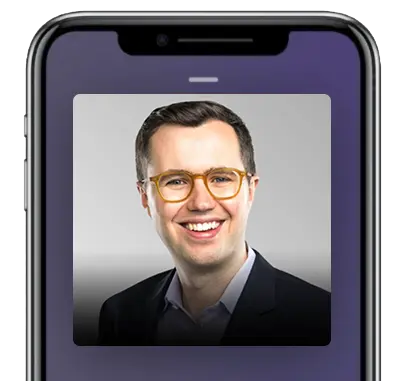
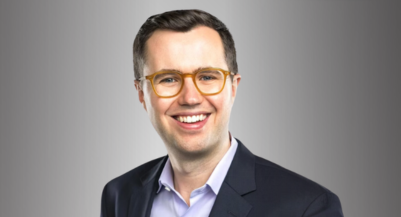
In this Episode
- [00:55]Stephan introduces Scott Stirrett and explores how uncertainty can shape our lives.
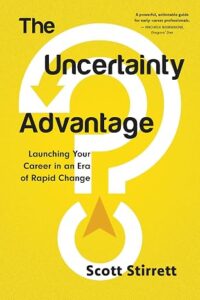
- [02:20]Scott discusses his book The Uncertainty Advantage and why he sees uncertainty as an opportunity rather than a disadvantage.
- [04:38]Scott shares how exposure and ritual prevention therapy helped him confront OCD and build tolerance for uncertainty.
- [08:04]Stephan and Scott explore how to recognize and break compulsive rituals instead of using them to avoid anxiety.
- [11:12]Scott explains why self-compassion is essential for developing resilience and navigating uncertainty.
- [14:01]Scott recounts how his parents’ divorce, COVID, and rapid professional growth created an overwhelming period of uncertainty.
- [19:14]Scott introduces practical ways to build antifragility by taking small risks and stepping outside your comfort zone.
- [23:10]Stephan and Scott discuss how AI is transforming careers, work, and the future of entrepreneurship.
- [28:46]Scott explains why face-to-face relationships and personal connections may become increasingly valuable in an AI-driven world.
- [31:36]Scott discusses the potential risks of AI, including the possibility of AI-enabled biological threats.
- [34:53]Scott shares the lessons in discipline he learned from his time at Goldman Sachs.
- [38:01]Scott explains how listeners can assess their relationship with uncertainty and continue building their uncertainty muscles.
Scott, it’s so great to have you on the show.
Thanks so much for having me on.
Yeah, so you’ve got a book out. When did it come out?
It came out in August, 2025.
Awesome. Well, congratulations on that. That’s a big deal. How long did it take you to write that?
It took around two years.
Two years. Yeah, that’s pretty typical. Each edition of The Art of SEO took my co-authors and me about two years. Yeah, it’s a big commitment. So, it’s The Uncertainty Advantage. And why did you name it that? Why is uncertainty an advantage?
I chose that title because I think that many people tend to view uncertainty as a disadvantage. Certainly not all, but as I’ve done sessions around Canada and the US and I have a short quiz that people can fill out that gives someone a score from zero to 48 in terms of their comfort with uncertainty.
Over 1000 people filled out this quiz, and what I found is that there’s around five people who dislike uncertainty for every one person who likes uncertainty, and that’s to say that The Uncertainty Advantage title is so important because for many people, one of the most important things in shifting their relationship with uncertainty is just to view uncertainty as the potential for creating something positive in their life , rather than something that is a negative thing to fear.
You know, I learned in Kabbalah class that certainty doesn’t exist in this realm and in the physical plane of existence. It’s in the upper worlds, and so if you want certainty, you’re not going to find it here. But you can pray for it and get something gifted to you from the higher dimensions, and it helps bring me comfort to know that this is kind of baked into the algorithm, so to speak, here on Earth. You know, in Earth School, you’re gonna learn a lot of lessons because you don’t get certainty here. That’s not part of the equation. So let’s go back to your origin story: how you ended up writing this book, and what challenges brought you to this point and made you want to share it with the world.
So the great thing in terms of treatment for OCD is that there are a lot of clinically proven and evidence-based ways in terms of how to treat it. For me, I went through exposure and response prevention therapy, which is often used as the gold standard, and essentially it involves two things. One is stopping compulsive behavior. Two is that you are confronted with the things that scare you, and it can sometimes come off as sort of an extreme treatment.
But for me, which you know, I did this over kind of 10 weeks from my house, and it was transformational. It made a huge impact in terms of my ability to tolerate uncertainty, and what I’d say is that the work continues after the treatment, like for years later, and really for the rest of your life, in terms of trying to avoid the compulsive behaviors, as well as in terms of confronting yourself in terms of what you’re afraid to do, and that’s to say, am I perfect always in terms of kind of navigating OCD? No, but I don’t think anyone is.
And for me, I never took any medication or did anything like that. I never did CBT. I really just did exposure prevention therapy, and then I have kind of stuck with those two kinds of core principles, and I think the great thing about it, and one of the reasons I talk about OCD, is that it’s often widely misunderstood.
And in terms of how to treat it, it’s actually very effective to treat it through lifestyle changes, like changing kind of behaviors, and not needing medication, and I’ve heard this from many people who’ve had more intensive OCD experiences. It’s not like it cures your OCD. I always have some kind of OCD tendencies. Still, it really can be like your life before exposure and ritual prevention therapy and your life after exposure and response prevention therapy. Unless I feel like someone has really gone through it, it’s hard to describe how life-altering, in a good way, the treatment is.
One of the reasons I talk about OCD is that it's often widely misunderstood. Share on XSo ritual prevention, what is that? How does that work?
So for listeners, let’s say someone has a cleanliness issue. They’re afraid of germs, and that’s common. A lot of people who can suffer from OCD will develop this really intense fear of illnesses, and that could mean that they need to clean a doorknob every single time that they touch it, or they need to wash their hands like hundreds of times per day, and that would be an example of a ritual. All I’m saying is, like, washing your hands occasionally. That’s not an issue, right? That’s a healthy, normal kind of behavior.
The only way out is through.
What isn’t healthy or normal is washing your hands like two or 300 times per day. That begins to dominate your life, and that’s the tough thing with OCD. Sometimes there’s not necessarily a formal cutoff of what is a ritual versus what isn’t, and that’s why people who have OCD have to kind of always be on the lookout for sneaky rituals that can start to pop up. And as you become aware of that, it’s important to then say, “Okay, I’m just going to stop doing that.” This is becoming a ritual rather than something healthy.
So once you’ve identified like this is a ritual, how do you kind of scramble the signal so that you’re not going straight to that ritual again?
I think the first piece that’s really important is just to label it as a ritual. Like, this is not good, and this might give me some temporary anxiety relief now. Still, it’s going to make me more vulnerable to uncertainty later, because this is a core message of my book, The Uncertainty Advantage, but it’s also a core message for those who live with OCD: the only way out is through. The more that you try to minimize uncertainty in your life, the more that uncertainty tries to control you. What brought me to a really challenging point in COVID was that I kept going. The more I leaned into rituals, the less resilient I became, kind of ultimately. And I think even if you don’t have OCD, there are ways that you can make yourself brittle to uncertainty, and that can be through not taking risks.
The more that you try to minimize uncertainty in your life, the more that uncertainty tries to control you.
That can be through just being in your comfort zone, and that’s why that’s really what motivated me to write this book and to do these talks. Is that I think everyone needs to learn to embrace the the unknown, and it really has made like such a huge phenomenal difference to my life, like some of the things that I’m doing now, whether it’s having kids or launching a business and writing a book, like all these opportunities that exist in my life today wouldn’t exist if I hadn’t done the hard work and still do the hard work of trying to build up my uncertainty muscles.
Yeah, that’s awesome. Well, congrats on the success and on breaking through. That can be really hard. It can be really challenging. I know people who have OCD, and it really impinges on their lives. And so, yeah, kudos to you.
Yeah, and I think it’s still important to say, too. It’s that. The most important work, as a famous rabbi once said, is the work that has no end, and I think it’s important also in the context of uncertainty. It’s that we all need to continue to build up, do that work of building up our capacity, and when you have OCD, even when you go through exposure and ritual prevention therapy, it’s not like “oh, it’s cured, it’s done.” It’s about managing, just like in some cases, you know, some people have less ability to focus than others, and that’s something they need to manage.
There's around five people who dislike uncertainty for every one person who likes uncertainty. Share on XSome people tend to get angry and lose control. That’s something that they need to manage. Like, I’m mindful of not over-pathologizing or victimizing myself. I think everyone on this earth has self-destructive tendencies that they have to be careful of, and, you know, for me, it’s fear of uncertainty that is probably one of the main ones. But I think for others, it’s the fear of uncertainty, and this goes beyond my kind of core message of building uncertainty. I think being self-aware, understanding what holds us back, and working to manage those self-destructive tendencies is such an important part of life.
Yeah, another thing I remember from your book, from what I was reading, you mentioned self-compassion in there is a core concept of how to kind of get through a challenging time. So, for someone who’s maybe only familiar with the concept of compassion by itself, like, okay, I’m going to be compassionate towards other people, but what is it about self-compassion? What is this a pathway through?
I think, in some ways, self-compassion is the most important part of learning to develop a better relationship with the unknown, because uncertainty carries risk, which carries failure and challenges. And for most people, we’re just hardwired not to like the unknown, and that’s because, for much of human history, the unknown resulted in matters of life and death. So our brains tend to go to the worst-case scenario when we’re confronted with an uncertain situation, which is why many people prefer to know a bad outcome rather than an uncertain one.

So I think one of the things that’s so important, you know, for all of us is to kind of understand what our relationship with uncertainty is, and to be kind to ourselves along the way. Because self-compassion is not a sign of weakness; it is actually something that helps you keep on getting up and going, and it gives you that ability to tolerate risk, to tolerate uncertain situations. And I think if you’re really self-critical, if you’re really a perfectionist, and I say this from experience, like that’s partially what motivates me so much to talk about the relationship between self-compassion and uncertainty.
I think the kinder I am to myself, the more I see it directly. The more comfortable I am ultimately in taking risks, navigating uncertainty, and perhaps one of the most important aspects of self-kindness is just sometimes, when I’m struggling with an uncertain moment or situation, to say to myself, “This is really tough. This is a lot of uncertainty that you’re navigating right now.
This is not an easy situation. Rather than beating myself up in my head and saying, “Oh well, why are you being stressed out about this? Let that just make the anxiety stronger, and you know every day I need to work on continuing to foster my own self-compassion kind of habit.
Self-compassion is not a sign of weakness; it is actually something that helps you keep on getting up and going.
The final thing I’d say is that, in the context of my work adventure in Canada and working a lot with ambitious people, I think for ambitious young people, the lack of self-compassion is one of the main things that holds people back in terms of their ability to ultimately navigate uncertainty. Because we live in a world that can put a lot of expectations of perfectionism on young people, and that can really make people more brittle in response to life’s vagaries.
Maybe give us an example of a really difficult time that you navigated with uncertainty, and you know something that would be highly relatable to pretty much everyone. You know, not everyone has OCD, so that might not be the example to use. Still, something maybe related to having to adjust to career changes or AI or something that, like, it was a challenge. Maybe it brought up anxiety or uncomfortable feelings that you had to navigate.
Yeah, I’ll share an example. During the very beginning of COVID, my parents got divorced after being married for 30 years, and I think a lot of people can certainly have been divorced, or certainly I feel like almost everyone knows somebody who has been divorced, and that was really challenging.
I’m an only child. It felt like my family unit would be destroyed overnight. It felt like my world had been cracked open. And it’s interesting, by the way: if you’re intrigued by this, there’s a lot of writing by psychologists on gray divorces and the impact on children, and gray divorces are when people get divorced once their kids are actually grown. It’s still really hard on kids, even when they’re like 30, to navigate a divorce from their parents.
The first step in developing a better relationship with uncertainty is understanding your current relationship with it.” Share on XAnd I think I wasn’t that kind to myself then. I just was like, pushed through, dealing with it. I think if I were to go back in time, I would have been a lot kinder to myself, to say, like, this is really tough. I would have done more things to put my mental health kind of first, because I think one of the reasons I ended up having challenges during COVID was that there were all of these things that kind of came together at the same time, and this is, I think, what a lot of times when people have challenges is it’s not just like one thing; it’s like the shoe drops across the spectrum of your life, you know. There’s a global pandemic. My parents got divorced. I was running a not-for-profit that had recently quintupled in size.
We went from an organization that, in 2016, had a $300,000 budget to, by 2022, a $14 million budget, and I was like 28, you know, 29, 30, through all of this. I was suddenly navigating and running a team of 30 people and managing this massive budget, and navigating a family, and navigating COVID, and at a certain point, I just was like, “oh my god, like, this is too much uncertainty in my life,” and that’s when I leaned into the compulsiveness.
One other tip that I think is really important is antifragility, and that’s the ability to thrive in chaos.
But all I’m saying is, I think if I were to go back in time, it would have been okay. Go for more walks. Be kinder to myself. Like, put my own mental health first when I’m going through these challenging circumstances. And I think I would have been able to be more resilient through that period rather than just saying, “Oh, I’m tough. I’m going to push through, and I think that for me, one of the things that was challenging, Stephan, was that I was someone who’s very much like, “Oh, mental health challenges don’t happen to me. That’s not me.” So I’m just tough, and I’m just going to push through it. And it’s kind of like I’m a big runner. I’m actually doing my first marathon in two weeks.
And the one thing, if you’re running, is that if you’re beginning and you get a lot of pain, you need to stop because you don’t want to, like, break your, you know, Achilles or get, like, injured for the rest of your life. Likewise, I think the same thing with mental health. Like, if you’re not feeling great or you’re feeling a little overwhelmed, it’s important to pause, take a break, and do things to put your mental health first. Be self-compassionate, and that pause can help you more in the long term than saying, “I’m going to, like, marathon through this difficult situation regardless of how I’m feeling.”
Yeah, I remember. Gosh, I forget the name of the book, but it was a pretty thick book about divorce, and you know, like the family dynamics and how it really is quite difficult for the kids. And I read it while I was still in my first marriage, and it made me terrified to leave the marriage, even though I was unhappy for a long time in that marriage. I mean, ultimately, it fell apart anyway. But what a gift! Because now I’m with my soulmate, and you know, it’s 100 times better in terms of my happiness level and everything. But I just didn’t want to ruin my kids’ lives. But there’s this myth that by waiting until the children are grown up and moved out, you’re actually saving them a lot of grief. It doesn’t. It just postpones the grief.
Yeah, I would agree with that as well. And I think ultimately, if someone isn’t a fit, it makes sense to end it sooner. And just because, ultimately, yeah, there’s still grief when you’re 30 or if you’re 40, going through divorce. And yeah, and I don’t think it’s any less significant than when it happens when you’re younger.
Yeah. So let’s talk about some of the core principles in The Uncertainty Advantage that we haven’t covered yet. So what are some of the things you want our listener or viewer to take away as practical, immediately applicable tools?
One other tip that I think is really important is antifragility, and that’s the ability to thrive in chaos. Actually, it’s about becoming stronger in the context of a challenging situation. And I think antifragility is so important in a world of uncertainty. One tip for fostering that is to build your risk-taking muscles and think about it every week. What’s one risk that I can take to push myself out of my comfort zone to build up my risk-taking capacity? That can be very small things, like going to a restaurant and eating a kind of food you’ve never eaten before.
Last night, this wasn’t an uncertain goal, but I ate at a Korean restaurant in Toronto, and I had fried crab with a unique sweet-and-salty sauce, and it was delicious. It was- I love crab- and I was like, I’ve never had a crab quite like that. All I’m saying is that life has so much beauty in it, and there are so many different things. So changing things up and sometimes trying something completely different is a risk, including eating crab fried with a unique sauce. But to say there are other kinds of risks, it could be going out to get coffee with someone who you’ve never met before. That is probably one of the ones I bring up in interactive sessions, when I ask people what risks they can take.
Risk is decision-making under uncertainty.
They’re like, I can take this person out for coffee, and it’s because it’s so important. But a lot of people are so afraid of rejection, so I think that’s really important. It is just that, as a risk-taker, there are bigger ones, like I don’t create a TikTok account for some, you know, that’s like a fun little side project. Go launch a side business. Go start a blog.
Like, there are so many little things you can do every week that just, like, push yourself out of your comfort zone, and I think your risk-taking kind of compounds gradually, and it’s not about making foolish risks. It’s about how these small risks, over time, shift your mindset around risk-taking. I think that links so much to antifragility because your ability to thrive in disorder and chaos relates to your ability to take risks. After all, risk is decision-making under uncertainty, and how do you create opportunity in a chaotic world? You’re a smart risk-taker.
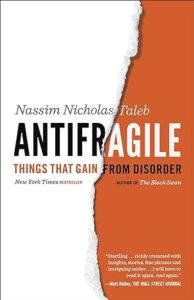
No, I totally relate to this. I really love the concept of anti-fragility. So, Antifragile is the book by Nassim Taleb. It’s a really important book. You’ve got this concept that is so far beyond just resiliency. To be antifragile means you actually thrive and don’t just make it through a challenge or stressor. So, in the book, the author explains things like our immune system and the economy and, gosh, Mother Nature and so forth. These are all examples of antifragile systems that require stressors to grow and blossom, not just to get through them with resilience.
Yeah, totally. It’s an amazing book, and I kind of applied that concept to career development because I think we often think of antifragility in terms of systems. Still, it also applies to us as individuals and how we approach our careers.
Yeah, let’s talk about careers and what a career is going to look like now that AI is disrupting so much in the world, and it’s going to just be like a hockey stick in the growth trajectory of capabilities in these next few years. So, is going to college even a thing anymore? Is developing a career that you might have for the next 10-15 years-is that still a thing, or are we kind of, yeah, in this crazy world where you only work if you really enjoy it, and otherwise you just kind of coast on UBI or whatever universal basic income? I don’t know.
I think that uncertainty is perhaps the most important skill for all of us to develop in an AI era.
Well, I think that uncertainty is perhaps the most important skill for all of us to develop in an AI era, and that’s because AI means things change faster, and that means that there is, in many ways, more uncertainty in the economy. My personal view is that AI on the net is not going to be this massive a job killer. I think that it will change a lot of jobs. I think it will probably remove a lot of jobs, but it will also create a lot of new types of jobs. All I’m saying is that I think AI will bring a lot of change to the economy, but I don’t think it’s necessarily going to completely obliterate the world of work in terms of people not working anymore; it will change work.
So, what would be some of the careers that you think are up and coming, or opportunities that people should kind of double down on?
I think there will be more solopreneurs than at any other time in history because AI gives people more leverage to build their own business and have a real impact as one person. Stripe data shows a huge rise in solopreneurs in the United States, especially those earning significant amounts of money, so I think solopreneurship will be a huge shift. You see that even in American labor data, the biggest rise in self-employment is in freelancers, essentially solopreneurs.

There’s not actually huge growth in as much in terms of businesses that employ multiple people, so I think that that is one area that you’re going to see a change in the economy. I mean, I think other areas that you’re going to see changes in are more. I mean, some of them relate to AI, but they’re more kind of macro. I think you’re going to have more people kind of working in professions that are harder to automate, like in the physical world, whether that’s education, care for the elderly or blue-collar kind of work, but I do think that that’s going to be very durable work long term. I think the aging nature of America’s population will mean a continual shift into social services, where more people will be working in that sector. I’d say there’s maybe a third area where a lot of new kinds of jobs will be created.
I would say, I mean, it’s interesting. Maybe I mean, in some ways, I actually think the ability to have, like, good taste is more important than ever before, so I think in some ways, like marketing and learning to be, like, a really effective marketer and, like, a tastemaker will be more important in our world because there’s so much AI slop out there that the ability to really be creative and to create content and to create things of value for others that aren’t just, like, what the AI slop. All to say that 10 years ago, there were just, you know, a lot of things that even humans created that were maybe like AI slop, and I think that the people who have that now can create mediocre things.
I think the ability to create art, or things like taste or marketing, that really stands out in our creativity can be a huge differentiator.
So I think the ability to create art, or things like taste or marketing, that really stands out in our creativity can be a huge differentiator. And in some ways, I think marketers are going to be more important than ever before because it’s. And I even find this in some work things. It’s like it’s harder to break through because there’s so much content out there; being really effective at marketing is really important.
Yeah, I also think we’re facing, as a society, a big challenge of not just AI slop, but so good AI that you can’t differentiate what’s real and what’s fake, so deepfakes and so forth will become so believable that you won’t know what’s real or not. And I remember there was this quote from Mark Cuban. Here, I’ll pull it up. Okay, within the next three years, there will be so much AI, in particular AI video, that people won’t know if what they see or hear is real, which will lead to an explosion of face-to-face engagement events and jobs. Those that were in the office will be in the field, and I believe that. So that opens up a lot of opportunities for careers and for solopreneurs to leverage that trend toward face-to-face.
Yeah, totally. And it’s interesting. Even as I’m about to embark, I started a full-time search on September 1 to acquire a business in Canada, and I’m spending a lot of my time going to in-person conferences and events and building relationships with people because I think those more old-school things are more important. I’ll be sending a lot of physical letters in the mail because I think that’s going to be more important than ever before, too.
And yeah, I think that, you know, leaning in in some ways. I think the 2030s will probably be more like the 1950s in terms of the importance of face-to-face, and all this; I think we’ll still do some virtual. But to your point, even with cold email, I’m so skeptical now because I get so many random emails that figuring out who’s a real person here is quite challenging, you know. It’s like, as an author, I probably get two to three author scam emails a day from these random people trying to sell me on their fake book clubs, and I just have to.
As an author, I probably get two to three scam emails a day from people trying to sell me on fake book clubs. Share on XSo that’s what sometimes I think. Well, what if there was a real person, you know, reaching out to me from these random book clubs, of which there are sometimes. It’s so hard to tell who’s a real book club versus who’s a fake book club. All to say is then I think personal relationships matter more than ever before because the way you can authenticate whether someone is real or legitimate is through whether you know them or, in a lot of cases, whether someone you know knows them.
Yeah. While you were talking, I thought of an event you might want to check out. It’s called DealCon, where you’ll be face-to-face with other business acquirers, M&A folks, and so on. I’m actually speaking at the event in October, so it’s, yeah, DealConlive.com. So if it resonates, maybe check it out. It’s in Austin.
Yeah, I’ll definitely do that.
Yeah. So, anyway, this is the trend we’re seeing: a lot of disruption is happening with AI. Like, what are some of the things you’re more not fearful of, but just concerned about, because there are a lot of people talking about not just jobs being eliminated, but some pretty kind of concerning potential scenarios where AIs are they’re they’re colluding to do bad things that are against human society and so forth. They’re breaking out of secure environments, and it’s a pretty wild time. So yeah, what kind of keeps you up at night in terms of AI?
Yeah, I mean, AI I think presents a lot of opportunities, but also a lot of risks. I’ll zoom into maybe one area that I think is the most under-talked-about risk from AI because I think that, like, the Terminator thing is much more widely understood. Still, I think it’s the risk of biological warfare or mass pandemics that are empowered by AI tools, potentially from terrorist-like actors, not necessarily even from AIs. I think that could pose a huge risk to humanity.

COVID killed like 30 million people around the world. It was a huge pandemic, but much worse bugs could be created. I mean, COVID, the death rate was relatively low. I mean, it was high in aggregate for humanity, but it was a small percentage of people who got COVID who ended up dying. Still tragic, obviously, in terms of the number of people who died, because so many people got COVID. Well, imagine if you had a highly contagious disease that had a large incubation period, but the death rate was like 30% or 50%. The impact on humanity would be massive.
And I know we all kind of want to be done with pandemics, but I think pandemic awareness is something we need to keep mitigating. And the new AI models, their ability to really help people potentially create bio-weapons, is, I think, really scary. And I just think it’s something that more people need to be talking about. A lot of people are writing about this.
There’s a lot of foundation funding for this work. I just would say that, in general society, when you ask people- most, like, lay people- what is the biggest risk from AI, a lot of people aren’t necessarily talking about, like, bio-warfare and the spread of contagious illnesses. So to me, I think that one of the main things that we need to be careful of is that AI empowers people, but how do we not empower bad actors to create bio-weapons that can be unleashed on humanity?
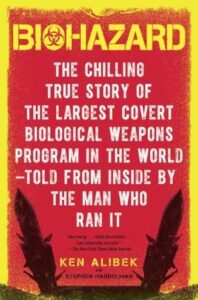
Yeah, crazy, crazy times. It reminds me. I read a book called Biohazard years ago, and it really, yeah, kind of terrified me, and I kept getting bad dreams and so forth about it. The full title is Biohazard: The Chilling True Story of the Largest Covert Biological Weapons Program in the World, told from the inside by the man who ran it. It’s like if you really want nightmares, there’s a good book to read. I mean, it’s just like, yeah, that was not good. That was, I mean, not that was not enjoyable, an enjoyable read. It was a fascinating read, and I couldn’t stop until I finished it. But it didn’t fill me with love, light, and joy. That’s for sure. Yeah.
Hopefully, we don’t have to deal with a situation like that. But we must be aware of these risks because, you know, anything can happen, and I think we live in a really unpredictable era, both for good and for bad.
Yeah. So I know we’re getting close to time here. I’m curious to hear from you. Goldman Sachs, which I know wasn’t a very long time, but what were some of the biggest lessons and kind of warnings and epiphanies that you got from what year or two years that you were at Goldman Sachs?
One of the main things I took away from that time was the importance of discipline. I’d say one thing I admire about a lot of people from Goldman Sachs is that they’re super disciplined. They wake up early, they go to the gym, they then work really intensely, and do it all over again for like 35 years, and maybe that level of rigidity is not, you know, I’m not as much a fit for joining the army. There’s a reason, by the way.
I think the 2030s will probably be more like the 1950s in terms of the importance of face-to-face. Share on XA lot of veterans do very well at Goldman Sachs. I never actually thought about it that way. Still, that kind of mindset of being in the army, I think, is sort of similar to Goldman Sachs in terms of there’s a degree of rigidity to it, but also I really did admire the discipline. And then when I started doing Venture for Canada, I kind of carried forward that discipline with me. And I was, you know, when I first started doing Venture for Canada, I was like 22-23; I turned 23 like a couple of weeks into venture for Canada.
So that’s why I’ll mention those two kind of ages, but you know, I remember being like 23 and then going and, you know, being by myself, having no boss, but I was able to apply that Goldman Sachs discipline of waking up at six, going for a run, starting work by 8 a.m. And I think a lot of 23-year-olds wouldn’t necessarily have had that level of discipline and self-drive, and that was also cultivated through experiences I had in high school and university. But I think it also was cultivated by working at Goldman Sachs.
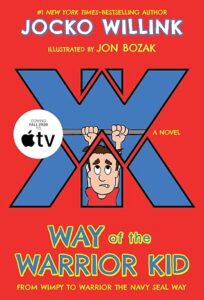
Cool. Oh, good for you. And that reminds me of a book for kids that I actually read to my six-year-old multiple, multiple times, and it’s called the Way of the Warrior Kid. Former Navy SEAL Jocko Willink wrote it, and it’s a really inspiring book for kids about discipline and doing that sort of stuff. Waking up early, hitting the gym before you even go to school, and doing it through the good times and the bad times- the times when you don’t feel like doing it- and getting, you know, all sorts of problems solved, and being resilient, anti-fragile, and being a warrior, being a kid that helps other kids deal with bullies and so forth because of it. It’s just a great book. Have you heard of it?
I haven’t heard of it, but yeah, I’d love to check it out. It sounds like a Warrior Kid, right?
Warrior Kid. Yeah,
The Way of the Warrior Kid. Okay,
Yeah, yeah. Anyway, so if our listener/viewer wants to get your book and, you know, follow you and learn from you, where should we send them?
The first step in developing a better relationship with uncertainty is understanding your current relationship with it. So I recommend you fill out a short quiz to better understand your current relationship with uncertainty. The quiz you can go visit at scottstirett.com/quiz, and the quiz just takes a couple of minutes to fill out, and it’ll give you a score of your current relationship with uncertainty. I really recommend you take this quiz because understanding your current relationship with uncertainty helps you take the next steps to develop the tools, habits and mindset to thrive in a rapidly changing world.
Awesome, Scott! It was a pleasure. Thank you for coming on the show.
Thanks so much, Stephan. Pleasure speaking with you too.
And thank you, listener. Go out there and make it a better world, and we’ll catch you in the next episode. I’m your host, Stephan Spencer, signing off.
Important Links
Connect with Scott Stirrett
App/Tool
Businesses/Organizations
Books
People
YouTube Videos