

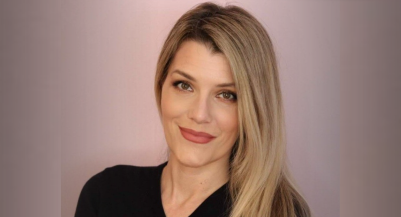
In this Episode
- [03:19]Ava Carmichael discusses a client who had a brand message that didn’t align with their direction, leading her to step in and guide them.
- [12:55]Ava shares her experience of attending denim shows and how it influenced her branding and digital marketing skills.
- [15:49]Ava shares her experience of using eBay to learn SEO and e-commerce marketing.
- [20:16]Ava mentions using Slido for an overview of client performance across various platforms.
- [31:48]Ava emphasizes the importance of video content marketing and how many brands shy away from it.
- [42:36]Stephan discusses the concept of breadcrumbs and following intuitive guidance.
- [44:04]Ava talks about the importance of distinguishing between intuition and fear and how to trust one’s inner voice.
Ava, it’s so great to have you on the show.
Thank you, Stephan. It’s great to be here.
Your bio mentions intuition. I would love for you to elaborate a bit on that. How do you use intuition in your marketing and client engagements? Where does it come from?
I read data to see what’s going on in trends in the marketplace. I think some people are born with it, to be honest. I think everybody’s got it. I don’t think everybody listens to it. For me, it’s a three-prong approach. Some of it is instinctual. It’s something I feel like I was just born with.
I read data to see what’s going on in trends in the marketplace.
I read data so I can see what’s going on in trends in the marketplace. Then some of it, I think, is just obviously experience. You go through things in your life, and you experience certain business ventures or projects, and you can see how things may play out based on past experiences. I think for me, I use a lot of different techniques in whatever it is I’m doing—building a brand, building a marketing plan for somebody. Everything, really, it’s part of everything that I do.
Can you give an example of a case where your intuition saved the day, maybe with a major client engagement of some sort?
I think, honestly, some of it can come from, I guess in this case, and I don’t want to mention any clients’ names, but sometimes a client can have an idea of what they think their brand is and the language they want to use out in the open. Sometimes it doesn’t really match with the direction they are actually going, or I guess, where I feel like it would be stronger for them. So I think I’ve had to step in a lot with some of my clients and say, “Is this part of your brand message, or which part of this is this?”
When you’re talking about somebody who has a personal brand or somebody who has products, sometimes the personal brand of who they are hasn’t been developed quite yet. It’s like putting too much of who you are personally into; maybe a product might not be wise until you’ve buttoned up your personal brand first. To avoid causing a disaster with the product you’re launching, you don’t want to have too much of the face behind the brand yet. Does that make sense?
Sure.
I learned how to do content marketing because fighting the press was incredibly difficult.
It’s like brand or product suicide due to poor branding. I don’t know if that’s actually intuition, but there’s always something inside of me that maybe speaks louder. I think I listen to that more or less when I’m doing any kind of business transactions or any kind of dealings with clients or even friends.
Got you. How did you develop your own personal brand, and then what kind of lessons and skillsets did you then carry over to helping your clients with their brands?
Wow, that’s interesting. I feel like I’ve been building my brand for a very long time, inadvertently, because growing up, we didn’t have the internet. I think I learned pretty early on that everything I do online is connected to me, and that’s part of who I am, and that’s part of my brand. I started blogging pretty early. I didn’t really do it for anything other than for myself. It wasn’t really to gain any kind of recognition or to—actually, at the time, I didn’t even know I was building any kind of brand at all. I was just blogging.
I would blog about what was on my mind or what I learned that day about business or whatever. It was just a random assortment of thoughts. I think at some point I realized that everything I’m publishing online becomes an extension of who I am. I think everybody should understand that you are your brand now online. It looks like everything you say and do just becomes part of how people perceive you.
I learned how to do content marketing because fighting the press was incredibly difficult. I was a fashion designer, but that always felt very separate from who I was because there were a lot of things in line with that fashion industry that I didn’t really align with. I didn’t find it incredibly sustainable.
Every brand and business needs to bite the bullet and start making more videos. Even though there are plenty of articles, many people are more visual than they are readers. Share on XIn some ways, it began to go against everything I truly believed in. I think I had to make a decision at some point. Am I going to keep doing this, or am I going to go do my own thing? Ultimately, I chose to go out and do my own thing because many of the companies I worked for weren’t aligned with where I was.
I think for me, building my own brands—and going a long way around here—because it was so expensive to do it, I couldn’t afford to hire anybody. So I ended up having to do everything myself. I learned how to do content marketing because fighting the press was incredibly difficult. So I’m like, “Well, I’ll just write about my own stuff, my own projects.”
The blogs on that side became part of a whole other type of thing. I learned that blogs can be about journaling or lead generation, content marketing, SEO, and getting your brand out there on a whole other level. In that way, I learned digital marketing by trial and error and by running Google ads. It’s so funny to even talk about it now because I was just so green back then. But as a result of having to do everything myself, I’ve learned how to do it.
On your website, you identify yourself to being a nerd—a branding and digital marketing nerd. How did you come up with that as your identity instead of maybe a geek, a wizard, or whatever? How did you find out you want the nerd?

I think the nerd part is just that I love the word anyway. It doesn’t mean anything derogatory. I feel like it’s just that I nerd out on analytics. I nerd out on the whole right- and left-brain part of it. It’s like, I love to think about how people think. It’s like, “When they land on a page, what makes them buy?” I love to understand that.
I love understanding what makes people buy something and what makes them connect with a brand. There’s that part of it, and then I love reading analytics, which, if you’d told me this when I was a child, I would never have believed you because I was never a numbers person. I was never into data or any of that. Once I started looking at the dashboards of Google Analytics and seeing where people were finding this page or Google Search Console, what terms they were using to search for how they found it, it’s like, “Wow, this is really fascinating. I nerd out on that kind of stuff, so hence, nerd.”
Got you. I’m cool with being a geek. I’m not as into being a nerd, which is kind of silly because I am a nerd too, but I don’t really put myself out there as one. Actually, my other podcast was called The Optimized Geek. I have two shows. This one, Marketing Speak, is actually the second one I started. The first one was called The Optimized Geek, and I changed it not too long ago to Get Yourself Optimized because I thought it might turn off some people who didn’t self-identify as geeks.
There’s a lot of really great personal development stuff on that podcast. I wanted people to get it. How did you incorporate fashion design into your business? Because I’m sure you learned some really ninja things in the process of becoming a fashion designer and doing that work, mood boards or something you did in fashion design, and then you brought it over to the brand building and digital marketing. Tell us more about this.
Whether you’re building somebody’s brand or marketing plan, you’re building a product, just like fashion.
Whether you’re building somebody’s brand or marketing plan, you’re building a product, the same with fashion. You would think, at first glance, how do they play together? I don’t know if they do. That’s what I’ve always struggled with myself. How do these two play together? But honestly, they do, especially whenever you are kind of that entrepreneur mindset anyway, which I am. I’ve always been that person.
For me, it’s like a brand architecture type. It’s like you’re building something. Whether you’re building somebody’s brand or you’re building somebody’s marketing plan, you’re building something, you’re building a product. With fashion, I was building a line, a brand, a specific product. There are a lot of key points that all intersect together for the middle of that one product or brand that you’re building. That includes things like PR, brand messaging, everything. The visuals that are all associated with one product, one brand, one line, one collection, or whatever it may be.
You can even take that part of the middle of that out, whatever that is, and you can replace it with anything else. It doesn’t even have to be a collection or a product. It’s whatever it is. In my world, it was fashion, but then I learned that you could take anything and replace it with something else, and it’s still the same kind of architecture, of sorts.
For me, I love fashion, but there was more to it even then than fashion. I discovered that I might be really good at building a collection, but I’m really good at marketing and selling it, too, maybe even better. When I realized that, I felt like I was really onto something. Then it was a really quick and easy pivot for me because I think I was already ready anyway to maybe stop working for larger corporations and do my own thing.
I think having built brands like that, I learned that it doesn’t have to be in fashion; it can be in anything. So I took all those skills—the hard and soft—and just applied them. There’s been such a variety of clients that I’ve worked with. It’s really about identifying the target audience and building concepts and language around that person.
When you're talking about somebody who has a personal brand or has products, sometimes the personal brand of who they are hasn't been developed quite yet. Share on XRight. Did you end up attending fashion shows and presenting your fashions at these shows?
I was mostly a denim designer. My specialty was denim. So I did attend a lot of denim shows, fashion shows for the companies that I designed for, sure. That was a fun industry.
How did you get into it? What’s your origin story there?
Oh, goodness. It feels like it was so far away that it’s even hard to understand, but I feel like it’s just something that was always part of my life. My grandmother was a seamstress, so for me, sewing was just like, “I thought everybody did that.” I grew up thinking everybody sews. My grandmother actually raised me. I think you and I have a similar situation with that.
Yeah, my grandmother raised me, too, for most of my early childhood.
Yeah. My grandmother and my grandpa raised my sister and me. She was of the depression era, so she had a sewing machine in the living room. She would always sew things, and she’d sew things for me. So I just assumed, hey, everybody sews, and everybody sews. I grew up putting garments together, sewing. I was always really creative anyway.
I grew up putting garments together, sewing. I was always creative anyway.
I think I came up with my first denim line at age 12. It wasn’t serious. I was kind of obsessed with fashion and brands as a child. I knew which car brands I loved, and I knew which clothing brands I loved even as a child. I don’t know why, but I think it’s just the designer’s eye. I was attracted to certain things like that.
I grew up just thinking everybody sewed, and so I sewed, and I started making clothes for people, like one-offs. Then I started a swimwear line back when the internet was still very, very young. I built my first website in Dreamweaver.
All right, I remember that.
This is back when Homestead was a thing, and everybody got a Homestead website.
Actually, Homestead was a client back in the early days.
I grew up putting garments together, sewing. I was always creative anyway. It was kind of funny when I think about you talking about the origin story. I was sewing clothes, trying to launch, and then using the internet to sell. Even back then, I was still kind of merging the two together because I love the internet. I love the possibilities it offers everyone. It was just this whole new world that was opening up. I dove in feet first.
I started designing, I started selling, and then I would go to work for somebody. I don’t know, it was just something that was always in my life, to be honest with you.
Got you. How did you incorporate content marketing and other aspects of digital marketing, in those early days, into the fashion stuff that you were doing? There’s overlap.
There definitely was. I was on eBay in 1999. So eBay taught me a little bit of SEO because I learned that how I listed it in the headline I used made all the difference in the world in whether I was even going to be found on eBay. So eBay taught me a lot about ecommerce and marketing online in a light way.

I was like Sophia Amoruso before. I think I was actually there at the same time she was the founder of Nasty Gal. Thinking back now, everything really overlapped with me because the internet, building websites, ecommerce, and then fashion. It’s just that they worked together for me.
Everything is non-random. There are so many coincidences that when you look back, and you kind of piece it all together, it’s like, “Wow, everything was perfectly aligned and meant to happen in the way that it did.”
I believe that, I truly do. It is not until we’ve been talking about this now that I’ve actually realized that, wow, those two really were playing with each other the whole time. I always felt like they were separate. They really weren’t at all. When it was time to stop playing with both of them and go work for a company or something, then I would put everything aside and do that. But it was just like, “When I wasn’t working full-time for a company, definitely, the entrepreneur side came out, marketing came out, ecommerce, and fashion all combined for me.”
You were a young entrepreneur, designing clothes as a pre-teen. Did you get some press through this process?
No. I wish. I look back on my life, and the one thing I really wish I had had more of was mentors. I just didn’t. I was floating around as a child with all these crazy ideas, but nobody to really rein them in or funnel them in a good direction. I think I was just kind of a little wild entrepreneur, crazy creative. Had somebody been able to harness that, probably would have had all kinds of things accomplished before I was 20, maybe.
eBay taught me a lot about e-commerce and online marketing in a light, fun way.
Yeah. The mentorship that’s typically available to kids is not very impressive. I was doing Junior Achievement for a little while as a teenager in high school, and I was so unimpressed. It just seemed like arts and crafts or something. It was so lame. It was not working with a real entrepreneur mentoring me on how to start a business. I had a friend, a 13-year-old, who was also 13. He had his own lawn sprinkler installation business. By the time he was 16, he had bought himself a brand-new Ford Mustang convertible.
Oh, wow.
eBay taught me a lot about e-commerce and marketing online in a light way. I ended up working for him a little bit. I was one of his grunts, basically, digging trenches. That didn’t last long. I didn’t like manual labor. But I was really impressed with what he had built as a young teen.
Anyway, let’s talk a bit more about analytics and how to glean actionable insights from dashboards and reports in Google Analytics and Google Search Console. Maybe you’re using Google Data Studio as well, and whatever other third-party tools that help us to find some opportunities, some nuggets of gold, or whatever the analogy is.
Oh, you mean from the analytics?
Taking all these reports, graphs, charts, and the ability to export, sort, filter, and all that. Most people, their eyes just glaze over at that stuff, or they don’t find the time to do it. If they do go in there, what are they going to get out of it other than just information? It’s really hard for a lot of people to get actionable insights out of these reports, so maybe we could talk a bit about that.
Create really good quality content. Structure it properly. Concentrate on the right headlines. What Google looks for the most is just quality content. Share on XI use a company. I think they’re based out of the Netherlands. I’m not sure. They’re called Swydo. I don’t know if you’ve heard of them. For me, they’re kind of gold. It’s not always the same as using Google Analytics, which is solely what I use. Then I can write reports based on what I find there, but every client is different, and they all want to know different metrics. I use Swydo because it pulls everything from their ad campaigns on Facebook and Google. It shows which social media posts performed best. It’s like an overview of how the month went, showing what performed really well. How many followers did you gain this month? How many did you lose?
That one’s a really nice tool for the scope I use overall. But when it comes to Google Analytics, it really depends on the client and what they’re measuring. So if it’s like a Shopify client account, obviously, what they’re going to want to know is if our sales are higher this month than they were last month? Shopify does have its own insights, but I don’t know if they’re quite as detailed as Google Analytics would be. I think, for me, what I like to pay attention to the most is the content that I’m actually creating and performing.
Is Google paying attention to that content? Is it bringing in more organic? Because for me, we can set ads all day long, but I think at the end of the day, what I like to see is how their site is performing organically. Because this is money that they don’t have to spend on Google ads. A lot of times, I feel like organic outperforms Google ads, especially when people are looking for specific pieces of content. They’re not going to click on an ad because they’re going to feel like they’re going to get fooled into it. I think what I look for the most is how we are performing organically. Is the content that we’re producing working? You can see that month over month.
Google Search Console can help a bit with that, but only with the pages. If you expand the pages in Google Analytics, you can see which pages get hit the most and how long people spend on each page, which tells me a whole lot. Is this the content they’re actually looking for? Some do really, really well, and sometimes it’s just a bounce-out. I’m thinking, “Okay, maybe that was just a bot, it didn’t answer the question right away, or whatever.” It wasn’t what people were looking for, but I love it whenever I can see that people spend some time on a page. Maybe they click into another page too while they’re at it. Overall, that’s a positive metric, whether it’s an ecommerce site or just content.
I look back on my life, and the one thing I wish I had had more of was mentors.
Sure. Are you familiar with Microsoft Clarity?
I should be, but I’m not. I look back on my life, and the one thing I wish I had had more of was mentors.
Until this year, I wasn’t familiar with it either. It’s free, just like Google Analytics, and they said it will remain free permanently.
Interesting.
It’s user experience analytics. It’s different from Google Analytics. You can see when people are scrolling or not, and whether they’re doing what’s called rage-clicking. Hey, this thing is supposed to be clickable. I keep clicking on it, and it doesn’t do anything.
Is that a little like Hotjar?
Essentially, it’s like Hotjar.
Those are definitely very interesting tools as well. You can see where everybody clicks, mostly. Obviously, everyone knows that the upper-right-hand corner is a hotspot on most websites. That’s why the contacts or call to actions always seem to be on the upper right-hand side. But it’s really interesting to see how far they scroll down. All your best content up top because that’s where most people spend their time anyway, it seems. That’s a really interesting one, too. I have to check out Microsoft Clarity. I’m going to have to write this down.
It’s a really cool tool. I played with it after hearing about it at PubCon this year. I spoke at it, and one of the keynotes was the program manager for Microsoft Clarity. It was compelling. I had never played with it prior to hearing about it at that conference. How about other tools for SEO, for paid search, and so forth? For example, Ahrefs, or what are you using?
I have used that. SEO, for me, is, and this is a funny, funny subject for me because you’re the SEO expert. So I feel strange talking to you about any SEO.
You’re talking to the listeners. We’re having a very personal conversation with the listeners, talking into their ears right now.
SEO is a funny, funny world. I’ve used SEMrush. Ahrefs, I’ve used briefly. Obviously, if it’s in a WordPress site, I use Yoast because that helps a lot. I think most people have a WordPress site and they’re writing content. I think they should definitely use Yoast. It would help them. It will train them just the basics.
You’re talking about when you’re writing an article or blog post, and it tells you if you’re incorporating the keywords and so forth?
It helps to get it nice and organized. I think for someone who doesn’t know any SEO, using something like Yoast is definitely a positive tool. Obviously, I don’t think you can use it for anything other than WordPress, but it’s pretty important to use it if you’re just starting out.
I have Yoast installed on every WordPress site. By the way, Joost de Valk was on this podcast. That was a great episode deep-diving into WordPress SEO. Listeners, check that out. What about Moz? Are you using Moz at all?
I’ve used Moz as well. I know it’s changing all the time because Google changes often and things like that. This is just my point of view, but what I’ve learned most from SEO is not to overthink it. I’ve learned that just creating really good-quality content, structuring it properly, using the right headlines—the H1s and the H2s—and including images with alt tags. I think what Google looks for the most is just quality content.
People should focus more on writing high-quality content, while not forgetting the keywords they’re trying to rank for.
SEO is a funny world. I think people should focus more on writing high-quality content, while not forgetting the keywords they’re trying to rank for. I think what I have learned personally is that whenever you create quality, SEO-driven content, other people start linking to it. When you’ve got other authoritative sites linking to your content, it tells Google, “Oh, this is a quality piece of content because Vimeo just linked to it, or somebody like that just linked to it.”
I think for me, I try not to overthink the nuts and bolts, the internal parts of SEO. I write something. If it doesn’t start indexing, most of the stuff I write is indexed pretty quickly on some of the sites I work on, because those sites are really old. If you’re constantly updating, it’s kind of like that. It’s just alive, I guess, for Google. They know these people always pump out quality content.
Usually, whenever I create something, it pops up pretty quickly on Google. If it doesn’t, that’s when I start digging in, and I start thinking, okay, why is it not? What am I doing wrong here? Am I trying to capture something that’s not relevant? Am I trying to capture something that’s too difficult?
Then I try to edit it, but whenever I go into it, I don’t overthink it right away. I know that’s probably not great advice for most people who want to implement more SEO into their website, but I think the key is creating quality content.
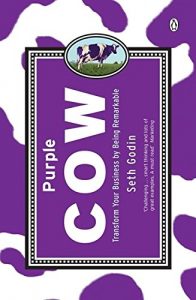
Yeah, I would agree with that. I would even take it a step further and say, make it remarkable content. Seth Godin, in the Purple Cow, talked all about remarkability. Worthy of remark is his definition of remarkable. If that’s the standard you’re working toward, it’s not just going to be, “this is a really solid piece of content, “But this is worthy of remark.” “That’s like your North Star.”
Do you like what you’re saying about don’t overthink it because you can tap into your intuition without having to use all the tools like BuzzSumo or whatever else to figure out what to write about?
You just access the universal Google, as my wife calls it. It’s like your intuition, your sixth sense. Like, “Okay, what am I going to write about that’s going to make a difference, help people, and be something that’s worthy of sharing, of linking to, of reading the thing fully, and not just doing a quick skim over it?”
Whenever I create something, it pops up pretty quickly on Google. I guess for me, it’s like, “I think about the stuff that comes to me. I want to know this information too. If I want to know it, it must mean that there are probably other people out there who do too.” A lot of times, I’ve written content for myself. It’s funny because when I write, sometimes I feel like it’s coming from somewhere else. It’s really interesting. Then whenever I press the publish button, I realize when I read it, it’s like, “Did I write this or did somebody else write this?” That’s another form of using your intuition, I guess, and just being in that flow whenever it’s just coming through and coming out. I think everybody has the ability to do that, but whenever you feel it—
Everybody has intuition. In fact, everybody is psychic. Most people would argue with you on that one and say that, well, I’ve never had any paranormal experiences or whatever. But the thing is, if you go with your gut, it’s not just your subconscious, or maybe it’s not even your subconscious at all. It’s like your angels or your higher self whispering into your consciousness.
When you say it’s, “I don’t even know where that’s coming from, what I just wrote, it could be from your higher self, from source, from your angels, from your guides.” It’s not just your brain. It’s not just you coming up with this stuff. I believe that completely. I’ve had lots of experiences of that too. I have corroborated enough evidence that I’m convinced. I don’t need to convince everybody else. Diehard skeptics can do whatever they want, but I know it works for me. What are some of the aspects of content marketing that you think are neglected or not done well?
Whenever I create something, it pops up on Google.
I’m trying to think. There are so many different types of content marketing.
Take a few examples, like the different content types.
I love video. I don’t think enough brands are doing video. That’s the one thing I push the most whenever I meet a new client. I’m like, “We got to do video, we got to do video.” Most people shy away from it. They don’t want to be on camera, they don’t want to talk. They don’t want to be a part of that brand image.
I feel like it’s definitely where we’re going. I think every brand, every business is going to have to just bite the bullet and start making more videos. I think there’s definitely a lack of video content. There are plenty of articles out there. But I think for the people out there who want more visuals instead of reading about something, even podcasts, if they want to hear about how something is done, or information that way.
Speaking of podcasts, I didn’t use to do video. I had audio-only podcasts for the first few years. It wasn’t until 2019 or so that I started taking videos as well and posting them to my YouTube channel. It’s been really great. I’ve had some 30,000-view episodes. That’s a lot of watch time added to my YouTube channel. If I hadn’t been publishing those videos on my YouTube channel, I wouldn’t have gotten that.
I had, prior to that, uploaded (or my team did this) some audio-only episodes to my YouTube channel, but that doesn’t hit the mark because it’s a still image. Maybe it’s a waveform of the audio or something, and it’s not really that engaging. It’s not like watching a couple of people having a conversation. So if you’re going to publish your podcast episodes on YouTube, definitely record a video of you and the guest.
I agree with that.
What would be an example of a video that you think is fantastic content marketing? I’ll first give an example that comes to mind that I love. It’s Casey Neistat, and it’s Do What You Can’t. That’s (I think) his featured video on his channel homepage. It’s so well-produced, such great storytelling, and so inspiring. It’s great. Very memorable, very remarkable.
Yeah, he is good. I’ve actually watched a lot of his videos, and he is very inspiring. I haven’t watched anything of his in a long time, but I always go to Gary Vaynerchuk. The guy is just a monster for content. I mean that in all the best ways. I would say out of a lot of the people that I’ve heard recently, he’s probably one of the most inspiring people I’ve had a chance to listen to.
There are no frills, but the message is so good. He has such a way of moving people into action. I think his video content is just great, even just stuff off the fly. He’s in the back of a cab, and he decides, “Hey, I’m going to make a video right now.” He has such a very personal touch with all of his fans, followers, Gary nation, I guess, they’re called, Vaynernation. I really appreciate the way he connects with people through his content marketing.
Do you have a favorite video of his?
I’ve watched so many. Because he’s always making so much content, but one that stands out in my mind was one of the first keynote speeches he did. I can’t remember exactly where he was, but it was so profound to me that I changed everything that I was doing at that point. This was probably 3½-4 years ago.
It was a keynote speech. He might have been in Amsterdam, I’m not sure, but it was a keynote speaking engagement he had. It was incredibly profound. It changed the course of everything I was doing at that time.
Looking back, you know how there are no coincidences; we’ve talked just briefly about that. How did that plugin as a puzzle piece so well into your life at that time, and in hindsight, like, “Wow, that was exactly what I needed?” The source hooked me up; it got me exactly the thing I needed at that moment to leapfrog or jump to the next level.
It’s funny because sometimes I feel like it’s coming from somewhere else when I write.
It’s funny because sometimes I feel like it’s coming from somewhere else when I write. It did. I think there was a time when he mentioned in the speech that there are going to be some things that you’re really good at. When you find out what those are, you triple down on them, but you’re not going to be good at everything. I think I went my whole life trying to be good at both fashion and marketing. It’s like I had to choose one.
I realized I think it’s time to just let this full-time fashion career go, just completely cut it off, and not necessarily just burn the bridge, but it was time to make a decision. I realized that I hadn’t made a clear and defined decision in my life and in my career. I was always teetering on both. When you do that, you find that you can only give a certain percentage to each one instead of 100%.
I realized by letting that go and it not being all of my efforts or even 50% of my efforts, that I was going to be able to give 100% of my efforts to something that I was also really good at, too, and that challenged me more. For me, it was marketing. I was like, “Okay, I’m going to let that fashion, that whole thing just go. I’m going to put everything in boxes.” I put it all up in my attic, out of sight, out of mind.
It was done. The decision was made. That was it. The moment that I concentrated everything on just marketing, my career, income, everything just exploded after that. Because what I had been doing was just putting a little bit here, a little bit over here, a little bit over here, and expecting 100% of results, and it wasn’t happening. I think the turning point for me was realizing I had to make a decision.
What we’re really good at prevents us from being in our zone of genius. If we’re not doing only our unique ability or our zone of genius as much as possible, we’re holding ourselves back, and we’re not fulfilling our destiny. That zone of excellence is deadly. Gay Hendricks talks about the zone of excellence versus the zone of genius. If you’re hanging out in the zone of excellence, you’re really good at this thing. But it’s not your gift, it’s not your mission, it’s not what lights you up, it’s not what you’re here for. You’ve got to let it go.
Anything that I feel is intuitive shows up in very strange ways, and I know it’s not coming from my fear-based thoughts.
Anything that I feel is intuitive shows up in very strange ways, and I know it’s not coming from my fear-based thought. I think after a while, the fashion just started feeling too shallow. It wasn’t really giving anything back into the world. Then I thought to myself, is marketing giving anything back? Then I realized, in some ways, it is because of what I’ve done and what I’ve helped people to achieve, it’s dreams and goals. It’s not just helping them with building a business; it’s their whole livelihood.
I believe that when everybody is thriving, that’s where we all need to be. Everybody needs to be thriving. Everybody needs to be successful with their business or whatever they’re doing, their career, and earning what they deserve and what they want to be earning.
I remember Tony Robbins saying that all that exists in business is innovation and marketing. If you simplify it that way, as Tony describes, then marketing is a critical component in making the world a better place. Because business is what makes a lot of things happen in the world. If your marketing genius is able to assist brands that are making a difference in the world to reach more people and make more of an impact.
It’s true. I always wondered. How do these two work together? How do I bridge this? Most of my clients can still email each other, and we have great relationships. It’s been more about building relationships than it is just about business as usual.
It’s pretty wild to think that people in your life are there for a reason, including your clients. Even clients that didn’t work out, they’re there to help you on your journey, and you’re also there to help them on their journey. We’re all just, at the end of the day, walking each other home, as Ram Dass would say. If you could think of an example, you don’t have to say the name of the client.
But is there somebody that comes to mind that’s like, “Wow, that was divinely inspired, or that was an incredible synchronicity that happened in relation to a client or even just a prospect, something that you were able to achieve or they were able to achieve?” You guys needed each other, and it wasn’t even just like a client. It was somebody who was assigned to you in this life.
Absolutely. There’s one that stands out in my mind 100%. She’s actually a spiritual coach for coaches. She’s amazing. The way we just came together was just through a mutual friend. She was struggling with some things with her website. I understood where she was at. I think it was four or five months of working together. What we were able to do together was just amazing. I felt like it was very cosmic. It felt very meant to happen for me, and I think for her, too. I felt very connected to her. It was a very nice experience.
That’s awesome. One example that comes to mind for me wasn’t a client. It was a prospect, but you can’t make this stuff up. It’s just uncanny. Forty-five minutes prior to our sales call, he heard Tucker Max and Dan Sullivan talk about me in a recording. It was a webinar, something, or maybe it was a podcast.
It wasn’t about SEO at all. It was about how to write a book. Tucker Max was talking about whether you can write a memoir, then you’re going to be the only one with your story, so probably, you don’t have a lot of competition in the traditional sense. But if you’re going to write a nonfiction book and you’re going to write about SEO, or you’re going to go head-to-head with Stephan Spencer and his 1000-page SEO book, that’s not a good idea.
You need to niche down to something that is not going head-to-head with somebody who’s already got an established plot of land like that. He heard that 45 minutes prior, what are the odds? What are the odds? There are so many synchronicities and “chance occurrences” that aren’t chance. Just magical. I love it.
It’s really about becoming attuned to those inner voices and knowing what’s what.
It is. I call them breadcrumbs. It’s really about becoming in tune with those inner voices and knowing what’s what.
Exactly. Yup. Just follow the intuitive breadcrumbs. Don’t go against your intuition. That always leads to a mess.
It does. It really does. I think for most people, it’s like, “We have to decide if it’s intuition or if it’s fear-based.” It’s like, “When you’ve got a nagging feeling, is it a fear or is it your own thought? Where is it coming from?” I think when people start to train that portion of their mind, they can understand what’s theirs and what’s something else. For me, it becomes a thing where you have to do this. It feels like my grandfather sometimes, nagging at me because that’s the kind of personality he was.
For me, anything that I feel is intuitive, it shows up in very strange languages, I guess, or in just very strange ways, and I know it’s not coming from my own fear-based thought or whatever it might be. Sometimes it feels really impulsive. I have to sit with that for a moment and say, “Okay, before I do something impulsive, let’s think this out a little bit.” I think for everybody, it’s really about becoming in tune with those inner voices and knowing what’s what.
You can ask. Is this coming from the light? If it’s not, they can’t answer it is. That’s a fun way to end this episode. If our listeners are interested in working with you and having your marketing magic applied to their business, how do they get in touch?
Just avacarmichael.com.
Awesome. What’s your most active social platform?
Probably Instagram.
Okay, and it’s @avacarmichael?
It’s just @avamariecarmichael.
Okay. Awesome. Thank you, Ava, and thank you, listeners. I hope you go out there, make some impact on other people’s lives, and do good marketing. We’ll catch you on the next episode of Marketing Speak. I’m your host, Stephan Spencer, signing off.
Important Links
Connect with Ava Carmichael
Apps and Tools
Book
Businesses/Organizations
People
Previous Marketing Speak Episode
Previous Get Yourself Optimized Episodes
YouTube Video