

In this Episode
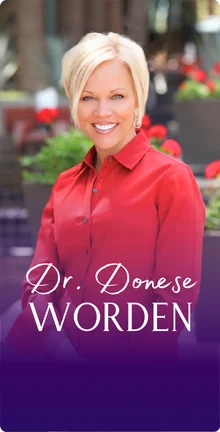
- [02:48] Stephan asks what has changed since episode 309, and Dr. Worden shares her work in metabolic oncology and the launch of the MORE Alliance, which treats cancer as a mitochondrial and metabolic disease.
- [10:32] Dr. Worden explains the new exercise research showing that three one-minute bursts of effort can beat 10,000 steps and traditional interval training.
- [13:41] Stephan digs into supplement quality, and Dr. Worden warns that most products may be mislabeled or adulterated, and that heat damage and Amazon sourcing add further risk.
- [19:27] Dr. Worden describes her company Prove It, which helps health and wellness brands stay compliant with FTC and FDA rules.
- [24:11] Stephan raises the peptide controversy, and Dr. Worden explains that the FDA allowed compounding rather than approving peptides, and why cancer concerns make her cautious.
- [28:32] Stephan asks which biohacks she uses herself, and Dr. Worden covers her home hyperbaric chamber and infrared sauna, plus the Project Neptune 100 underwater study and its telomere findings.
- [36:32] Stephan admits to chasing his Oura sleep score, and Dr. Worden explains why wearables are unreliable for sleep, especially after 50 and during menopause.
- [41:14] Stephan asks about eating windows, and Dr. Worden says fasting should be personalized, since genetics, menopause, and muscle loss all change what works.
- [46:18] Stephan asks for a self-checkup, and Dr. Worden walks through her seven pillars of sleep, body, digestion, energy, mental clarity, relationships, and purpose/spirituality, each rated 1 to 10.
- [55:11] Dr. Worden explains why digestion is the lowest pillar score for most people and why gut health, stress, and the microbiome matter so much.
- [59:34] Dr. Worden closes by naming purpose and spiritual connection as the most important pillar, and shares how she changed her own interval training advice when the research changed.
Donese, it’s so great to have you back on the show.
It’s so great to be here. I always learn so much from you. I’m just glad to be here.
Yeah. Well, I’m grateful for you too. And the last episode was a while ago, episode 309. We went into some pretty awesome topics there, but we’re going to cover some new stuff this time, and maybe, if you could, catch us up on what the latest hot buttons are for you? We recorded last time, if you can believe it, in July of 2021, ages ago.
Does not seem that long ago. Oh my gosh! A lot of things have changed. Oh my goodness! Okay, well.
Yeah.
Well, let’s start with, you know, just playing. I still see patients and clients from all over the world, mostly oncology patients, because I specialize in metabolic oncology. Along those lines, we have developed an alliance of top researchers and doctors worldwide who are studying or using metabolic oncology tools and therapies. That’s a ketogenic diet, hyperbaric oxygen, and repurposed drugs. So I am running that foundation. I am, you know, one of the founders with Dr. Tom Seyfried, and we have not officially launched. It’s probably going to be in the next month, but we’ve got top-line researchers.
We’re really changing and questioning the paradigm of how we’re looking at cancer, how we’re studying it. What is cancer? It’s really less than 10% genetic, so we know it’s a mitochondrial and metabolic disease, and so we’re challenging and changing the paradigm in our way of doing hard bench science at major institutions. It’s going to be a hard rock to pull up the hill, but we are, and I work with traditional oncologists all over the world. They allow us to say, “Okay, here are some things that may even make your standard of care work better or have fewer side effects, but in their own right, these therapies are anti-cancer.”
So that’s exciting, and that nonprofit is soon to launch, and that’s a big that’s a big thing that I’m literally running. Yeah, so that’s big. I love it. And then patience, and then I still love to speak and do podcasts like this. So anyone who wants to hear about the world of what I’ve got going on, I’d love to get out there more. I love speaking on stage. I have a lot of background in television broadcasting and all the things that I’ve done. So time to get the message out and do advocacy work, and there are a lot of studies that we’re doing now that I’m involved in.
I’m a published researcher already in cancer, but some of the newer ones we’re studying music with caretakers for other stress levels. That particularly caretakers for Alzheimer’s. That’s a study in progress now. We have another study using a microscope called a Seahorse to watch mitochondria change with music. So now we say, listen, we don’t have to spend a lot of money to do all these things. These non-invasive things we can do for ourselves can change us at the cellular level, in what the mitochondria do. And by the way, it’s not just- remember, in biology you study that it looks like a kidney bean and it’s the powerhouse of the cell that makes ATP.
Yes, but that’s only a fraction of what it really does. It takes your food and oxygen and converts them into energy. But it’s a motherboard. It’s the communication between all the cells and all the organs in the body. It is a master, master communicator, and there are many other things that it does. That’s a whole other topic that we could get into at some point, right? On a different note, let’s talk about mitochondria. But it’s a buzzword right now, right? In health and wellness, everybody’s like, “Here’s a supplement for mitochondria. Here they say, “Well, those are not proven, and we’re a little afraid of some of them with cancer biology because what supports the mitochondria in certain ways may also support cancer cells.
So we have to be careful with what we’re doing. But our therapies are safe and effective, and it’s just exciting to be part of it because it’s a big paradigm challenge and change, and having, let’s just say, the strength or the ability to say, listen, we haven’t moved the needle much in cancer. Maybe we’re looking at it without the entire picture, and that’s where we’re coming from, and that’s exciting. So let’s see what else the nonprofit, the patients, the speaking. I love it. There are a lot of other things, but I really enjoy the research.
Sleep, exercise, good food, and good people around you. Those are the things that are anti-aging and longevity. Share on XAnd you have a supplement company too, right?
Well, I’ve got my website, which we probably have 40 different companies, but what I do is even the companies that I trust, right? Even those companies, I make them give me more than a certificate of analysis. I make them show me that batch, that lot number on that bottle. I know what capsule, what’s in there and what’s not in there. No bacteria, no, you know, fungi. It has in there what it says. All the things that you need in quality control, and that’s a full-time job for somebody on my team.
But I still do that. And yes, I have a line that the formulas are done. I’m kind of looking for the right partner in distribution for it because it’s another one that will kind of revolutionize what we do and how we do it-it’s not more capsules to take. It’s different. So I’m excited about that too.
You got a lot going on.
Well, but you know what? I tell you what I love is like this, right? Is my truth in medicine? Finally, the patients kept saying, “We want more of you. We want to ask you questions about what you think about skincare or the environment or things that we don’t get to in our visits, and so I started the Truth in Medicine LIVE. It is a Zoom. We go over a topic, and I keep everybody up to date. What’s the latest? Get them out of the misinformation. What they’re hearing on social media that needs to be, you know, it’s been misrepresented.
Get it down to what we really know and don’t know about the topic, and then they get to ask questions, and that’s fun because I get to work with everybody in a different way and not have to be one-on-one. So that Truth in Medicine LIVE program is growing. I’ve done no advertising at all on it. It’s just in-house right now, but we’re about to do that and grow it, and I really enjoy that.
Is that a paid program? Is it just for your clients?
It’s paid right now. Nobody knows about it except my patients and clients. It’s only right now. It’s only $44 a month, and boy, they get a lot. We give them assets, and there’s a library they can go back and look at, and then they can look at all the documents. We just had new research coming out about exercise, big, big changes, so it keeps them up to speed on it, but in a way from me as a clinician and a researcher, in a credible format, not just a large. Headline and running with it, you know, of saying, “What do you think about cold plunges? Well, it’s great. Brown fat can teach you all about the good things, but people have died, have heart attacks and strokes from it. So again, not everything’s for everybody. And learning more about these biohacks and all the things they’re reading about, they’re just confused. There’s a lot of misinformation. They don’t know who to trust, and so, you know, I’m the one to trust.
Yeah. So what would be an example? You said the big changes and exercise, like what was that?
I was recommending interval training a month ago. It was the best we had. I just changed it. I don’t feel bad. Here’s new information that was still good and beneficial. But let’s do better. Share on XYeah, that just came out. Well, it was a big, big paper. Let me just explain that: when we talk, let’s take interval training. That’s the big thing. We know we need to do strength training. We get it. We know that. Then there’s the whole 10,000-step thing. Then it became 7000 steps. We knew that interval training meant hard and fast, and then calmed it down. Hard and fast, calm it down. You build up to about one or two minutes all out, or 80, at least 80% of your heart rate, right? You do that, and then you calm down. You keep doing it about five repetitions, three times a week. That was the goal, and that was based on science, and it wasn’t wrong.
But now we know something different, especially about the steps. It’s that a big, big study came out, and then there was a research group, so researchers get together when something like that happens, especially in exercise physiology or among physicians, and they get together and say, “Let’s crunch this thing together. Let’s look at this study because this is very different.” And they did, and it’s all over now. This is something going through some of the podcasts and the social media now recently, and here’s what it is in a nutshell. Right there, when we were saying, here’s what you need to do with interval training: 10,000 steps.
That was based on people doing a questionnaire. People would say I did this long or that, and they would fill out something, and then it was put into a bucket that was either moderate or, you know, more intensive exercise. There are a lot of flaws in it when people are doing their own thing, and they put wearables on people to really track what is found now, and everybody’s loving it. It’s a short burst. Three one-minute short bursts are beating the 10,000 steps and the interval training and everything else.

So people say, “I don’t have time to exercise.” Yes, you do. You still want to lift. Got to get to the gym. But every day for 1-3 one minute, like running to the mailbox and back. About seven. You don’t even have to get to 80% of your heart rate. About 70% you’ve got to get out of breath. But you got to do something-a sprint, run after the kids, do something for one minute, get that heart rate up into that. You do that three times; it’s beating all the others, and that’s what we call, you know, real data, not objective data that was from these wearables.
So now everybody’s going well. Okay, it’s the short burst beats, even interval training, and especially long terms. Like we’ve known hours on the treadmill, not great. You’re wearing down your joints more than you’re getting the benefit. So that was new, and it’s exciting because it really has been kind of combed through by researchers that I respect that looked at who funded it, how it was developed, what you know. Really, you break apart the study itself to see how accurate it is, and this one’s holding up, so that’s so.
You’re very thorough with that. Like, you dig into the details of these studies, these research reports, and you also do that with the supplements, not just the ingredients. As you said, you want to know the lot numbers and all the different quality control things that you look into, and on the flip side, you have people who just don’t know any better, me included, buying stuff off Amazon, thinking that they’re getting the legit thing, and it’s a knockoff.
That is exactly right. It’s a knockoff. They change the label, or it’s set in a hot warehouse; it got so hot. There’s no active ingredient, or it’s growing bacteria and fungi by the time you get it. And there are a lot of things. And then the original ingredients. Sometimes I would say I used to say 80% of I would suspect 80% of supplements were either mislabeled or adulterated in some way, not in a good way. Now even studies are backing me up on that. Now that number is kind of growing to 90%
Good things happen when we’re in a state where there are no bears around. Everything’s going to be okay. The body is wise. It knows what to do. It will repair itself. It will clean itself. Share on XThere’s a lot of bad players, and even the good players, even the ones that I use and that I have in my store, I make them show me that. Lot number, that batch. I make them show me, and they come directly to me from whoever manufactured it. It’s not sitting in a warehouse distribution. Who knows what happens? The things that I’m talking about. Lots of things can happen. So all I can say is I know it’s come directly from the manufacturer to me. I’ve done a very deep dive on quality control. That I know. I know what I’m sending out to the people that buy from my store. I know what they’re getting.
Bottom line, don’t buy your supplements from Amazon. Buy them directly from the company that makes the supplement. Well, because you don’t know that you don’t know what you’re getting otherwise.
But here’s the problem: you can do it from the, but a lot of the better ones are just doctors’ lines, so they can’t get it. So you have to find somebody like me, a doctor like my store, or a doctor that has a store. Now I will tell you, most doctors don’t do what I do. They, in fact, probably are the majority, and I know the majority. They’re not doing that quality control like I am, but you can’t get a lot of them because they’re doctors’ lines or physician lines only. So keep that in mind. But if you can go direct, go direct. But then you’re paying shipping on each deal from each company. It’s better if you can find a spot to say I can get most of my stuff from one place, so that’s why my store.
For example, we were looking to buy, what is it, like a binder for a detox, and yeah, you go to the website, and it asks you if you’re not a practitioner to put in your practitioner code so that you can buy the product.

That’s right. You can’t. But you can find most of these products appropriately. Hopefully, you’re doing the right thing for yourself. But find it on, you know, sites that have been vetted like mine. I just, I, I honestly, and I have other physicians that I respect. They are of good quality. They’re buying a physician line. They go, “Well, it’s third-party tested.” I said that doesn’t mean that’s what you’re getting. I’m out there training physicians and people with stores to be asking these questions that I do.
I mean, I make them sign off. I mean, I’m a stickler. If they get past me, they get past anybody. You know, I’m beyond the quality controls, so I’m just trying to train physicians to do this, and they say, “Well, it’s my product, it’s mine. I have it manufactured at so and so.” And I said, “When’s the last time that you had those quality controls, those check-offs, the bacteria, the mold? When’s the last time you looked at your C of A’s,” and they’re just not. They’re running a business, so it should be done, but it’s not.
Even if it is clean and unadulterated and high potency and all that, it arrives, and it sits in your mailbox for eight hours till you come home, and it was 90-degree heat. You just cooked your supplements.
Yeah. Some will hold up in the heat, but a lot of them don’t. And you know, you would hope the worst-case scenario would be that it just knocked down the efficacy level. You lost a few bugs, or you lost some of the potency, but it’s still not harmful. It’s just less potent. But heat can also make bacteria grow, fungi and other things. So that’s, you know, it’s hard. I mean, I live in Arizona, and we mail it out.
Some of the most stressed people I know are biohackers. They’re charting everything. They’re tracking everything. They’re trying the new thing. I believe that’s putting more strain on their body than if they weren’t doing any of the… Share on XWe mail ours out with cold packs, but by the time it gets there, that frozen part’s gone. But it kept it cooler. But there are certain products we do not ship in the summer. We just don’t, and we have other substitutes that we do. Well, I find the next best, you know, the next best supplement alternative that will take the heat. So we look at all those things.
Yeah, and then there’s you as a doctor and as a supplement provider and an expert, like a celebrity expert; you’ve got all these rules, all this compliance. You have to dance around because you can’t say, “oh, this cures anything,” because then the FDA or FTC will come after you. So it’s not easy.
Do you know that’s one of my companies? You know I’m an entrepreneur. It’s one thing I didn’t mention at the beginning. I have a company called Prove It, and I’ve partnered with another group. And what we’re doing is that these companies are making these claims, and some of them are doing it for the wrong reasons. Some of them are doing it because they just don’t know any better, or they think they can’t afford to do the right thing.
So my company, Prove It, is helping these health and wellness companies look at their website, look at their marketing, and say, “Listen, you can.” Say that it’s just a matter of time, and the FTC can come after you. In fact, I’m leaving in two days to go talk at a big conference with a lot of coaches and physicians and manufacturers of products. And I’ve got a big, scary talk forum about the fines that are coming down- million-dollar fines from the FTC, Federal Trade Commission, FDA issues- and in the health and wellness industry specifically, it’s always been, well. It’s too expensive. No, it’s not.
So I’ve got a way that I can take them through and teach them how to stay as close as they can to compliance without doing that. Now, what’s interesting, and this is what I will say to you. This goes back to the overall how the industry, health and wellness industry, is doing. There are some really good players that will say, “I want to do it right. I don’t want to be shut down, and I don’t want to be banned from my industry. So yes, I want somebody to take me through this and get through these pieces and review everything and make sure I’m as clean as I can be. You can still get visited by these agencies, but at least you’re ready, and you’re trying to do it right.
But here’s what’s disheartening: there are some companies that have told me I’m making millions every week. So even if they find me that 30 million, that’s not going to be too big of a ding for me, so I don’t. I don’t care. So they’re going to make the claims. They’re going to say all this stuff, and people are going to look online, and they’re going to go. They said this would do this or that, and they’re just waiting. They know they’re running in the gray.
I’m going to say red line area, and they’re just like, I don’t want to spend the money or the time. I don’t care. Let them find me. Let them find me. I said, but now I’m trying to scare them and say you could be banned if they see that you were really doing it on purpose, and so they’re starting to get stricter. And I think that’s a good thing. We need some breaks on a lot of the players, and you know, I’ve been in the industry a long time. I was on one of the teams, and it was because of my findings that we brought pea protein to the market. And so I know I’ve been on the backside of this industry, and knowing the good players and how hard it is to get good quality raw materials, and to do it right, you have to spend more, and then you have to compete against the next person that’s selling it, looks like your same kind of product for half the price.
Well, there’s a reason, right? It’s half the price, but we talk about the pharmaceutical industry having motives that maybe we might not like in all instances and funding research and how they do it, but the nutraceutical industry is just as bad. The nutraceutical world, it is. We’ve got some players that are taking advantage of the public. So I created Prove It, and we’re working with the good companies that want to try to make appropriate claims and not overreach what they should be saying.
Okay, and what’s the website for Prove It?
Prove It. Yeah, I just don’t know if we’ve got it back up. I just changed partners on that. I had a co-founder, and now I’ve redone it. It’s just me now, and I’m working with another group. I’ll tell you about it soon. You and I need to talk about it anyway on the business side, right? Of some things, but I will tell you that, yeah, we’ve got some very good things, and what we’re doing is looking at. It’s beyond A/B testing. It’s really some good testing.
Why aren’t you looking at the best way to market your product? Why aren’t you looking at what’s really working instead of throwing ads at it and hoping something works? What’s really working, at the same time, is it compliant? This might be the best thing you can say, but it’s putting you at compliance risk. We’re looking at it at the same time, and that’s a great way to grow a business. Can I do both? Why are we not doing both? So yeah, yeah, we’re the first company we know that’s done that, starting to do that, and that’s why I’m on my way to talk about it in a couple of days.
Cool. So let’s talk a bit about peptides because there’s some controversy about that. A lot of people have been saying amazing things. It’s like a godsend about peptides, and now there are some real concerns out there about it. What’s your stance on it?
Well, you know, I looked it up the other day because I kept saying I knew I was working with peptides before anybody was talking about it. I looked it up. It was 16 years ago. I was in Mexico, working with hard scientists. And one of the scientists was the leading researcher in peptides at UCLA. This is the real deal. I love peptides; I loved them then. I still think they have great potential.
We were studying it in Mexico, and we got it. Not we. I wasn’t part of the clinic. I was just a researcher down there advising on the clinical side. But the Mexican government shut down the clinic. So that was years ago. I think we’re still kind of swimming around now. Now the FDA just allowed the sale of certain peptides, they didn’t approve them. That’s where everybody’s getting it wrong. They go, “Well, the FDA just approved a few of them.” No, they did not. They did not approve of them. They allowed you to go through account-finding pharmacists and let a pharmacist make a few of these, right?
So, I think they have great potential. I think we don’t know enough yet, and people are using them for anti-aging or this or that, and I’m not sure the risk versus the reward is there. And here’s why: any stem cell or peptide can also activate some cancer cells, and because that’s where I’m working, that’s where the researchers I work with, we’ve got concerns about stem cells and peptides because we don’t know what it’s going to do in five or 10 years or right now, with any potential cancer cells.
And until we know that, because I’m on the side of it, working with stage four terminal cancer patients, right? I see the end. Now I’m not saying that’s why they got their cancers. I’m just saying I’m watching this suffering, and if there’s any question in my mind that a therapy might potentially be harmful or potentiate a cancer, then the risk versus the reward has to be huge. That means you can’t walk because there’s no other way to get your knee better, or whatever it is; then you say quality of life versus risk.
I’m very honest about it. Even if it’s something that could hurt my business, I’m going to say it because it needs to be said.
Okay, now you go think about it, but either you want the weight loss, or you want the metabolism, or not? I mean, we’re still learning more and more negative things off of that, but we’re also seeing some positives, even in cancer biology. It’s just too early. That’s what I’m going to say. When you say, “What do you think about it? I’m going to say it’s too early. In fact, it was a big group of functional medicine doctors. It was probably maybe a year ago, maybe not quite as long. And I was standing in front of them, and they asked me, “Dr. Worden, what do you think about stem cells and peptides because they were all doing it in their clinics. It’s a big money maker, and people get better. They do get better from it, right? You know, sometimes.
So they asked me about it, and I said, “Well, you really want me to answer because once I say it, you’re not going to be able to say it. Do you want to hear?” And I told them what I thought, exactly what I just told you. Too early. I think we’re risking it. I don’t think we know enough. And Dr. Jeffrey Bland, who’s the father of functional medicine, the hero in functional medicine groups, he was standing right beside me and asking what he thought about my statement. He said he agreed with me. Now, the whole group didn’t want to hear it, but they went right back to their clinics, probably most of them, and kept doing it because you’ve got to run a business, right?
But I want people to know, and this is where Truth in Medicine, my group, my people that listen to me, I just, I’m very honest about it. Even if it’s something that could hurt my business, I’m going to say it because it needs to be said, so I think it’s early. But I am very excited about the potential, and I was 16 years ago.
Gotcha. Now you mentioned towards the beginning of this conversation a couple of modalities like hyperbaric oxygen and so forth. Are you personally using those sorts of biohacks, or is that mainly just for your patients?
No, I have one in my house, a softshell. I wish I could get in it more often. And I’ve got a red light infrared sauna. These have science behind them. I know what they do neurologically, cancer, all of it, anti-aging. You want to increase your stem cells eightfold in just a short period of time. That’s from a Harvard study. That’s hyperbaric oxygen. I’ve got real science, real studies behind some of these things. So the things that I talk about, I can give you the science. Now, as you know, just like with exercise, science changes.
But what we’re seeing is that as more research comes in, these things get better and better. I mean, even an infrared sauna- 10 minutes of infrared sauna- the benefits are just extremely good, right? So there are certain things that, so far, there’s no research signal that makes me alarmed, and all the newer research that’s coming out is all beneficial. Those are the ones I think: risk versus reward, right?
Yeah, I love- it reminds me of something kind of crazy I learned about just the other day. A researcher lived underwater. And high pressure, 30 feet underwater, in a pressurized pod for 100 days. It was called Project Neptune 100.
Well, that’s one of my colleagues. That’s Dr. Dominic D’Agostino . He’s funded by the Department of Defense and NASA, and he’s on my board with me, with our alliance, our broader alliance, Metabolic Oncology Research and Education Alliance. So Dominic and I are in contact almost every day. So those people, they have been putting them under there, and that’s what I tell people when they go, “Oh, I have to do hyperbaric because I have cancer.” I said, no, you get to do it, and here’s what you need to think.
I’m treating you just like they’re treating the Navy SEALs and the astronauts. How can you take someone with immense stress, physical and emotional, all the stressors, and what can we do for them? These are the kinds of therapies that Dominic D’Agostino found for our warriors, and it’s the same therapies because we’ve all kind of connected. Well, we have connected to say these are the same therapies that are working with the oncology patients, and I say, guess what? I’m going to treat you like a Navy SEAL. I’m going to treat you with a ketogenic diet and hyperbaric oxygen, the very same things that they’re doing with our warriors to make them more resilient. Those are the same things we’re doing for cancer patients and neurological conditions, whether it’s Parkinson’s or MS, whatever it is. Yeah, it’s exciting because you want anti-aging; you want longevity. It’s the same stuff, same things. It’s targeting the mitochondria, getting the mitochondria into a better ability to do its communication, its energy, all the things the mitochondria does. That’s where the medicine is going. It’s where the research,
But also lengthened telomeres by 20%.
Oh yeah. Oh, you can’t believe the length of things that we see and that it does. That’s when I say anti-aging; you’re right on it. That’s one of the markers. You’re right. The epigenetic clocks, the telomeres, all these things get better. The brain likes fat. The body likes fat. Ketogenic is. I think most people should do six weeks, maybe a few times a year, get into ketosis, kill off, maybe possibly kill off a few cancer cells and get the brain fed and all these things. I think it’s a good thing. People with cancer, we keep them in ketosis. We keep them there. And if you just do it a couple of times a year, why? If you have a little bit of fat that you want to burn off, that’s the way to do it in a good way, and you’re getting benefits at the same time.
BDNF, a brain-derived neurotrophic factor, is like fertilizer for the brain. Very few things get past the blood-brain barrier, but BDNF gets in and fertilizes, giving the brain a lot of good things. Share on XYeah, so there are different kinds of fat. You know, there’s the visceral fat, which is the worst, that wraps around your organs and kind of chokes them. There’s just the regular body fat.
We call it the pinchable kind.
But it’s not nearly as damaging to your body as the visceral fat. So could you explain the differences and then which one you’re going to want to go after first, and how do you actually burn that fat, right, right, and not just lose some of the pinchable
That’s right. So there’s brown fat and white fat, and brown fat’s good for us. It helps you make hormones. It helps you make all kinds of good things. So we want more brown fat. We want less fat, but we definitely want to get the visceral fat, like you mentioned, around the organs. That is the most detrimental, most inflammatory. But all these therapies I’m talking about, metabolic therapies, metabolic work with the metabolism and the mitochondria, they all work on getting that better. Now, guess what else does sleep, good, deep, quality sleep, exercise.
It’s amazing what exercise can do right beyond just burning that fat and getting to the visceral fat. I mean, you know, when you lift a weight and you get to the burn part, it’s starting to kind of burn a little bit. I love that because I know the science behind it. When you’re in that burn, in that moment, BDNF-it’s a brain-derived neurotrophic factor. That’s like fertilizer for the brain. That’s good stuff. Now, very few things get past the blood-brain barrier. It’s there to protect us, and very few things get across. They try to make drugs and supplements. A lot of these things can’t get in, but BDNF gets in and fertilizes, giving the brain a lot of good things. This is a factor when you’re in that burn of exercising.
The hard stuff is what gets you through life, and the shortcuts are the things that cost you in the long run.
So we go back to the basics. You say, “How do we get rid of the bad stuff and enhance the good stuff?” Not just your fat, but your brain, your organs, all of it. So it is exercise. It is good sleep, less stress or more resilience to stress. You’re not going to stop stress from coming into your life, but how do you become more resistant and resilient?
That’s having these moments in your day, knowing that it’s coming or you feel it, that you can go into a meditation or listen to some music so that your body doesn’t get into this fight-or-flight state. That’s when damage happens. That’s when you start storing fat, all the stuff that you don’t want. The good things happen when we’re in the state where there are no bears around at the moment. Everything’s going to be okay. The body is wise. It knows what to do. It will repair itself. It will clean itself. It will burn the bad fat. It does all those things.
But we all want to just keep going 100 miles an hour and try to lay down at night and say, “Shut down, busy brain.” And even if you get to sleep, your brain’s still up here instead of slow, orderly rhythms into the quality of sleep we want, called sleep architecture. All these stages. We want to do it. Just keep doing what we’re doing. Not really putting much effort in. Now a lot of people want to exercise, but they’re still stress balls. You know, some of the most stressed people I know are biohackers. They’re wearables. They’re charting everything. They’re tracking everything. They’re trying the new thing. All that came out. I read this. They’re like this, and that is, I believe, putting more strain on her body than if they weren’t doing any of the biohacking stuff. I think we’ve got to. Right, right.
So my wife, Orion, whom you know, would accuse me of deciding whether I’m going to have a good day based on what my Oura sleep score was. It’s a terrible idea.
I saw you smiling. I knew you were going to say. So here’s the thing, because you like data. So do I. I’m a researcher, right? I like data. We make good decisions based on good data. Here’s the problem, and now, out of the wearables, I will say Oura overall seems to be more accurate than the other wearables by the latest that we’re looking at, they seem to be pretty accurate. But none of them are very accurate for sleep, and they’re really not accurate. The older you get, their studies are up to 50.
Now that they’re doing studies on the older, the older you get, the less accurate your sleep scores are. And if you’re a woman and you’re menopausal, I say, you know, women will say I was awake, and it told me I was asleep. I feel good this morning, but my readiness score says it’s low. I say, stop looking at that. Now it’s good. I love the HRV. I love other things that it’s tracking that we can do. But for sleep, we’re not there yet with wearables, especially like I just said. If you’re over 50, and especially if you’re a woman around perimenopause or menopause, it’s just not that accurate. Guess what? Your best wearable is checking in with yourself and learning to read your own body and saying “How am I doing in these areas?” I have like a seven-pillar thing that I put people through for a self-checkup. Check in with yourself.
You know when you wake up and how your day went. You probably know how your sleep went, right? So I don’t. I’m not against wearables. I think they’re cool. People like it, but I think when you’re basing every health decision, and you’re basing how you feel according to what this just said, instead of how I feel, that can only track so much. Better is tapping into your own, your own wearable.
Yeah, and I think one thing that kind of is a throughline through all this is that the hard stuff is what you know gets you through life, and the shortcuts are the things that cost you in the long run. So if you’re trying to save money by getting the cheap products on Amazon, you’re going to pay for it. If you skimp on the exercise or on the sleep or whatever the thing is that you know is good for you, but you just don’t have time for it, you’re cutting corners. You’re going to pay for it in the end. If you don’t like the way you look, you get liposuction because you don’t have time to do all the things with dieting and the gym workouts and everything else. And it doesn’t change your blood markers that show that you’re unhealthy. It didn’t actually improve your health at all-it’s just a vanity thing, and it doesn’t get you the end game, the outcome of a long, healthy, vibrant life. At least, that’s my understanding.
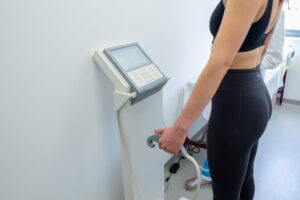
That’s right-they’re skinny, soft people. You touch them, there’s no muscle mass. I don’t care what the scale says. I want to know your body composition. How much of you is fat, muscle, water, and bone? Go get an InBody or a Z-score. Go get to the gym and find one of those. Tell you your visceral fat as well. Now we know: should we lose weight? Should we lose fat? What do we need to do? Tailor that program.
Anything that comes with the UPC or QR code on it, you can bet it’s not going to be your best nutrition. We want something live and organic from the garden. We can’t do that all the time, but do the best you can.
So we’ve got technology to help us do it, and now somebody says, “I don’t have time to do this. Well, you got three minutes a day, and if you can get into a sauna, a red light in a sauna three times a week or more, great. Do whatever you’re doing: scrolling through your phone, watching TV through the glass. If you’ve got a sauna that has glass like mine, doing your stuff while you’re in the sauna for 10 minutes- I’m not asking you for hours and hours. And when you go to the gym and you lift heavy, you don’t have to be there. I just did a 20-minute one this morning. You know, we ran through. I got my cardio and my lifting in because we had to get back. Right. So you are, you know, no matter how busy you are, you’ve got to put it in your schedule. Sleep.
Yeah.
And exercise, good food, people, good people around you. Those are the things that are anti-aging and longevity.
But it’s not just the food you eat; it’s when you eat it as well, right? So if you eat it within an eight-hour eating window, that’s better than grazing throughout the day from the time you wake up until the time you go to bed, right?
Well, that’s kind of recently changed too. It’s very dependent on the person. There are some people who, because of their metabolism they need to eat small, controlled meals so it doesn’t spike their insulin. Other people need to eat in that timed window that you’re talking about. This fasting or interval window of eating, right? Timed. There’s a time and a place for fasting and shortening the eating window. It makes sense, right? That your body goes into fasting and has autophagy to get rid of the zombie cells. They should be dead, but they’re just sitting around creating inflammation.
There are a lot of things that happen during fasting, but there are a lot of things that some people cannot do. A fasting program should be put together according to you personally, not just what’s the latest trick you know on what everybody’s doing now. There’s a lot of great science. We’re big fans. We use fasting and intermittent fasting with our cancer patients. But if they’re losing muscle, we’re going to adjust, right? We’ve got to. So you have to know what your end goal is. What’s the end goal? But also
Now that you mention that, it reminds me of a study that I read about where people who were of Nordic origin got more benefit out of intermittent fasting than people who were of Middle Eastern descent. Because their bodies were not structured to like if you’re, I don’t know, in the winter in the north, and it’s going to be a while before you get to catch your next meal.
It’s not more. It’s not always better. It’s timing and the dosage of everything, including fasting, exercise and food. What’s the best dose and the timing for you?
Yeah, yeah, it’s called survival of the fittest. It’s genetics. You know, it changes the expression of the genes, and so it all plays in. And you know, for a postmenopausal woman or a woman going through menopause, fasting is very difficult. It’s hard on them. They don’t do well. You have to do it differently. So everybody’s individualized. All medicine should be personalized. It’s not a one-size-fits-all for any of it. But in general, people eat too much. They eat all the wrong things. You know, in general,
Ultra processed.
Yeah, ultra bad junk food, anything that comes with the UPC or what’s that QR code on it, right? Those, you can bet they’re not going to be your best nutrition. We want something live and organic from the garden. You know, we can’t do that all the time, but do the best you can. But you know, I’ve got people that say “What’s the perfect diet for everybody?” So, well, there’s not really one. But I will say, if we had to say in general, if I didn’t know anything about you, if you didn’t know anything about your food sensitivities, allergies, and, you know, your likes and dislikes, the green Mediterranean diet is now, by the research, looks like it’s for most people a really good way to eat.
So that’s the Mediterranean diet, which most people know is fish and olive oil and greens and, you know, Mediterranean-style things. Less red meat, maybe a little bit, but the green Mediterranean diet is adding in green tea and walnuts and polyphenols into that more of that into the Mediterranean diet, and those studies are looking good for longevity and feeling good. If you need to do a ketogenic diet for a neurological disease or cancer, that’s also beneficial. But if you don’t have those issues. Just maintenance, or what’s the basics for now? It’s the green Mediterranean diet, and if you want to add in some fasting or interval fasting, work with somebody who knows: Do you really need to do that, or is that controlled stress really good for you right here, right now, or is it too much stress on your body? Too much.
It’s not more. It’s not always better. It’s timing and the dosage of everything, including fasting, exercise and food. What’s the best dose and the timing for you? Where’s your insulin sensitivity? Where? What’s your glucose and insulin doing when you eat and when you exercise? What is the best time of day?
There’s a lot here.
Yeah, it’s not. You know, it’s those of us who work in all of this. We’ve got it. We got patterns. We say, “okay, have somebody sit in front of you. You go through head to toe. You get through everything, and you go. Okay, here’s the best program for you right now. Now that could change in six months or a year. We’ll watch, and we’ll see.” But it’s not like you can come up with the program for everybody. We’re all too individualized. We are.
Yeah, but speaking of that, if somebody wants to do a self-checkup to see where they need to focus and what kinds of modalities they need, or supplementation, or so forth, what are those seven pillars, and how do they go through that?
Yeah. So let me. We’ll just go through it quickly. Usually, I mean, I’ve got whole workshops that I do, like days where we dig into all the treatments and the things and all that. Right now, I just want people that are listening. This is fun. Get out your phone or get a piece of paper and pencil. Get that out. But I want you to write down these seven words: sleep, body, digestion, energy, mental relationships, and purpose slash spiritual purpose slash spiritual. Okay, I’m gonna just go quickly through those.
I want you to rate yourself on a scale of one to 10. Don’t write it down yet. Let me just describe very quickly. But let’s talk about sleep. You know, how do you know how much quality sleep you’re getting? REM, deep sleep. Are you wearing a wearable? Can you trust the wearable? But here’s the way I want you to think about yourself without all that. Rate yourself a one if you can’t get to sleep and you can’t stay asleep. If you can’t get around eight hours, pretty deep, and wake up with energy and feel rested. A 10 is, and you know, a 10 would be. I’m a 10. I woke up. I’m ready to go. I don’t need coffee. I like it because I like the benefits or whatever. But I don’t need it, and I’m not going to drink it till an hour after I wake up. By the way, anyway, I got eight hours of deep, restorative sleep, and I have energy throughout my day. You’re not crashing.
It’s not like you can come up with the program for everybody. We’re all too individualized.
That’s a 10 body. It’s beyond weight. It’s beyond physique. It’s not a stat. The point is, are you happy with it? Are you one? It would be weak and flabby if I talked about it a minute ago, and you don’t like looking in the mirror; a 10 is when you love your body. You may not like the shape you were born with. That’s sorry, but love your body. It’s working well, and you’re taking good care of it. You’re doing the things we’ve been talking about. That’s a 10. Digestion. The best way to determine digestion is to talk about bowel movements, and we’re going to talk about poop for just a minute.
A description of a good bowel movement: from your elbow to your wrist, about that long. It could come in two parts throughout the day, but mostly you want morning elimination in the morning, about that long, about as big as your wrist in the middle part of the log, not a cow patty. A log that is easily passed. It doesn’t smell, and it’s about medium brown in color. So start there.
A one: stinky poo, short poo, thin poo. It’s not formed. It’s gooey. It’s slush. Or there’s rabbit pellets, right? A 10 is when you’re so proud of what you just saw? You’re like, I didn’t think that something that length and that size could come out of me. And where was that being stored? That’s the kind you want to look back and go, “Wow, that was good.” And you know what I’m talking about if you’ve ever had that one in your journal. That’s right, and you feel good. You’re like, Wow, and you feel good the rest of the day. Think about it. That’s a waste. That’s the toxins. Those things, because if it sits there, it’s going to leak back in and cause inflammation and all kinds of things. So you feel good when you have good food. You’re going to feel that one.
Next one, energy. Again, ready to go in the morning without coffee. You’re not crashing at the end of the day. A one is you’re waking up tired. You’re tired all day. You’re just kind of dragging, and then you can’t get to sleep. It’s called wired and tired. Think about that. Wired and tired at night. You know you’re tired. You’ve been tired all day, but you’re still too wired. That’s one. That’s adrenal. You’ve got to get with someone who knows how to get you back into a proper rhythm. Find out why that’s happening. Blood sugar, adrenal, cortisol. What is it?
A 10 is when you get caught skinny-dipping at 91 years old, like my dad, because they forgot their swimsuit when they went to the outdoor spa. You’re doing everything you want to do, even if it’s a little bit slower, but you’re working out at the gym, you’re golfing, you’re lifting, you’re lifting weights, you’re dancing, and you’re doing all these things. That’s my dad right now, who’s almost 93. Now he’s slowing down, but that is Energy, okay. Mental state, clarity, cognition. Are you thinking? How’s your memory? How’s your focus? Can you focus? What about word retrieval? You’re like, ” Oh, can’t. I know what I want to say. I can’t pull that word. Short-term, long-term memory. Looking at those things and analyzing yourself.
So if you’re having trouble following now, I’ll talk fast, so I’ll give you a little bit, maybe a one or a two. I was gonna say if you can’t track with me, give yourself a one, but maybe give yourself a two because I’m fast. A 10 is you’re remembering some interesting highlights of what I said that apply to you, and after we’re done with this podcast, you can go. Oh yeah, those things applied to me. I might want to think about that in my life. And you could repeat it so you can remember a good portion of this for about 15 minutes.
Beyond making billions in biohacking, what’s the deeper purpose behind your work, why does it matter to you, and how will it help others?”
Relationships. Do you have a strong support system? If you have no family, no friends, no colleagues at work and no intimacy with your partner or with yourself- and I’m talking about sex and touch and all the things that are very healthy for us. If we don’t have any of that, that’s one. A 10 is when you have a great tribe around you, and you’re having great sex. You’re allowing this human body to do what it’s been built to do, and part of that is intimacy.
Next one: purpose and spirituality. Right. So, what are you passionate about? Do you have something in your life that you’re passionate about right now? And spiritually, do you feel connected? And you feel a deep, deep sense of gratitude and serenity. You can pull on a practice, music, meditation, and get there and be able to say, “It doesn’t matter what challenges are going on in my life right now, and there’s a lot, but it’s all going to be okay, and you can get your body back into that state where it can heal itself. So one has no connection with anything. You feel alone, and you just wonder if it’s all worth it. A 10 is the ability to feel that sense of peace and connectedness that I’m talking about. When you can get to that and have that, and you’ve got a purpose. Like my dad, we worried about his purpose of golfing and doing things and dancing with his friends. That literally became his purpose.
And then he had his gallbladder taken out, complications, blah blah blah, in the hospital, in and out for six of the last nine weeks. We got him out of it, and I’m having to rebuild muscle and all that stuff, but he’s back now because he thought for a while, “What’s the purpose of my life? I’m going to lie in a hospital bed. You know, we had to keep him back in. You’ve got purpose with your family, with yourself. But it was really the things that he just enjoyed, and it depends on what your purpose is. You want to write a book, you want to save the world, whatever it is, or you just want to golf, and that’s okay too. Don’t have to have some big purpose.
Like, I don’t want to tell anybody I don’t have a purpose because that laugh is like, yeah, I just want to read 10 books in a month. That’s a purpose. It’s okay. So look at all your scores, look at your lowest one, and say I’ll bet you already know some things that you could be doing to get it better. If you don’t, and you’re clueless, get with somebody who does. Find a practitioner that can help you find the problem, the root of the problem that’s causing that pillar not to be at a nine or a 10, right?
And if overall your numbers are, you know, 0 to 15. You really, really need to get some help because your body’s giving you signals that you should not be ignoring, and you want to stay healthy and vibrant. This is how we do it. Listen to your body, and you have to listen; you have to check in. No lab work and no imaging are going to show me all these pieces, so I think we should be doing this self-check-in at least once a month, maybe more.
Okay, so let’s say that somebody is amazing. So, what if somebody who’s listening has issues, let’s say, with, you know, their digestion? They don’t think of themselves as having digestive issues, but they don’t have that-I don’t know-photogenic poo that you describe. So, how did? What are some of the actions they might take if that’s the hypothetical scenario?
Right, right. I mean, like I said, some people may sometimes some people’s bowels are shaped differently, and they can’t get a lot. They can’t form a long one. They might get two pieces that big in a day. But if you’re not eliminating every day like that, there’s a reason. Is it food sensitivity? Is it stress that’s shutting down your nervous system when you’re telling your body you need to run from a bear, and when you’re telling it to go into survival mode, do you think it’s going to say Now’s a good time to have a bowel movement? No, it’s going to shut it off. It’s going to stop it from doing that because it’s in survival mode.
So, is it stress? Is it the foods you’re eating? Do you have food sensitivities? Do you have an unknown parasite? Do you have a bacterium, a virus, or a Candida yeast overgrowth? What is it? Do you have small intestine bacterial overgrowth? The only way to check that is with a breath test. That’s why I try to eat better. Try eating in an atmosphere where you have time to relax and let your food digest.
First step: try digestive enzymes. If that doesn’t help, you may need testing to find out why it’s not there. Health begins in the gut: the gut microbiome, the skin, the oral cavity. You’ve got a microbiome everywhere, but that gut health. Day one of naturopathic school: health begins and ends in the gut, and the more science we’ve got, the more we know that is true. Very important because you’ve got to break down the nutrients in your food, and not only break it down but assimilate it, get it where it needs to go, so your body has the gasoline it needs to run the car; can’t do it. And mitochondria, remember, take that information, the food information, and the oxygen you breathe, and turn it into the energy for your cells to do whatever it is they’re doing. All the amazing things that the body does.
So, gut health. I always say that’s. I will tell you this. That’s honestly most people’s lowest score. It’s because they’re not eating well, they’re not exercising, they’re not doing the basics that we’re talking about, and they’re not happy, and they’re stressed. So that is commonly the lowest score for most people: digestion, gut health, and that’s one of the most important parts. You know, I will say, if I’ve had somebody ask me that question- if you had to choose out of the seven pillars, what’s the most important? I’m going to say, for overall physical health, probably gut. If I had to leave out the others, it affects the brain and everything else.
But overall, for us as human beings, it’s the spirituality/purpose part, because without that, you can be a biohacker. You can be doing all the stuff. You can be doing all the cold plunges, all the things, and eating right and doing all this. But you don’t really have that purpose or that spirituality. And even if you have a purpose and you want to make billions of dollars in your biohacking stuff, okay, that’s the purpose, but what’s behind the purpose? Why? Why is it important to you? And why do you think it’s going to help others? And that’s where the spirituality piece comes in.
If you can really feel good when you put your head on your pillow at the end of the day about the work you’ve done and how you’ve helped somebody that day, I think that’s the most important.
If you can really feel good when you put your head on your pillow at the end of the day, what work you’ve done, how you’ve helped somebody somebody that day, I think that’s the most important, and that tells your body right before you go to sleep it’s all going to be okay. And then it does all the things that it likes to do: fight cancer at night, lymphatic system, detoxing the brain, all the things that happen when we’re quiet and sleeping. Even though our dreams may interfere a little bit, if you go to sleep that way, I feel good. I helped one person today. It doesn’t mean, you know, I go to sleep at night sometimes, and I’ll be thinking about, like, I have a 10-year-old glioblastoma patient right now. The parents came to me; they know we’re working against time.
You know, there’s always a miracle we can hope for, but that’s not the goal. The goal is quality of life and length of life for this young little one, and go to sleep thinking about what I forgot to do or say or something new or novel that pops into my psyche, and usually right before I’m going to go to sleep, and then I’m like, okay, got to get up because I got to write this down; I don’t want to let this go, that stuff. I don’t mind, but right before, right before is the person that I helped that day that said, “You really changed my life, or “I feel like you saved my life, or “I know that my quality of life is better. Thank you, and you go.
That’s why I work so hard. That’s why, and you know, I’m an advocate for truth. That’s why in supplements and medicine and I mean I’m a I’m a tell it like it is. And you know, I get blowback sometimes, you know, not much. You know, I may get more as I get more vocal about things. But you know, it’s about how I feel good about what I said and did, even though that could change tomorrow. I was recommended for interval training a month ago. It’s the best we had. I just changed it. I don’t feel bad. I just go okay. Here’s new information that was still good and beneficial. But let’s do better. So, the number one pillar to me is spirituality and feeling connected.
Yeah, I agree, 100%. Yeah, awesome. Well, a great way to end this episode. So, if our listener wants to sign up for your Truth in Medicine, they want to read more from you, or watch more of your amazing training or whatever. If they want to actually become a patient, where should we send them?
Then go to my website, which I know that you’ll be going to. I haven’t even done anything with it or updated it or anything, and since I built it, it’s probably been almost 10 years ago. But it works, and truth in medicine is. there. They can sign up from there. It’s also on some of my socials. I’m going to start doing more social things, social media. I’ve got a lot of content. We’re just going to cut it down and start posting it because it can help people. I just hired a person to be able to manage that.
So, if they go to my website, that’s it. If not, I can send you my Linktree after this if you want to post it afterward. Stephan, it gets them to all my social channels and my website and all that. And There’s Truth in Medicine is on there too, so we’ll get you that. You put it on there, but go to drworden.com. Everything’s on there. Don’t look at how it’s aligned. You would be saying, “Nope, you’ve got to fix this, this, this, and this, and I do. But so many hours in the day, right?
Awesome. Well, it’s been a pleasure. Thank you for sharing your wisdom and all these insights and all the research, all the data and yeah, thank you for sharing your light. And thank you, listener, for sharing your light in the world. Go out there, make it a great week. We’ll catch you next episode. I’m your host, Stephan Spencer, signing off.
Important Links
Connect with Dr. Donese Worden
People
Previous Get Yourself Optimized Episode
YouTube Videos