




In this Episode
- [00:00]Kathi Burns explains how repetitive, low-value tasks create a hidden friction tax, costing entrepreneurs an average of four hours per week and potentially $78,000 annually.
- [02:29]Kathi shares her journey from being a U.S. Coast Guard licensed captain to becoming a professional organizer after realizing during a night in the Gulf Stream that material possessions did not matter.
- [07:22]Kathi reveals how her husband’s SEO expertise helped her website rank at the top of search results, leading to national media appearances and opportunities to share her organizing expertise.
- [13:35]Kathi explains how her own struggles with focus and business management inspired her transition from home organizing to helping entrepreneurs build systems that support growth, delegation, and freedom.
- [16:35]Stephan and Kathi discuss how distractibility can be a superpower when managed effectively, with Kathi emphasizing the importance of boundaries and structured systems for maintaining focus.
- [20:44]Kathi introduces the concept of the friction tax and explains how business owners become bottlenecks by holding onto repetitive tasks, failing to delegate, or operating without clear standard operating procedures.
- [23:50]Kathi explains how to identify whether the bottleneck lies with the business owner, the team, or the system, and why choosing practical tools such as Asana, Trello, or Workflowy depends on how each person works best.
- [27:52]Kathi recommends training videos and documented procedures to help virtual assistants and team members understand workflows, reduce communication gaps, and preserve institutional knowledge when employees leave.
- [31:10]Kathi warns against layering AI on top of business chaos, explaining that entrepreneurs should first establish reliable human workflows and understand their business structure before introducing automation.
- [33:02] Kathi shares practical steps for identifying tasks below an owner’s pay grade, tracking repetitive work, and reclaiming time by delegating responsibilities that do not require the owner’s direct involvement.
It’s great to have you on the show.
Oh, It’s a pleasure to be here. I’ve been really looking forward to this conversation.
Yes, me too. And I’d love for you to share your hero’s journey with our listeners to start, because I have some big accomplishments in your career, published books and TV appearances and all that. Like, how did all that transpire? How did you go from where you started to where you are now?
Okay, well, that’s a long story, but I will keep it short. A long, long time ago, I had seven careers, but I was a U.S. Coast Guard-licensed captain. I was delivering yachts, and I remember being out in the middle of the Gulf Stream one night, watching a satellite go overhead, thinking about everything back in my apartment, and that none of it really mattered. I had, like, this clarity that stuff just doesn’t matter. So that was like the beginning. I would get back to my apartment in between gigs, and I would purge because I had the clarity. I just get rid of stuff, and so I think interestingly that was the very beginning of my career as a professional organizer. Little did I know that, though.
Flash forward, I had a publishing design agency in Florida, and when 9/11 hit, basically all our contracts went down, and we floundered for a little while. All the Hyatts and Marriotts and the tourism industry-they all shut down. People stopped flying, and people stopped going anywhere. So after that, I moved to California, reinvented myself, and met a woman, so I had a year off. My husband said, “If you move to California, he’s from there. I will give you a year off so you can reinvent yourself”. So I said, “Okay, that’s interesting. I’ve worked my whole life. I’ve had several careers, and so I took a year off.
But at the same time, I met this woman. She had a year off as well. It was for a different reason. She was on her own hero’s journey of healing from cancer, and we became fast friends. We became prayer partners. She was the first girlfriend I ever met here in California, and one day I went to her house and was like, ” Girl, you’re never going to heal with all this stuff. You’re surrounded by all this stuff. And so I helped her start eliminating and clearing and adding space so that she could reinvent herself and heal.
And she goes, “You know what? You’re really good at this. You should become a professional organizer.” I’m like. “What the heck is that?” And at the time, that was right when Clean Sweep came on. It was the first time anyone had ever gotten media coverage for what a pro organizer was. And I said, “Well, this is fun. I could do this standing on my head asleep, and I’m going to be a professional stylist too because I was always also always helping my friends get dressed and choose clothes and outfits and whatnot, as I was helping her.
So, flash forward, that was 22 years ago. I’ve been a professional organizer. I became board certified. My original company was Add Space to Your Life because that was my mission: to give everybody more space in their life, so they could flourish, thrive and get what they want. And over the years, I saw people do that. I saw them get the spouse. I saw them get the house. I saw them get the promotion, and so on. Then I started working with small business owners, and I realized they didn’t really have systems in place to run their business.
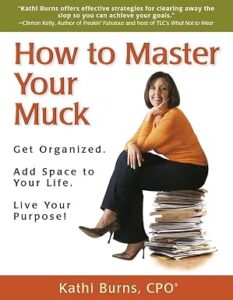
So that’s when I published my first book in 2009 about How to Master Your Muck. So how to set up a system for success so that you can actually thrive and flourish in your business. And it was amazing to me at that time how many people didn’t really know the intricacies of having a support system behind you in your business.
Now, as an 80-year-old, I’ll admit I chase squirrels all over the place. I knew I also needed systems in my life and my business so I could move forward and do what I wanted with my life, and that was the beginning of helping entrepreneurs and small business owners create systems for success.
And here I am now. I’m an operational architect, and I work with small business owners, founders and CEOs who may not be delegating and may be doing too much in their business, instead of working on their business. So that’s a very short story of my adventure as an entrepreneur.
You can tidy up your deck all you want, but when a storm hits, it doesn’t matter how tidy your deck is. Your structure underneath has to be solid to survive the storm. Share on XYeah, congratulations on your success. And you’ve been featured in Oprah Magazine. You’ve been on different TV news programs. Like, how did that come about?
I was really, really blessed when I first started, and you’ll love this: when I first started my business. My husband was an SEO expert, and he got my Add Space to Your Life. He had that website ranking above the National Association of Professional Organizers, so I was like the number one search. If you searched for a professional organizer, it was me. So one day out of the blue, Good Morning America called me and said, “We want to feature you, as what you do as a successful woman startup business.” And I’m like, “Okay, cool, boom.
So that was the beginning of it, and then after that, how the media works. Everybody started picking me up, right? I was the it girl. I was in O Magazine, Martha Stewart Living. But interestingly, I’ve always been a writer, and I was writing 500 words a week for this little newspaper that had eight publications here in San Diego, and I was the Dear Kathi. Ask Kathi about getting organized.
So that gave me the copy and the content for my website because back then content was queen for SEO. So writing 500 words a week and answering people’s questions about how do I organize this? What do I do about that? It was really, really fun, but it gave me solid groundwork to write other articles in big magazines, right? So they would call me and say, “Hey, freelance writers would call me and say, ‘ We want to interview you about tidying up whatever.”

And then the local news started picking me up, and I became really good at giving turnkey segments. So the producers would call me, knowing that I could walk in and give them three, three to four minutes, no fluff, with the props, with everything they needed, their talking points, and it was really fun because I’m always trying to stretch them to that five-minute mark. After all, they asked three and a half. And my joy was always trying to see how much I stretch them just a little bit more, get a little bit more airtime out of each segment. But they would know that they could call me and I would just deliver everything they wanted, like there for a segment, so they wouldn’t have to work basically.
Yeah, and they love props. That’s a secret weapon there to get on TV. Even better would be to bring a pet, like a dog, onto the segment. That’s that’s that’s that’s a clear winner.

Yeah, that’s a good idea. I should have brought a dog when I was talking about organizing for your pets. Yeah, it would have been good.
Yeah. So, what sort of props would you bring on the TV shows?
Oh, I would bring. Oh gosh, I remember several, several times I was on holiday, and, always organizing for your holidays. So I would bring out my one, my first bring-out box, which is, the box that you bring out at Thanksgiving before the holidays ensue, just different organizing devices. At one point, they called me in to organize their Fox News local studio. They wanted me to organize all of their mic and camera equipment.
So we actually organized the whole department, and that was a great prop because it was like storage units here and there and everything. So they actually provided that prop. Or I would bring in, like a CamCard. Back in the day, when you wanted to shoot, your business cards into databases. Things have really gotten better now with that, but just, anything that I could think of, I would bring Christmas hats. I remember one segment where the anchor actually put on the Christmas hat. I put on the Christmas hat, and then we talked about all the things, about the holiday. That was fun. Yeah,
I would do segments where I’d do segments about being a geek and how to use gadgets and different kinds of geeky things that help improve your life, and the host would play along and would put on things like a Muse meditation tracker and a posture tracker and all these things, and I even brought on several segments an Iron Man costume because it was tied to Comic-Con, like Geek Comic-Con and so forth.
And I’d have a quiz, all this sort of stuff, and then that made it really fun and entertaining. And of course the TV producers love that because it’s good TV because it’s got the props and you got the stuff that keeps the audience engaged, and then when the host is willing to put on the Iron Man mask and everything, that really tops it,
Doesn’t it? Though when they play along, it’s just so much fun.
Often the bottleneck is the owner themselves, and it comes back to releasing control. Share on Xyeah. So you have how many books? You have How to Master Your Muck, and then you have another one.
Yeah, I have Home Organization: The Smart Guide. Make Room for Yourself in Your Home. So that’s all about home organizing from the front step to the back step. I’m a co-author of four other books. The Tetris book. I was actually hired to write the Tetris book with the social media rep for Tetris. That was fun. That was a really good project. And then so, what is the
Tetris book like? What’s the full title of that?
Okay, it is Organizing with Tetris.
That’s fun.
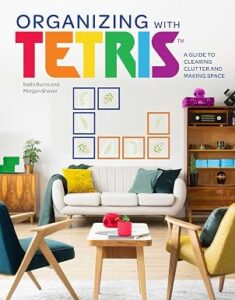
Yeah, a guide to clearing clutter and making space, and it was-it’s a really interesting project. It was quick to write, but it wasn’t quick to design because the artist did a fantastic job. But coming up with images that combine Tetris with organization was a challenge, so it actually got delayed by a year. Just trying to get it right, and I think they totally got it right. It’s just a gorgeous book all the way around.
Yeah, yeah, that’s cool. It’s a nice tie-in. Yeah, really, really cool.
Yeah.
Awesome. And now you’re doing something more focused on business, not just home. Like, what was the impetus to move to business? The business world more than the home and the home kind of organizer.
Well, as my company was growing, I was researching more and more deeply and trying to figure out how Kathi stayed focused in her business. Right, being someone with a proclivity to chase squirrels, I focused on the backend systems of my business and wanted to delegate. I didn’t want to do everything myself; I wanted to scale, so I started doing it for myself. And as I did that, my peers and colleagues would say, “Well, how did you do that? What was that?
So it is actually, I know this, Stephan. When you set your intention, things manifest. So I set my intention that, I’m going to teach what I most need to learn, and as I learn it, I’m going to teach others what I’ve learned, and then those people start showing up in your life, and that’s what happened. A lot of business owners started showing up, and I moved into away-from-home organization and business structure.
And business systems, and as an operational architect, it’s really fun to help people design the back end of their business so that they don’t have to be in it. Because I had so many clients who were struggling and working too many hours, we started businesses for freedom. Basically, I mean, that’s why I started my business so I could be free and make money and have fun and have joy and do what I loved.
Yeah, work your own hours and pick and choose your clients, all that. Yep.
Right, but what happens if you don’t? If you’re at the point where you’re ready to scale and you don’t have that structure underneath you, it doesn’t work. You don’t have freedom. You end up enslaved to your business, working too many hours, nights and weekends. And the most common thing that I heard from my clients was guilt. They have a lot of guilt about things left undone.
And we don’t start a company to be in guilt and to be in overwhelm and overload, so my challenge was to just help them see their way clear of not being in guilt, of being able to delegate without fear, and get more stuff done with other people helping them. And as entrepreneurs, the hardest thing is to give up control. I mean, you think about it. We’re creative, and we’re controlling. That’s why we created a business, right? And then to let go of those strings, so to speak, of all the little things within our business, this is a challenge.
Yeah, yeah, it is. So if you’re easily distracted, I know I am, and I’ve never gotten tested for ADD. I don’t feel like I want to know if I’ve got some diagnosis or some label of a disorder.
Right.
If you’re at the point where you’re ready to scale and you don’t have that structure underneath you, it doesn’t work. You don’t have freedom. You end up enslaved to your business, working too many hours, nights and weekends.
That doesn’t serve me. So, in fact, just a little side note here. I learned this from Amy Africa, a friend of mine who’s an expert in usability and user experience. She explained that the history of ADD is really a superpower, and we were evolutionarily selected for it back in the day. In Stone Age times, we had not only hunters and gatherers; we had spotters. Spotters kept the tribe alive because they were the first to notice that their food source, the herd, was on the move. Like, pack everything up; we’re going west. The herds are on the move, or they would be the first to notice that another neighboring tribe is sneaking up on them in the middle of the night to murder them all.
So it was really important to have spotters in the tribe, and those spotters are now labeled as having a disorder, because you have this ability to pick up on things; you can hyperfocus, but you also have this diffuse awareness, and you can be everywhere all at once. You can be thinking about 1550 things, whatever, all at once. It’s a superpower, and so that really changed my mindset around this. It made me feel more capable, more anti-fragile, not just resilient, because I can cope with the distractibility. It’s actually a superpower. So I don’t know if that resonates with you, but several people I’ve told that too. They really like that.
Oh, absolutely, and I do believe it’s a superpower. It’s just something that you have to know how to set boundaries for yourself. I have for a long time. I had one of my talks where you know, stop chasing squirrels because what happens is, we jump from tree to tree, and then they bury nuts. Did you know that squirrels lose 41% of the nuts they bury?
Yeah, they forget about them, right? They don’t remember where they are, and then they become trees.
We don’t start a company to be in guilt and to be in overwhelm and overload.
Right, exactly. Thank goodness for squirrels. I love squirrels, but yeah, I do believe that it is a superpower, and again, not to label, but to understand that it is innate, and how to work around it, and how to work with it, actually, to make it serve you. And I find that if I can just drill down, drill down into systems, drill down into the structure. Drill down into what’s causing friction in your business. That helps me a lot. Keep that linear focus.
Yeah, let’s talk about how you drill into a business and into the mindset and the decision criteria of a business owner. Or a founder, or entrepreneur, how he or she thinks and acts, and the values and so forth, really affect what team they have, the culture they have, whether anything effectively gets done or not.
Even if you have a team, you can still hold onto hundreds, or even potentially thousands, of ideas, tasks, projects, and so forth that never see the light of day because you’re not effective at delegating. So just having the team isn’t enough. At least that’s what I find, because I have a team and still have many items on my to-do list that have never made it into our Asana system; they’ve been in my personal to-do list for years.
Plan your week before it plans you. Share on XRight, right. That’s what happens. It happens with everybody. So I always start by looking at the signal, like what. So I think about a thing called friction tax, and friction tax is what you pay silently every day by things not working smoothly through your business, like they’re getting stopped somewhere along the line, and that’s the average entrepreneur will waste four hours a week at least on things that they should not do, right? Spending four hours a week, answering an email that they shouldn’t have any involvement with, or not being able to find a document.
Four hours a week just trying to find documents adds up. And it’s a slow, silent drip, drip, drip in the background of a business that you don’t really think about until you start really noticing. How much time did I spend trying to find that one document, right? And it averages about four hours a week, which, based on your hourly rate, can add up to quite a bit of money throughout the year, every single year, silently, right? Silently, the tax you’re paying.
So I always start with the signal. I ask my clients; I’m trying to find out what it is they themselves are doing that I call below their pay grade, right? So what is that stuff that they’re doing that is not worth their $ 200 to $ 500-an-hour rate that they personally charge? I had someone do the same thing yesterday: she was delegating to her team, but she was taking the low-paying clients to work with herself, and we couldn’t figure out why.
When you turn into reaction mode, you don’t really feel like you have the time to develop that SOP. You’re just reacting, reacting, reacting.
She goes, “Well, I’m afraid they’re brand new clients. I don’t want to lose them, so it’s the fear thing, right? So it starts with the signal always, and it could be something like, “Well, my team came back to me because they didn’t know how to continue this particular process, or there wasn’t a proper SOP set up in the background. And I think that was a problem with the lady yesterday. She didn’t really have a standard operating procedure for how work would flow with a brand-new client. She had a process for an established client, so she didn’t want to let go of the reins. And when you turn into reaction mode, you don’t really feel like you have the time to develop that SOP. You’re just reacting, reacting, reacting. That makes sense.
Yeah, yeah. So, what are some of the systems and supports that you put into place- workflows, the props, etc. that help this person get past that friction tax and start to become freer as an entrepreneur?
Well, it starts with: is the bottleneck them, the system or their team? And quite often, when people have a team, they think it’s the team, but we start with what happened and was it on you or was it on the team, and that’s the signal, right? That’s what I call the signal that leads to the source, because here’s the thing, and this is what I found out over many years: you can tidy up all you want, like you can tidy up your deck, but when a storm hits, I like to use a metaphor of sailing. I’m a sailor. When a storm hits, it doesn’t matter how tidy your deck is. Your structure underneath has to be solid to survive the storm.
So it is all about the structure of the business. So I start with, okay. So do you think that was something that was in your wheelhouse, or was that something that your team fell through the cracks? And as entrepreneurs with teams, we generally think that it’s the team that’s not doing it properly. But often the bottleneck is the owner themselves, and again, it comes back to releasing control. So I always start with that. Where is the bottleneck? Is it you, or is it the team? Or is it that some people don’t have a team? They have VAs, but the VAs don’t really know what to do because it hasn’t been spelled out properly. So it comes back on them, which really is on them because they didn’t set up the structure.
So I know there are so many different things. Asana for sure works. Trello works. Every single client is different in the way that they’re going. The best system depends on how they think. Like, I love Trello because I love the visuals. I’m an artistic, creative, visual person. I love seeing the little cards and moving the cards around. WorkFlowy. Oh my gosh! My husband thrives on WorkFlowy because he can condense and expand whatever he wants and assign out whatever he wants. So I use some type of structure, which is the structure that the client is going to be able to implement and that the client’s going to enjoy using. That’s the whole kicker.
If they don’t like using it and it’s not second nature to their brain, they’re not going to use it. And once they start using it, then they can build upon it and keep adding more and more and more. I mean, I just added another SOP myself in the background for a VA to say, okay, add that step to it. So here’s the great thing that I love, Stephan.
Organizing is an ongoing process. It’s never done. It’s always in process and can always be improved. And that, for me, is the joy of my business because it’s creative. And as entrepreneurs, we love to create, right? So creating is the joy, and creating a specific system for each client is why I love what I do, and it’s what keeps me amused after 22 years in the industry. Yeah.
So let’s say, for example, that someone has a VA or team of VAs, perhaps in the Philippines, and they’re not getting enough leverage out of that team. Maybe the team needs things spelled out to the nth degree, like the SOP needs to include everything. Even if you think that it’s common sense that it should just be done, if it’s not listed in the SOP, it doesn’t get done. If that’s the situation, what do they do to fix it? Do they have to replace that team member because they need somebody more of a think-on-their-feet kind of person who is a problem solver who understands context, isn’t just kind of like following the recipe exactly; otherwise, the cake doesn’t come out.
Organizing is an ongoing process. It’s never done. It’s always in process and can always be improved.
Yeah, you have to have those people for sure. You have to have the doers that just do, do, do, do, do, do. I have one of those. Well, she’s so fast I can’t keep up with her, right? She’s just doing, doing, doing. But you have to have that oversight person, the person that has the vision that I would call your number one, right? You need to have the number one who can actually see where things are falling through the cracks, and then train the doers to do it. And oftentimes it comes down to that, especially with the Philippines and with languages. English as a second language, having someone who doesn’t have to be a first-generation English speaker, but they have to understand it well enough to be able to implement.
And what I found is that videos work great. So if they want to do a video tutorial for the doers, that is an amazing thing that will help a lot. We have a lot of video tutorials throughout the background of my business on this: how you do this, this is how you upload this. I think that video is a new way, a new easy way for us to train the people who are helping us because things get lost in translation when it comes to Slack or Trello or whatever. But if you put a little video on it that says This is what you do, and this is how you do it, and this is where you click, it works really, really well. You can implement videos on any platform you use for your SOPs.
Yeah, and also if you’re training somebody, record that training so that it can go in the library of training videos because you’re training the person anyways. You might as well use that video later to train the next person without repeating yourself.
Exactly, and you never know when your number one will leave. I’ve had two number ones leave me. And fortunately, I’m so blessed that they spent the time spelling out and putting SOPs together for things that they had been doing that weren’t even spelled out. So you really got to cover yourself and know that. Spell everything out to the nth degree, and if you find something that isn’t, add it. Add it to that SOP. Like I say, it’s an ongoing process, right? Because as entrepreneurs, we are growing, we’re expanding, we’re changing offers, we’re changing things the way that we do it, and so everything has to be updated all the time, which is fun.
If they don’t like using it and it’s not second nature to their brain, they’re not going to use it.
So, how do you handle AI changing the nature of work and automating a lot of people’s jobs, or at least parts of their jobs? Like, you probably need fewer team members with AI, and some team members aren’t as AI-fluent or as gung-ho about it. They don’t want to figure out how to automate themselves out of a job, so they don’t learn. And you can’t then compete with all the other companies that are offering your same services and doing the automation work and the AI implementation. So, like, that’s a challenge,
Big time challenge. It’s a big challenge, and I find a lot of people are implementing AI on top of chaos, and you have to start with what’s working now; only then, with the system set up with humans, do it actually works. Only then should you be implementing AI tactics to expedite. I think AI expedites. AI doesn’t necessarily invent or create the structure, and AI, as we know, hallucinates, and it’ll create a structure that probably isn’t even part of it.
Here’s the thing: every business is different, and you have to think about the nuances of your business that you need to solidify in the background before you jump in and have AI help you out. A lot of people will get into AI. They get into subscriptions. They get into all the things. They ask. They use AI as their number one. Whew! Okay, that’s scary, right? So, I am a strong believer in AI. I use AI all the time. However, I have to know my true self, my true voice, and my actual business structure, and have them solid before I can set them loose on a computer or set a computer loose on it, because you never know what’s going to happen.
Right? So, what are some next actions that our listener can take, without having to hire a consultant that comes in like yourself to kind of overhaul things? What quick next actions, quick-win activities, can they do? Let’s say next week.
Yeah, I think there are a few things that I teach this all the time. The first thing is to ask yourself this question: My company depends on me to be blank. Like, what does my company depend on me to do every single day? Like, fill in the blank on that. Is it support? Is it report? Is it answer? My company relies on me every day to do a blank. Right, that’s the very first step, and after that, start looking at what the things are that you do over and over and over again that are below your pay grade; that’s the most important thing.

My company relies on me to answer this email, and then I spend time doing that, right? So start taking note of the time and friction caused by having to explain the same thing over and over. So I think take note of where you’re being depended upon, and how many repetitive tasks you’re doing. Take a pause and just write it down.
“Oh, I had to do that again. I had to do that again.” That’s where you can start seeing the friction that you’re paying without knowing it, and it’s little drip stuff, and it’s like a minute here, two minutes there, five minutes there, but it adds up to an average of four hours a week. And if you count that in, it’s an average of about $78,000 a year that’s lost in the silly little things that you shouldn’t be doing.
So just start paying attention to what you’re doing that you shouldn’t be doing. That’s below your pay grade, and what are you dependent on? Where in your company can you let go of the string, so to speak? What should you not be doing? That is what I call below your pay grade. Even just something as easy as QuickBooks, you can hire a bookkeeper for $35 an hour, $65 an hour. I’m sure your value is more than that. Is that something you can delegate?
So just start paying attention to the things that you shouldn’t be doing in your company. If you want to really grow your company to capacity, you need to start letting go of the controls in your business and start learning how to set it up so it’s running in the background of your business. That’s my constant quest. How can I have things running in the background of my business that I don’t have to pay attention to that are going to be done properly? So start noticing that. That’s step one, and step two.
Video is a new, easy way for us to train the people who are helping us, because things get lost in translation when it comes to Slack or Trello or whatever.
Yeah. So would you recommend that somebody track their time for, let’s say, a week or two weeks of the entire workday? That’s something I haven’t done in decades. I don’t know that I would ever want to do that. I don’t think I would, but maybe if it was an essential part of the critical path of fixing some issue in my business, I would be willing to do it. But yeah, not fun. Make it for me. It makes work. It makes it a job and not my passion, or not, my business.
It’s a drudge. It’s a drudge, and I agree. I say track it for a day. Pay close attention to what you do all day. Pay close attention one day. Just pay close attention. How you start your day? What happened? How long? First off, never go in your inbox first thing in the morning. But how long were you in your inbox? How long did you spend dealing with something that should have been explained? How long did you actually spend creating something that is being on the business and moving the business forward? Just spend one day doing it, and just make a note on a little piece of paper. Okay, 10 minutes here, five minutes there. I shouldn’t have had to explain that again. That was another six minutes.
And at the end of the day, you’re going to have a really good metric of what you’re doing that possibly you don’t need to do, right? And then, oh, I could spend this much more on this, and I know that you’re a big believer in centering and getting yourself set for the day. How much time did you spend prepping for your day? Did you spend a little quiet time at the beginning of the day? Because when you do, things go smoother, and you’re much more aware of where the bottlenecks are happening as well, because you’re more grounded.
Yeah, yeah. Do you think it’s better to do it at the end of the day to plan for tomorrow, or at the beginning of the day to plan the day you’re in?
I prefer the end of the day. When I work with time management with people, there’s a choice, right? I always say plan your week before it plans you, right? So are there going to be some people who want to do it on Sunday night because that’s what they do? I always recommend doing it on Friday afternoon.If you’re going to do the five-day workweek thing, which most entrepreneurs don’t, but still, set a time, set aside time either at the very end of the week or at the very beginning of the week before the week begins.
If you check your inbox first thing, you react immediately, because everything in it is a call to action. Share on XSo, in answer to your question, I don’t think you should plan it the morning of, because things happen. Things happen as soon as you turn yourself on and get into the job; you’re not planning. You’re going into reaction mode, and in fact, that’s what happens with inboxes. If you check your inbox first thing, you react immediately because everything in it is a call to action.
Yeah, and it’s somebody else’s priorities.
Exactly, they want you to do something. You have to do something. That’s why they’re emailing you. So like Tim Ferriss said- who I know was on your podcast before. Never check your inbox first thing in the morning. You’ll get derailed, especially if you’re a squirrel chaser like me, and you’ll go off into some unknown atmosphere. So plan before, way before your day begins, whether it is the end of your week or the day before the week starts. Either way, know what you’re going to do that week before it hits, and only then can you decide what to set aside.
Because guess what, life happens. You can have your week completely planned out in advance, but there’s going to be something that hits you, some deadline that is a really good opportunity that’s going to derail your plan. But here’s the thing: if what you were going to do, what you didn’t do, and when what you didn’t do, then you can come back around to it. But if you don’t know what you were going to do, you don’t know what you didn’t do, and then there goes. Right, that’s the cycle.

Yeah, yeah. So you do something for your clients called a capacity audit. Can you describe what that is?
Yeah, what it is is I help them see, again, as we’ve been talking this whole time. What is their capacity? Where are they overextending their capacity by doing things they shouldn’t be doing, or that they could easily delegate? And so, really, it’s all about what are you doing on it? And again, I ask people to just chart themselves for one day. Give me a one-day snapshot of what you did. What did you do all day yesterday? Let’s go from the beginning to the end of the day, and we can spot right away where they’re wasting their energy and not growing their business. Where they could be making money, but instead they’re doing dinky things below their pay grade.
So the capacity audit is all about that. It’s all about looking at their day and figuring out: Well, is that delegable? Could that be delegable? How could it be? And who would be the person? And oftentimes, people don’t have that number one. They have a few VAs in place, but they don’t have the number one. And we go into actually setting up a job description for who that perfect person is who could walk in and be your second brain, because your brain should not be the company, right? If your brain is the company, that’s a definite challenge.
Your brain should not be the company. If your brain is the company, that’s a definite challenge.
So I try to figure out, in the capacity audit, where their brain should be used, where their brain could not, could be jobbed out and create that ideal person. And what happens is that person will just show up once exactly who you need to help you as your number one, so to speak or your second brain. That person just shows up in your atmosphere, and you’re like, you can identify that person right away, and you can say that that will be my person, and then you can job it out. Jobbing out your brain is the way to go.
So the deliverable of a capacity audit is a document? Is it because I don’t know any training or a conversation, like what form does that take?
It’s a conversation followed up by a document. So the document kind of really pinpoints all the things that they could be delegating. Here are the things you can work on to find that person, and also probably at the end of the conversation, there’s usually always a description of what the things are that that person needs to be able to do so that you can delegate. So it ends up being, here’s what you’re doing beyond your capacity. Here are the things that you can delegate.
Here’s how it could be delegated, and here’s the description of the person that you could actually put into place to help you with that. And it’s not me; it’s always someone outside who has this skill set so they can increase your capacity. That’s what the capacity audit’s all about. Let’s increase your capacity as a business owner and a business leader and a business founder, not as a business doer. Like, get yourself out of the do of it and be the overseer.
Yeah. So you’ve got an acronym, FLOW. Do you want to explain that and maybe fill in some of the gaps of what we haven’t already spoken about?
Sure, I use FLOW a lot, and it goes way back to the day of. Everybody can’t. There are so many times that people can’t find their documents. I can’t believe it. It’s like the number one thing. It’s like trying to find papers or documents you created but don’t know where. So the first acronym in FLOW is filter. So you have to filter out all the noise and all the chaos in your business, and not have duplicates and triplicates of the same thing in your system.
Get yourself out of the do of it and be the overseer.
So filtering is very, very important. And once you filter and get rid of the duplicates and all the obsolete stuff. Then you go into logistics. How will this be stored? That’s the L in logistics. How will this be stored, and how will we find it? That’s the most important thing. Let’s do logistics. Let’s map it out. Let’s just go as simple as your Google Drive. Let’s map out your Google Drive and how it’s going to be shared and how it’s going to be organized. That’s the logistics of your documentation of your business. So that’s how L.
O: operates. Okay, who’s going to operate the actual system? And this is where we get into delegation and delegables. How can we operate this so that you’re more out of the system, but yet over. The system, but it’s operating on its own, which leads us to W withdrawal. Yeah, how are you going to withdraw yourself from the process of FLOW and have it running smoothly in the background of your business, and you knowing that things are going to get done, that everything’s going to be set up, so that you can start focusing on the big priorities of your business and working on it and the expansion and the joy and the freedom of why you own a business to begin with is not to do all the minute little details as you scale. It is like getting rid of it so that you can then grow further and grow more. And that’s what FLOW is all about.
Yeah. So how do you see this difference evolving? I would say. How do you see this evolving in the next couple of years? As AI takes a lot of jobs and automates a lot of society, where’s your focus going to be? How will the flow paradigm change, and how will the way you work with clients change? Are you going to have AI employees working for you? Like, what does that look like?
Friction tax is what you pay silently every day by things not working smoothly through your business. The average entrepreneur will waste at least four hours a week on things they should not do. Share on XI believe so. I think we are going to have AI agents working for us for sure. Absolutely, I think the FLOW is going to stay. I don’t think the FLOW will change at all. You’re going to have a filter. You’re going to have to locate. You’re going to have to operate. You’re going to have withdrawal. That has to stay in your business; otherwise you’re not flowing, so to speak. So there will be more and more AI implementations that filter. Okay, how are these documents going to be saved? Where will they be saved? Who’s going to save them, and who’s going to be able to locate them? Yeah, that’s something I think the infrastructure has to be built.
But I do see AI coming in to be able to handle a lot of that. But there we’re in this gap right now. It’s kind of like, and we’re still in the gap of paper versus digital. We’re still there. I mean, I remember working with doctors, 10 years ago, saying they’re going to go all digital. My doctor’s office-it’s going to be all digital. It’s still not all digital. It’s still not. So we’re always going to have this gap for the next 20 or 30 years. I think it’s still going to be like the Wild West, and there will be some things that are really easy to delegate out, and there will be other things that are still like that mushy part that didn’t quite happen yet.
Just like still having clients who have paper files and digital files, right? And the point, and then as an organizer and as a pro organizer, it’s like, and that’s the sticky part because you can’t have half of your documents digital and half of your documents paper and being able to find them can’t. It’s really hard.

Yeah, I spent some time several years ago scanning a lot of notebooks and files and things so that I have everything digital, so that was helpful, especially since I moved overseas. That was the impetus.
Yeah, that’s a big way to get yourself done. The question is, are they easy to find? Is the nomenclature set up so that you can find all that digital data really quickly? I have a lot of clients who scan things in, but then they still can’t find what they scanned. So when I organize hard drives, there are really only four main categories in the hard drive, and then it goes from there. So you don’t want to.
What are those four?
Business, personal, tax, and then some could be products, which could be separate from business. The products that you’re creating, but digital, personal, and tax are the three main ones. Archive. I’m sorry, I screwed that one up. Archive is the fourth category, and it’s important because when you find things in your drive that are no longer important to you, you can move them to the archive. They don’t disappear; they’re always there, but they don’t mess up your other main categories.
Yeah, and you don’t have to worry about organizing it. You just, like, yeah, just throw it in there.
And it doesn’t go away, which is great because a lot of people are like, I can’t throw that out, but I might need it someday. One of my colleagues wrote that book, But I Might Need It Someday, which I thought was a great title because I hear that all the time. But I might need it. It’s like, “okay, throw it in an archive. It’s not going anywhere.” But it won’t mess up your business, your taxes, or your personal stuff. It’s just out of the way. Back to that FLOW thing, right? Withdraw. Get rid of the junk and put it someplace else.
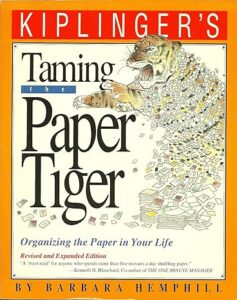
Yeah, I interviewed Barbara Hemphill on this podcast, and I loved the definition she gave of clutter, which is deferred decisions.
Absolutely, yeah, I love Barbara. She’s a colleague. Sure. Yeah, she’s been doing Paper Tiger forever, and she’s fantastic at what she does. And I love how she’s evolving as well. See, that’s the whole thing about being business owners: we get to evolve, we get to reinvent ourselves, we get to create more, and just follow our bliss of whatever we’re inspired to do with our companies, and she’s a great model for that.
Yeah, for sure. All right, so I know we’re out of time here. If our listener/viewer wants to learn more from you, read one of your books or even work with you, get a capacity audit or set up a consulting arrangement. Like, what? Where? Where should we send them?
Well, let’s go to OperationalFlow.co. But I want to send them, and that way you can get your capacity audit if you’re interested in something like that. There’s also a friction tax assessment that you can take. It’s a three-minute little quiz, and it can show you where you’re paying friction, where you’re paying taxes on things that you shouldn’t be doing. So that’s a little assessment right on the homepage of OperationalFlow.co. Take that assessment. It’s just two to three minutes tops, and it’ll show you exactly where you’re kind of falling off the rails or doing things that you shouldn’t be doing.
Awesome, and I think How to Master Your Muck book is also available as an ebook on your site, right?
Absolutely, and it’s free. So you can get the ebook for free, download it, get the digital copy for free, and if you want to buy the book, you get it for $1. So, yeah, have at it, and that’s all about business systems supporting you.
Awesome. Well, Kathi, it was a pleasure having you on. Thank you for sharing your wisdom. And yeah, if our listeners apply at least one of these tips, they’re going to make their lives better, so I hope they apply them. This isn’t just entertainment; this is edutainment. You’re supposed to actually apply it in your life and business. So I hope they do that. Thank you so much. Thank you, listener. Go out there and make it a better world. I’ll catch you in the next episode. I’m your host, Stephan Spencer, signing off.
Important Links
Connect with Kathi Burns
Apps/Tools
Books
Business/Organization
Films/TV Shows
Magazine
People
Previous Get Yourself Optimized Episodes
YouTube Videos