

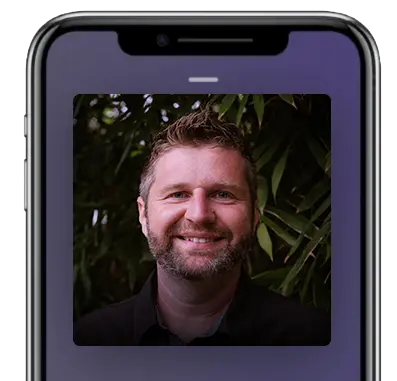
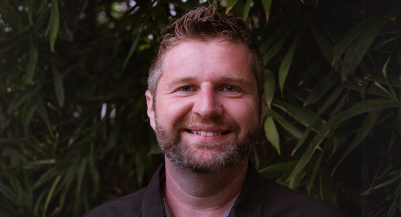
In this Episode
- [03:09]James Schmachtenberger outlines the initial hypothesis behind Qualia, focusing on enhancing intelligence, empathy, and overall quality of life.
- [06:15]James explains the shift from a reductionist approach to a complex systems model, which considers the interconnectedness of human physiology.
- [09:24]James defines cellular senescence and its impact on health, including the buildup of senescent cells and their inflammatory effects.
- [13:58]James elaborates on the concept of periodic dosing, where high doses of active ingredients are taken for short periods.
- [23:35]James discusses his fascination with various biohacking and neurohacking techniques, including methylene blue IV therapy and PRP injections.
- [32:06]James addresses the negative effects of social media on brain chemistry and attention, and how Qualia Mind aims to mitigate these effects.
- [41:48]James shares his experience with an elimination diet and the significant improvements in his GI health and overall well-being.
- [47:58]James reflects on his unique and special relationship with his brother Daniel, highlighting their complementary skills and intelligence.
James, it’s so great to have you on the show. Thanks for coming.
Thank you so much for having me on.
I would love to start with a little bit of your superhero origin story. How did you end up kind of solving the world’s problems through supplements?
I will attempt a concise version of that. There were several factors that contributed to it. Most of my life has been focused on and kind of devoted to understanding the human experience and looking to elevate it in the realms of cutting-edge medicine, psychology, etc.
But I think specifically the thing that was kind of the main catalyst that brought me into doing Qualia was in my early 20s, I was running a company that was much bigger and more complicated than I had the skill set for, and as a result, I went into a very severe degree of burnout. Actually went into adrenal failure, and had to start my own kind of healing journey and figure out what would make a difference.
In that process, there were a bunch of things I worked with, but there was one particular kind of experimental therapy I did that really showed me what was possible with the right types of science. I ended up going down to this clinic in Mexico, and I did three days of this IV therapy for like nine hours a day, and it was like a complete night and day, like a life-altering type of experience. Most things are kind of subtle and gradual. This was not. The kind of brain fog and struggling to think that was present not only went away, but on the other side of that therapy, I had a higher degree of brain function than I had ever experienced in life.
There was a kind of clarity, there was a kind of ability to hold and understand complexity and nuance that just hadn’t been there, and then the sort of like depressive feelings that went with severe burnout also went away and were kind of immediately replaced with the sense of like passion for life, motivation, a deep desire to do as much as I could. The thing that really stood out to me, and what really spurred the thought process that moved in the direction of Qualia, was my sense of empathy shot through the roof.
After doing that, I just actually couldn’t think about anything I wanted to work on in the world without immediately being aware of what the broader implications were. How would it impact the people around me? How would it impact the world at large? As I was reflecting on that experience, I realized that the thing I did wasn’t something that most people were going to do or would have access to, but it highlighted what is possible with the right kinds of research, the right kinds of chemistry. The initial hypothesis that created the company was this question of, “Could we create something that was broadly accessible, that would dramatically enhance intelligence, and not in a narrow type of way?” Most of the time, when products focus on intelligence, they’re really focused on attention span.
There's so much more to healing and health optimization than almost anyone is aware of. Even if they're aware, most of what's really interesting is so expensive it's inaccessible. Share on XAttention span is great, but it’s not everything. You also need the ability to do quality reasoning and understand complexity and critical thinking, and all these myriad areas. Could we make an impact in a noticeable, significant way, and, with that, improve people’s experience of life? Could people feel more confident, more capable, and develop a better appreciation and outlook on the world? And, with that, could we stimulate the parts of the brain and nervous system associated with empathy and compassion?
The idea was that if that was possible, and it was a genuine “if” that could really have material impact on the world, not only would it dramatically improve the quality of life of the people we directly impacted, but you’d also have this growing population of people who are more intelligent, more capable and intrinsically motivated to use that capacity for better and better purposes. That was really what we started on with Qualia, was that concept, and that’s where we started in brain function, because that was the kind of center point of that fundamental question.
I didn’t know initially going in if we were actually going to be able to pull that off. I had spent quite a while interviewing all types of formulators, neuroscientists, neurochemists, and kind of everybody, and told them this grandiose vision. They’re all like, “That’s cute. It’s not doable.” Everyone likes the concept, but it seemed as though it was fundamentally out of reach, at least without going into entirely specialized precision medicine. That was at least a quarter million dollars a year per person.
When we actually dove in, fully into the research, we actually had to create essentially a new approach to how we looked at research and development and how we came to study human physiology. Essentially, what we did there was we started applying complex systems modeling to human physiology.

Much of medicine as we know it today, whether allopathic or natural, is very much oriented towards a kind of reductionist approach to science. We think there’s one issue we want, one compound or one surgery that solves for that one issue, and that actually just doesn’t work now. It does in acute issues. If you got into a car accident, you broke your arm, there’s a very clear causation, there’s a very clear treatment path. But when you’re getting into anything complex, either healing disorders or just upgrading physiology, we are incredibly complex, interconnected systems.
If you’re focused on one area like the brain, you can’t really think about and address the brain without, for instance, addressing the gut, because 90% serotonin is produced in the gut, 50% of dopamine as years go on and we get better and better understandings of the microbiome, the connection between that and brain function are just extraordinary.
We had to take this more complicated approach and really dive super deep. We actually spent two years on pure R&D before we launched our first product. Since then, as we continue to launch products, we spend. It’s hard to know exactly, but from what I can gather, it’s probably like 15 to 20 times the amount of R&D hours on new product development than what is standard. It’s because we’re trying to accomplish these bigger, loftier, more transformative goals.
Amazing. Wow. How do you come up with an idea for a new product?
There are a number of things that kind of determine that, but I would say one of the core things we look at a lot is: What are the things that can have the biggest impact on human health and overall well-being? What are the things that are either not being addressed currently or are being addressed insufficiently? That’s the area where we work.
Essentially, we only pick the hardest areas in almost all cases, because if something’s being done, if something’s important, but it’s already being done, then my orientation is just to direct people to the fact that we’re never really looking to build products where we can’t do something that is meaningfully more effective than what we’ve been able to find in the market. It’s really this function of what’s going to have the most impact and what is the most underserved?
Cellular senescence is a biological process that occurs in all living organisms, in which cells reach a point at which they are no longer able to divide and replicate and to perform the functions for which they were designed.
How did you come across or come up with a stem cell product?
In some ways, it was kind of a natural evolution of research that we had started on immune function and on addressing senescent cells or zombie cells. As we dove really deeply into those areas, we ended up creating products in those categories. But it then also led to, like, “What was the next obvious evolution?”
Let’s define, for our listeners, “zombie cells” and “senescence,” because they may not know.
Cellular senescence is the biological process that happens in every living being, where cells reach a point where they are no longer able to divide and replicate, and no longer able to do the function that they were intended to do, and at that point, they become senescent, or what’s often called the ‘zombie state’. In an ideal scenario, the immune system is able to identify those cells and get rid of them. But for most people, the immune system doesn’t operate as well as it should. There are too many stressors, too much toxicity, all these things that we’re exposed to on a daily basis that minimize the function of the immune system and that also just happens naturally as people get older.
As we get older, we have all these stress impacts. When it’s happening is you have all these cells that get to this place where they should die off, but they don’t, and they go into this kind of zombie state, where they end up basically still taking up resources that would otherwise go to healthy cells. There’s a problem there, and then there’s another problem, which is that they put out these inflammatory proteins, which cause the other cells around them to become senescent faster. The more you have a buildup of these senescent cells, not only do they create a problem in and of themselves, but they also accelerate the aging process for everything around them.
That was actually an area that we dove into before we got into stem cell research, which was: How do we understand the cellular life cycle? How do we understand what mechanisms are at play and what can be done to help the body dramatically reduce the amount of senescent cells, both kill them off and help kind of detox them out of the body?
We built a product for that called Senolytic, and it’s a pretty remarkable product. One of the things that’s kind of unique about us is that we actually do human studies on every product. We don’t just rely on the research for the underlying ingredients, but we also study the actual finished formulas.
As we get older, we carry so much stress. When it happens, cells reach a point where they should die, but they don’t, and they slip into a zombie state.
With the senolytic product, we did a few different studies, but kind of the biggest one that we did was focused on joint health. The main symptomology that people tend to have when they’ve got a lot of senescent cells is a lot of joint discomfort, stiffness, and mobility challenges. Even though it’s not a joint product, that was the structure of the study. We had people do basically three cycles of the product, and we saw on average a 68% decrease in joint discomfort and a 51% decrease in joint stiffness, which was huge. Even though that was only testing one area, it kind of speaks to the potential and the probability of what its effects are in a whole bunch of other areas that we haven’t had a chance to study as fully yet.
Wow, that’s really encouraging. Do you think that can improve somebody who’s perhaps having sciatica pain? That can be quite debilitating for folks.
I would tend to think so, but it’s not something that we’ve researched specifically. I’d actually have to go back and look at the data. I think there were a couple of people who were in the study that had sciatica, and I just don’t remember specifically what their commentary was, but there’s definitely reason to believe that it would have an impact there.
In essence, that’s going to have an impact on virtually everything. Because these senescent cells are not localized to one area. They do tend to pool a little bit more in joint tissue than others, but they’re happening throughout every tissue type in the entire body, and essentially diminishing the body’s natural regenerative properties. As you start to get rid of them, the body then has more resources to create new healthy cells, to do various kinds of healing and regenerative processes. Everything is going to work at a better level. A lot of this work in the last few really focused on cellular wellness, because it’s so fundamental.
One thing I’ve noticed about this product is that it only has enough supply for four days. You take six capsules per day for four days. I’m curious how long someone meant to stay on this product before they start feeling some of the impact from it? What’s typical that you’ve found?
The senolytic product and the Stem Cell product are both what is called ‘periodic dosing’. Rather than something that you take every day, you take really high doses of the active ingredients for a short period.
For senolytic, it’s actually only two days a month. For stem cells, it’s four days a month. Some of our other products aren’t more traditional, but really, we just kind of follow what the fundamental science says, and in both of these cases, there’s a lot of evidence that high-dose, periodic dosing is far more effective.
The other just natural benefit is that it’s easier for people. For some people, it’s hard to remember to take supplements every day, whereas a kind of structured regimen that’s only a few days is usually pretty easy to pull off. As a result, people tend to stick with it more and get greater overall benefit. With the stem cell formula, which is newer, we haven’t done as many studies as we have on some products, but we did well. We’ve done two studies so far.
Senescent cells are not localized to one area. They tend to accumulate slightly more in joint tissue than in other tissues, but they occur throughout all tissue types in the body.
The larger one was basically looking at age-related symptomology. With that, we actually only had people do one cycle, so four days of the product, and in four days, 41% of the participants noticed improvements in one or in many cases, multiple areas of age-related symptoms, so better energy, better recovery post-exercise, and less stiffness. That was literally off for four days. We are preparing another study right now that’s going to be quite a bit longer, but essentially, half of the people had a noticeable impact after a single cycle. Almost everyone had things happening that were happening at a cellular level that just maybe weren’t fully noticeable. With most supplements, you don’t feel for weeks or months. The fact that such a high percentage of people were having noticeable differences is pretty significant.
I wonder if that’s this is an unusual approach. Most supplements you take are in daily doses, and it’s not like a mega-dose; it’s a small dose. It takes, typically, months or longer to see and really feel a benefit. But I wonder if your experience with the adrenal failure and the IV therapy may have guided you in this path of let’s do a mega dose, because you did, what a Myers’ Cocktail for IV therapy? Or what was it?
No, it was, it was a very high dose NAD, it was 1500 milligrams a day, which is quite a lot. It was a combination of six different amino acids, and then some secret ingredient that I never found out what it was, but ultimately, I think it was the NAD, with the particular aminos that were doing the majority of that work.
That’s an unusual therapy, right? To go in and get mega doses of NAD via IV. I don’t know very many people who have done that.
No, like any of the IVs at this point have become relatively common. But usually it’s a single day, and it’s a much lower dose, I would say typically, what I see as a maximum of 500 milligrams. When you’re doing NAD intravenously, it’s really quite a terrible experience. The after effect is awesome, and I still highly recommend it. But while you’re on it, you tend to be in a fair amount of pain. You’re kind of going through nausea, chest tightness, it’s relatively miserable, and especially when you start getting into those really high doses, then you’re just talking about nine hours of quite an unpleasant experience.
Now, I would still do it again, because the results were so substantial. That particular therapy that I did was developed by a guy named Dr. William Hitt, and he actually won the Lifetime Achievement Award for his work in addiction recovery, because what he had found was that the high dose and ad with these particular aminos would basically rebalance people’s brain chemistry in such a way that they stopped having a drive towards addictive behaviors.

I was kind of an outlier. He just looked at a lot of my lab work and said, “Well, your brain basically looks like that of a heroin addict.” I didn’t actually have a drug issue. I had just slept, usually no more than two hours a day for three years at that point.
How do you even survive like that? That’s mind-boggling.
I was young. I started that at 18, and then I basically hit burnout at 21. There is a different kind of resilience at that age. I was also so passionate about what I was working on that I pushed myself in a way that kept me from noticing some of the damage until it was already pretty well in place.
At that point, I was running a vocational college that taught alternative medicine and psychology, and it was kind of my first real, deep dive into profound healing work, both at the physiological and the psychoemotional levels.
I was just getting to see every day people going through these huge transformations and learning how to do that work with others. The excitement that I had around the work allowed me to get away with things that I probably shouldn’t have, like not sleeping.
One of the core missions I had in building Qualia and a research team was to understand what’s happening at the very cutting edge of medicine and human optimization.
Kind of reminds me a little bit of Elon Musk and how he’d sleep on the floor of his offices so that he could keep more keep working.
I did spend quite a bit of time sleeping under my desk because the commute time didn’t make sense. I’d work well into the night, lie down on the floor, and nap for a little bit. I didn’t make other people do that, though. I was willing to push myself really hard, and the rest of the team to work at that level.
That IV therapy, I’m sure, must have saved your life.
Almost certainly, because I was already in the healing field, had it not been for that, I probably would have found something else that would have helped, though, likely not nearly at the level that did. I was fortunate to find something like that was pretty hard to track down that wasn’t something that was being heavily advertised, wasn’t in the same country, and I always had a very experimental orientation, so I was willing to go try something that was kind of out of the norm, especially based on what I had seen in terms of effects on others. But it made a huge difference in my own health and quality of life. In this case, my life trajectory, like it was that experience that really created the aha moment to build Qualia.
It was one of a series of things in life that showed me that there’s so much more possible in terms of healing, in terms of health optimization, than what almost anyone is aware of and then, even if they’re aware of them, most of what exists that’s really interesting and useful is so expensive that it’s not accessible. That was underlying like one of the core missions that I had with building Qualia and with building out a research team like we have is how do we understand what’s happening at the very cutting edge of medicine, very cutting edge of human optimization, and even if the ways in which it’s being done right now are not accessible, can we understand how it’s working and then kind of reverse engineer that into supplement where it’s highly accessible, where you don’t have to go through doctors and prescriptions, you don’t have to pay tens of thousands of dollars.
In reality, we can’t achieve everything with supplementation that can be achieved through different kinds of therapies. I would say with our stem cell formula, it’s highly likely that going and doing pluripotent stem cell injections is more effective than just taking the supplement.
By the way, I did the stem cell therapy with Dr. Harry Adelson back in 2018, along with the microneedling on the face and everything, the injections in the joints, he extracted stem cells from my bone marrow. That was not a fun process, but both my wife and I did it.
One of the most interesting things about Qualia Mind is that it can help people make better choices. Not only does it directly help, but it also provides the energy and motivation to make better choices in other areas of life. Share on XWe’re like you, on the cutting edge of things, we like to experiment and be early adopters on this sort of stuff. I don’t regret it. I don’t have a desire to do it again anytime soon. But have you done it?
I haven’t. I’ve done exosomes intravenously, and then I’ve done things like PRP into most of my joints. Similar-ish processes, but I haven’t done the full stem cell thing yet. I definitely have a fascination with it and want to, but I haven’t done enough research into the different styles yet to decide which one I would be most attracted to.
For a listener who’s not familiar with PRP and exosomes. Could you briefly explain those?
An exosome is basically a part of a stem cell. It’s very much in line with traditional stem cell therapy. It’s just that, rather than delivering the whole cell, it’s delivering a particular part that directly helps with tissue regeneration, and because of what it takes to produce them, it’s less expensive and more readily available than full stem cell therapies.
This doesn’t come from you. This comes from placentas or from cord blood, or where do the exosomes get harvested from?
In theory, in the same way you do stem cells, you could do that, derived from your own fat or bone marrow. But that’s not typical. I think in most cases, at least in the ones I’ve looked into, the starting material was umbilical blood, and then the exosomes are derived from that, and then what they call expanded, which basically produces more of them. That either goes intravenously or into specific tissues.
It’s an area that I find really interesting, and I want to do more experimentation with it. I was actually surprised that with the one IV therapy I did, I didn’t really notice much, whereas with PRP. PRP stands for platelet-rich plasma. Basically, they draw blood, spin it in a centrifuge to separate the platelets from everything else, then take it and usually inject it into a specific body part.
I’ve had a tendency to do a lot of extreme-ish sports kind of thing, so I’ve torn most everything at some point. I’ve then used PRP injections into the joints where there were issues, and that has been remarkable therapy for me. It tends to work well with virtually everyone. Some people have a little better effect than others. The platelets themselves, when they’re injected in, have a lot of direct healing properties, but then also, because there’s this fluid that’s going into areas that typically don’t have a lot of natural blood flow, usually connective tissue, it also creates a pretty significant acute inflammatory response, and the inflammation then drives more blood flow and creates healing of tissue. The first time I tore a shoulder, I didn’t know about PRP yet, so it was quite a long time ago. I was doing weekly physical therapy.

I was doing a bodywork technique called ART (active release technique), which is effective but wildly painful. There are a few other things. I was doing some supplementation, and I would say, in nine months, it got like 10% better, but I was still continuously in pain and had very limited function. At that point. I got PRP injections, and in six weeks, I was back to about 90%. Since then, whenever I’ve had anything that I’ve damaged or just done preventatively for not wanting things to generate, I go straight to PRP, and I’ve had consistently really powerful effects.
That’s awesome.
That’s not a painless or inexpensive therapy, but it’s much more accessible than something like stem cell therapy.
That can be, what, a couple of $1,000 maybe.
Depending on which joint you’re doing, with which doctor, anywhere from like $800 to about $2000 is kind of what I see most of the time. Not inexpensive, but it’s also not $50,000 like it usually is for doing the whole body stem cell treatment.
I went to Docere Clinics, which is Dr. Harry Adelson, that’s Dave Asprey’s stem cell doc. He’s very good. I’ve had him on this podcast, too. He’s amazing. You’re quite the biohacker. What is the most outrageous thing that you have done that would be something that would be maybe surprising, even more so to our listener, that you’ve done from a kind of biohacking, or perhaps neuro hacking standpoint?
I’ve done a lot of stuff, and I was just telling somebody recently about doing methylene blue IV therapy, and apparently, that one seemed very surprising. Methylene blue is a pharmaceutical medication, but it’s only used in very narrow use cases in standard medicine. It’s used for cyanide poisoning. It’s used for a couple of conditions that create very low blood oxygen, but in kind of the more longevity biohacking arena is used very broadly, because it’s one of the most powerful mitochondrial enhancers that exists and has a number of other effects. It does good things for cognitive function, but its core is really mitochondrial health.
The way people live alters our brain chemistry, making it function quite differently from its natural state.
I’ve done like, I’ve done that orally for a long time, particularly in conjunction with red light therapy, because they have a very clear synergy. But I’ve now done, I think, two ideas of it. I felt great afterwards. I was actually surprised that the first time I did it, because I had done it orally quite a bit and never really felt anything weird. I felt more energy. When I did the first IV, I actually got quite high, as it felt almost like I was on mushrooms, or something. I was sitting there, and everything kind of got soft and wavy and a little bit melty. I just lay down, and kind of enjoyed it; it passed in about 10 to 15 minutes. But I had not expected that. I guess that one, by a lot of standards, is a little bit out there.
I just happened across a study about methylene blue and how brains get colored blue, like dyed blue by repeated intake of that substance. Have you heard about that?
I did see something about that. I don’t remember reading in detail, but the question that came up for me was: was that a lasting effect, or was that short-term in nature? Because it is a very vibrant blue, and it does dye all kinds of things, but usually, in most cases, that then goes away fairly quickly once the body kind of uses it up and processes it. I didn’t know whether it was just kind of that happened for a few days, or if that was long-term.
This study, which is actually of people who died, had autopsies done, and the study was published. I’m just looking at it right now. The journal is Forensic Science, Medicine and Pathology. The study is Fifty Shades of Green and Blue: Autopsy Findings After Administration of Xenobiotics.
It’s pretty wild. Disturbing, actually, seeing the pictures of the brains that were dissected, and the blue goes right through all the white matter and gray matter. It’s pretty extreme. Anyway, just wanted to throw that out there. I don’t know if you’re continuing to take methylene blue, but maybe look at that study.
I should go back and read that in full, because I think I just kind of glanced at the abstract when it came out to be curious. Methylane blue is somewhat controversial. I would say most people in the longevity space, and most naturopathic doctors, are fans, and there are, prospectively, some risks with it.
From what I’ve seen, a lot of them seem to be overblown, but there’s also just not adequate research there yet. It’s something that I think is interesting to explore. But do some research. Do it cautiously, and with a practitioner who knows how to guide that process.
The more you scroll on social media, the more your entire brain and physiology adapt to it as the thing you should do. Then listening to a long-form podcast or reading a book becomes less interesting and more difficult. Share on XTalking about the brain, let’s move on to the mind, and how Qualia Mind, I was reading about it, and it can reduce procrastination. That made me very curious. Also, I’m interested in learning about how we live in this social media addicted world now, and society, and the dopamine deficit that many of us are facing because we scroll too much socially. I’m curious if the quality of mind addresses that, as well as the reduction in procrastination.
Good question. As we get into social media, it can become quite a rabbit hole, but it’s worth it. Mind is the first product we ever launched. It was the one that kind of came from that original inspiration. We have reformulated it a few times because there are always new ingredients, new research, and we keep upgrading it. But in essence, what that product is trying to do is, first and foremost, bring brain chemistry into balance.
The way in which people live causes our brain chemistry to function quite differently from what would be a natural state. All the light exposure, the time pressure and stress, the toxins we’re exposed to, the attention-dopamine hijacking of social media and AI, and pretty much all forms of exponential tech. These things all put major stress on the brain chemistry, and tend to cause excesses of certain neurotransmitters and deficiencies in others. When we really dove into the research in this area, what became just blatantly clear was that the brain is an incredible thing.
It works brilliantly when supported and not continuously overtaxed. But the world in which we live doesn’t really support that. First, what we were looking at was whether we bring brain chemistry into balance in the world in which we currently exist. Factoring all of those stressors, factoring the deficiencies that are created, there’s a lot of different ingredients in there that are, for instance, like precursors to the creation of different neurotransmitters, so that your body has the building blocks to be able to produce more dopamine, more norepinephrine, serotonin, whatever is kind of needed in real time.
It’s first, can we bring it into balance, or into homeostasis? Can we increase what’s called ‘homeostatic capacity’? Once something is in balance, can you then increase its ability to stay and operate in balance in increasingly more difficult and complex situations? You’re never going to avoid stress entirely, or not, have some impacts of it, but can you be less impacted by it, and can you bounce back a lot faster when stressors occur?
The brain is an incredible thing; it works brilliantly when supported.
It’s really fascinating with that product, probably more than any other one, how broad the effects that people end up experiencing are, because virtually everyone’s brain chemistry is not an ideal balance, but they’re also all in different types of imbalances. In the process of coming into balance, you have people with very different effects. For some people, they become way more driven, and procrastination goes away. Motivation takes its place.
For another person, the main thing they might notice is the dramatic uptick in creativity and flow states. For another person, it might be that they become calmer and present, and their meditations get better, and their quality of connection with others gets better. Usually, what we see is people have improvements in all these areas, just more in certain areas than others, depending on what their starting point was. But that’s in essence, that’s what we’re trying to accomplish with that product. When you introduce things like social media, it just becomes more and more crucial because the negative effects of doomscrolling are, at this point, very well documented and ridiculously problematic.
We lose the ability to hold attention. Everything is delivered in 32nd bites, and anything that you do in repetition tells your brain that that’s the important thing to do, and so it starts to essentially rewire to be able to do that thing more and more efficiently. The more that we’re on social media, scrolling a bunch of 32nd clips, the more that our entire brain and physiology adapts to that being the thing that is important to do, and if that’s what’s important to do, then something like listening to a long form podcast, reading a book, or having a deep, nuanced conversation becomes less interesting and harder.
With this product and with things like social media, it’s really two parts. One is the product’s ability to support being less damaged by those things than you would otherwise be, and to have more resilience, to be able to bounce back and more access to self-control. But then there’s the whole other side, which is controlling our inputs and being aware of the effect that everything has, like where we put the majority of our attention is going to materially change how we feel, what we’re capable of, what we’re interested in.
There’s really nothing that I’m aware of that can completely offset the side effects of two hours a day of doom scrolling. You do have to be able to make the choice to progressively less and less of that kind of thing, and something like the mind can help minimize the detriment and can give you more of a sense of willpower to make those different choices. With Mind, one of the things I find most interesting about it is that not only does it create a really distinct and noticeable improvement in how you feel, changes in how you think, but it also tends to give people the ability to make better choices.
The negative effects of doomscrolling are, at this point, well-documented and highly problematic. We lose the ability to hold attention.
Particularly, this is critical for anyone, but for me, when I first started exploring nootropics, I was in a lot of burnout. I was in a lot of fatigue. Doing the things that I knew would be good for me was just very hard. I didn’t have the energy to exercise regularly. I didn’t have the energy to take the time to cook really healthy meals. When I started, I did different experimental things, and eventually, with Mind, not only did it directly help, but what I found was that it gave me enough energy and enough motivation that I started making better choices everywhere else in life. The compounding effects of all of that are really huge
What are your life choices and routines now that keep you from doomscrolling and getting sucked into all the dopamine-addicting apps and bells and whistles that are inundated with technology?
I still get sucked into some of those things, not as much as I used to, and still more than I probably wish I did. But there are things I’ve put in place that have been really helpful. One of the things my partner and I started experimenting with, maybe five or six months ago, was keeping our phones turned off and out of the bedroom by 10 PM, whether or not we were going to bed. The phones went out and were not directly accessible.
We got like an old school alarm clock, because we still, on occasion, needed an alarm, but we didn’t want to have our phones accessible. When we get up in the morning, we wouldn’t touch our phones until we had gone for a morning walk. You have a series of benefits in that one change: avoiding the blue light of screens and the stimulating effects of things like doomscrolling allows sleep to improve dramatically. In the morning, if you don’t go right to your phone, you give your brain time to kind of naturally wake up. A bunch of different things happen, but basically, you don’t spend as much time in kind of distressed fight-or-flight types of states to have this kind of natural wake-up process that doesn’t go directly into productivity, and instead gives you time to feel and think and kind of ruminate on your day, reflect on what you want, which makes a huge difference.
There are tons of studies on the benefits of activity and early morning sunlight on the eyeballs for overall nervous system health, for sleep improvement, for circadian rhythms, for all kinds of things. One change made a huge difference, and it was a little difficult to adapt to in the very beginning, because there had been sort of prior addictions there that had to be let go of.
But that was really a worthwhile change to routine, and I think it was made easier by the fact that my partner and I were together, so we were kind of our own accountability and support systems. If one of us wanted to drag it out, the other one would be like, “No time to put it away,” so that I find it very useful.
As time has progressed, I’ve just kind of extended that. Now I try to get up a little bit more early than I would have otherwise needed to spend more time in the direct sunlight, get a little bit more exercise, and all of that has a huge impact.
When we get up in the morning, we wouldn’t touch our phones until we had gone for a morning walk. You have a series of benefits in that one change: avoiding the blue light of screens and the stimulating effects of things like doomscrolling allows sleep to improve dramatically.
For me, a lot of routine has been around. Well, I have a pretty extensive supplement and peptide routine, and that actually takes a fair amount of time and attention. I’ve made a lot of dietary changes in general, in life, but I would say that, particularly in the last couple of years, it’s been a real big focus. I did a particular kind of elimination diet where essentially, I was only eating four types of vegetables and nothing else for a month, which really gave my system the ability to clear out everything else, and then slowly introduced foods back in so I could see what my body was reacting to.
I have some underlying autoimmune stuff that has created lifelong GI issues. I’d done all kinds of biohacks and therapies that helped some, but actually not that much, which kind of led me to realize that a lot of it was food-related. Even though I always had a pretty healthy, clean diet, there were things that, until I did that, I didn’t realize, for instance, that I don’t do well with beans and legumes. As soon as I cut that out, tons of stuff got better.
How about nightshade vegetables? How are you with that?
I seem to be okay with nightshades. I notice that if I eat a lot of them consistently, I don’t seem to get GI issues. I do feel more fatigued. But some nightshades here and there don’t seem to have any noticeable effect.
That’s good for some people, but they can be really problematic.
For people who have kind of rheumatoid-type issues, that tends to be where there’s the worst reaction. Nightshades are definitely a fairly common area of challenge for people. I do find elimination protocols to be super useful, because it can be hard without that to really clearly identify which foods your body’s reacting to. If you don’t make something super clear, anything that we have an emotional attachment to, we’re going to have a confirmation bias in how we think about it.
If you absolutely love cheese, and you’re trying to determine if that is giving you a negative reaction, your brain is going to do all kinds of amazing gymnastics to figure out how to attribute whatever symptoms you’re having to anything other than the cheese, and especially if you’re just kind of reducing it for a little bit, but not getting rid of it, it’s harder to really know, than when you’ve completely cut something out for at least a month, so it’s fully out of your system, and then you introduce one thing back in at a time, the effects are a lot more noticeable, and either something clearly works with your body or pretty clearly doesn’t.
There's so much more to healing and health optimization than almost anyone is aware of. Even if they're aware, most of what's really interesting is so expensive it's inaccessible. Share on XThat’s a great thing to do. To do an elimination diet for a course of a month. That’s a big deal, and it can be very important, if you have any kind of chronic symptoms, to really get at the heart of the matter. Have you done any kind of food allergy testing, like immuno labs or anything like that?
I’ve done several of those. Interestingly, what showed up in some of them were things that I couldn’t notice any reaction to, and then some of the things that I absolutely have reactions to showed up as fine. I do think food sensitivity testing is useful, but from what I’ve seen, it’s more an indicator of what is likely than a clear determinant of whether these things work for your system.
I did all that stuff first, tried to cut out everything it said I was reacting to, and it helped some, but it didn’t help nearly as much as just cutting out everything and then slowly adding back new things every few days. In my case, it was a pretty stark difference, because I didn’t just do a standard elimination diet, where you just go to a few simple things, but I did what’s called Bieler’s Broth. It’s basically a green soup. It’s zucchini, green beans, celery and parsley.
You chop them up, cook them in hot water for a while, then blend them into a green broth, especially if you add a little salt or garlic. It’s actually reasonably tasty, but that’s such a specific and kind of narrow thing that you’re not really running the risk of getting little bits of exposure to stuff unconsciously, but it’s also very easy on the body to digest. Kind of gives your digestive system a significant break. Has strong anti-inflammatory properties. Honestly, after a week on Bieler’s Broth, I felt like Superman.
By the end of the month, so many things felt better. Now, by the end of a month, I was a painful kind of bored. I so badly wanted to choose something with flavor other than green soup, but the benefits were so strong that it was actually fairly easy to navigate.
But then, after a month of that, I started slowly adding things back in, and it became pretty clear what reactions were there, and kind of all of the GI-related stuff that I was having significantly has gotten dramatically better since doing the Bieler’s Broth, followed by keeping stuff out of my diet that wasn’t working. That’s really good.
Actually, probably going to do another round of that soon, because I’ve been traveling pretty consistently for six months, and even though I’m doing quite well with that, there are just a lot of stressors on the body with that many flights and different time zones. Probably do another round of that in the next few weeks is kind of a reset.
Thank you for the amazing interview. I have one last question, which might seem a little bit out of, I don’t know, left field, but I was inspired to ask this because I was researching the history of your company and the history of just your entrepreneurialism and everything. I know your brother, Daniel, is an important part of your life, and you guys have been business partners and so forth.
I wanted to come up with a just a really out there sort of question you probably were never asked before on a podcast interview, and that is, what’s a moment from your childhood that epitomizes your relationship with your brother, Daniel?
It’s a good question. There’s not a specific moment that I feel like it readily comes to mind. There are so many moments that each touches on different parts of our relationship. But what I will say is, I’m wildly blessed in that regard. I would say I would say, I won the sibling lottery. My brother, for those, I bet he’d say the same thing. We have a really, really unique and special relationship. Growing up, there was obviously competition, and we beat the crap out of each other and the things that young boys tend to do, but there’s always been a really deep respect between us and a kind of admiration for how each other show up in the world and what our unique capacities are.
There are a number of things that are very similar between the two of us, largely, I would say, in what we value and what drives us. But then our kinds of intelligence and our skill sets are very different.
From an intellectual perspective, he is one of the most intelligent people who has ever lived. That might sound like a grandiose statement, but go watch one or two of his podcasts. You’ll understand. I could never do the kinds of complex cognitive modeling and problem-solving that he does.
My intelligence and capacity tend to come in largely in human dynamics. I love people. I love human dynamics. I’ve always been fascinated by them, and over time I’ve developed skills that let me really understand people at a deep level: what motivates them, what they care about, and what they’re not talking about.
I’ve always had a competency around being able to make things happen in a kind of tangible reality, like with Qualia. I absolutely couldn’t have started this without my brother, because I just simply don’t have a strong enough science background to accomplish the things that we’ve been able to do. At this point, we have a whole team of researchers who were amazing, and they had to be like my brother, had to find them and then help train them on the kind of scientific model that had been created.
But where I couldn’t have created this without him, the reverse is also true. You put him in any kind of research situation, and he’s going to excel in an incredible way, but he hasn’t had the same underlying tendency or orientation to take things and build them. A lot of what I’ve devoted my life to has been a lot of what I’ve devoted my life to has been around finding people technologies, etc, that were that seemed like they could have radical improvement in the quality of life of as much of civilization as possible, and then help bring those things into the world in a way that people can actually access them.
Thank you so much. If our listener or viewer wants to try your amazing products, where should they go to learn more from you or about the research you and Qualia have put together?
I would say the main places to go to our website, Qualialife.com, are all the products that we make are accessible. All the studies we’ve done are published there, and as deep as people want to go in understanding the nature of our research and how we approach it. We have a lot of content accessible to most people, and for those who really want to dive deep into science, it’s available too. Lots of articles and podcast episodes. I would say that’s kind of the main place.
As for the products, in addition to being on our website, they are now available at Sprouts, at GNC nationwide, and on Amazon. Mostly go to Qualialife.com.
You guys have generously provided a coupon code: STEPHANSPENCER. That is all one word, you can put it in to get a discount. Thank you for that. If they want to follow you on a particular social platform, where are you most active?
I’m not super active on social, but I would say I’m probably more on Instagram than anywhere else right now. That’s just at @JamesSchmachtenberger.
Awesome. Well, thank you, James. This was just a delightful interview. You’ve shared such amazing advice and recommendations. It’s not medical advice. See your doctor, consult your doctor, all disclaimers apply. And you shared from your heart. You shared vulnerability, and that’s really a beautiful sentence. Thank you for that.
Thank you for having me on this was a really fun conversation. I’m glad we got to have it.
Me, too. Awesome. Listener, please go out there and do something with this information. Some good work in the world to make the world a better place. If it’s just a small action, you are part of the solution, and we’ll catch you in the next episode. I’m your host. Stephan Spencer, signing off.
Important Links
Connect with James Schmachtenberger
Business/Organization
People
Previous Marketing Speak Episodes
Previous Get Yourself Optimized Episodes
YouTube Video