

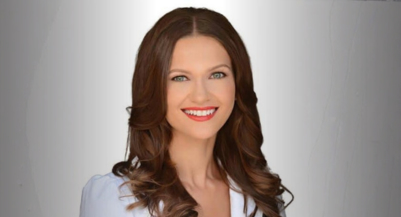
In this Episode
- [02:09]After a successful run of documentaries and books, she shares that she’s now focused on family, preparing to release a new IBS book, and embracing an uncertain yet intuitive next chapter—guided more by purpose than by fixed plans.
- [05:03]Izabella reflects on how trauma and suppressed self-expression may contribute to illness, sharing her shift from a raw, emotional self to a controlled persona and emphasizing healing through reintegrating disconnected parts.
- [12:19]Stephan discusses physical and spiritual root causes of illness, criticizing dismissive medical advice and introducing the idea of “medical hexing,” where negative prognoses can harm patients by instilling hopelessness.
- [16:15]Stephan shares multiple faith-based and spiritual healing stories including near-death recovery and angelic intervention accounts.
- [20:38]Izabella shares that her healing came through trial and error, addressing multiple root causes like gut issues, infections, nutrient deficiencies, and stress while combining physical treatment with mindset changes.
- [27:23]Stephan shares the story behind The Alchemist and a real-life recurring dream that led to discovered “buried treasure,” using it to emphasize the importance of trusting intuition and acting on recurring inner guidance.
- [32:57]Izabella recommends deeper trauma-healing modalities like EMDR and neurofeedback, explaining how they help reprocess trauma, regulate brain activity, and restore emotional safety, self-trust, and long-term nervous system balance.
- [37:31]Stephan shares how neurofeedback helped him recover positive childhood memories, and later describes a powerful spontaneous “flood” of additional memories during prayer while driving, which he interprets as a profound healing experience.
- [40:35]Izabella concludes that the key to better health outcomes is self-education and taking ownership of one’s healing process, emphasizing that people must be active participants and “CEO” of their own health rather than relying solely on others.
- [42:55]Izabella shares where listeners can find her work, including her books, group programs, private and group coaching options via thyroidpharmacist.com, along with her content on Instagram, Facebook, YouTube, and her Thyroid Pharmacist Healing Conversations Podcast.
So what an amazing journey you have been on with, you know, a successful documentary and New York Times best sellers and everything. So what is next for you? Like, where, I know you got this new book out on IBS, but I’m sure you’re working on, like, amazing world-changing plans beyond that, like, what’s what’s in the cooker right now?
Well, I have a four-month-old daughter and a seven-year-old son, and I just finished writing and editing a book about irritable bowel syndrome, so I’m excited to get that out into the world right now. It’s kind of interesting. I think offline, we were talking about soul contracts and things of that nature.
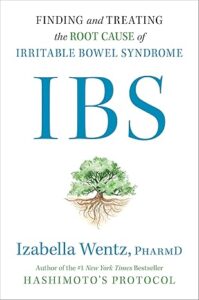
And I’m in a bit of a transition period, because I feel like I’ve written five books, and I’m hoping that they will do the work that they need to do, to help the people that they need to help. And I’m not sure what’s next for me. So I don’t have any more book contracts. I don’t know what my soul contracts are coming up, right?
But your soul knows, you know there’s in Judaism, they teach that your whole life plan and everything about like how the universe works, entire Torah, everything is taught to you by an angel in the womb before you come out, and when it’s time for The birth, the angel just taps you on the forehead with his finger, and you forget everything.
I was gonna say, I don’t remember. I’m trying to remember.
But it makes sense, I think, because if you go to a movie and you’ve read the Wikipedia page beforehand, it takes all the fun out of it.
I like to read the Wikipedia page. In the middle of the movie
I went to see The Truman Show, not even having seen the trailer. And that was the best movie without having any clue what it was about. It was so cool, so awesome. I felt like I was Truman in the movie because I had no idea what was happening.
Anyway, so yeah, if you think about it, like, this is a movie, and if you’re going to play in it and be the star, you might as well play full out. And if you just kind of imagine that everyone else is either an extra or a supporting character, the Supporting Actor and their soul is in on it. Like, even if they don’t seem to be in on it, they’re still in on it, like it makes it way more fun. You take life less seriously, and you’re willing to take crazy, big risks that seem incalculably impossible, and stuff happens like the universe conspires to make your dreams come true. Yeah, at least that’s my experience or my understanding of it.
You know, it’s interesting, because I feel like we talked about some of the origins of illness and why people get sick in the first place. And I know trauma has been documented to be a big part of autoimmune disease. Thyroid disorders have been connected with not speaking your truth and suppressing yourself. And I feel like maybe that was a part of my story.
And there was a part of me that was 18 to 21 that was a bit more, a bit more open-hearted, emotional, let’s see just a different version of myself, right, raw, messy, curious, just on, anchored all over the place. And then that shifted later on in life, where I became very stoic, self-contained, collected, a high performer, focused, polished, proper and very anchored. And so, part of the healing journey, I think, is also connecting with that younger version of yourself and integrating, all right.
There’s a book about, like, I think it’s called No Bad Parts, if you kind of disassociate from some parts of yourself because they were maybe not as socially acceptable, or maybe not in your family, or maybe you personally just had some trauma connection connected to that. You just didn’t want to, you just wanted to shove that into a back corner or something. So, yeah, that book I’ve heard really good things about. I don’t know if you are familiar with it.
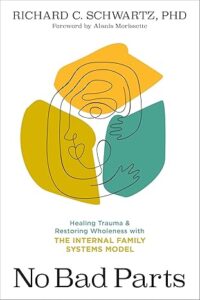
I’ve heard of it. I’m going to add it to my reading list.
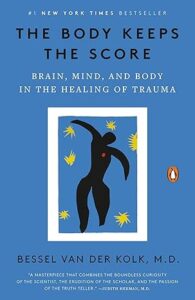
Yeah, yeah. And then we talked about this before the recording, too. It’s another book. I haven’t read all of it, but I got, I think, the gist of it, and it’s called The Body Keeps the Score. And there’s somebody who has trauma that’s not yet fully resolved. Just a bit of a warning there that it might kind of trigger, because there are some pretty specific examples in there that the detail might be triggering, but it was a great book. What I read of it. It’s a big book. It takes a long time to read it. But the premise is that if you have something in a trauma, an unresolved event, it is kind of trapped in your body somewhere. And I’m curious if you felt that, if you felt that there was something specific to a certain trauma that was trapped in your body, in a certain place, like, was it trapped in your thyroid? Was it trapped in your lower back or in your I don’t know? I’m just curious.
Yeah, definitely. I feel like the digestive issues, some of the digestive issues, are tied to not being able to digest your emotions, not process your emotions, swallowing your anger and a lot of it, for myself, a lot of the I guess, suppressing my truth and not speaking out, which can be tied to thyroid disorders as well as chronic fatigue. This is an interesting one because people who are chronically fatigued feel like they’re not able to live the life they want to live. One of my colleagues, Dr. Jacob Teitelbaum, said he specializes in chronic fatigue syndrome, and one of the things he mentioned is that he will help people with their fatigue by addressing chronic infections, getting them nutrient-optimized, and so on.
But if they don’t do the inner work, and they don’t do that work on that emotional, spiritual realm, then they will find another way to be fatigued. He said he’s had patients that, you know, ended up getting hit by a bus just so they could be fatigued again, right? It kind of comes back to you. I feel like you kind of create your own reality, and I know I’ve seen that with a lot of my clients. I will ask them what was going on in your life before you got sick. Like, that’s a really big question that I like to ask. And for some of them, they were under a lot of stress, right? Something was going on in their lives, and that stress had a really big impact on them.
Physically, I can tell you what stress does to the body. So when you’re under a lot of stress, this is going to shift your stress hormones, right? You’re going to have a lot of cortisol that’s going to be put out that’s going to remove nutrients from your gut lining, from rebuilding your body, from all of that, your anabolic process is making you stronger into more of a catabolic process. And so you’re basically going to be breaking down your body for fuel, for the stress response and a lot of times people end up with things like chronic gut infections because the nutrient depletion impairs their gut lining, their stomach acid, which is supposed to kill off infections from our food, gets depleted.
And this is kind of the trajectory that I see that people go on. Is there something going on on an emotional, spiritual level that really changes their physiology? And they end up allowing, not like on purpose, but they allow infections to come into their bodies. They become weaker, and then, or perhaps infections that were there and being managed, kind of gain traction, right? And then they essentially start making the person sick over time. And so I’ve seen that time and time again in people, where we can kind of pinpoint where things turned for them.
And the thing is, you need to do a lot of different things. You need to do work to get yourself to feel better. Sometimes it’s absolutely from an emotional standpoint. Still, oftentimes it’s also on the physical because, you know, if you’ve been compromised and depleted for so long, like having a better mindset is going to help, and doing trauma work is going to help. Still, you also need to do the physical parts.
Now, if you only do the physical parts, though, and you miss the emotional part, you’re going to get yourself back into another situation, right? So you can be replete, but you’ll still have those underlying patterns. And so you’re going to find a way to, you know, get hit by a bus or find another infection.
What was going on in your life before you got sick? That’s a really big question that I like to ask.
Yeah. So I know you, you’re big on this concept of finding the root cause, and that’s part of the title of some of your books. So there’s a spiritual root cause in addition to a physical root cause. So the physical root cause you might be dealing with symptoms and be undiagnosed, which, by the way, when you’re describing how you’re, the medical professionals that you were seeing were brushing you off and saying that, “Oh, well, you’re just getting older.” I mean, that’s what happens as you age, you know that I consider that crazy making. I think that’s really not good, that’s not good, that’s not light. It may be a close cousin to medical Hexing, a term I recently heard of. Are you familiar with the term ‘medical hex’?
No, is it like medical gaslighting?
Well, not really, but what I was describing is, like, the crazy making, that’s the gaslighting thing that I was talking about. But this medical hexing is where a doctor will say, Well, I’m really sorry, the chance of your recovery is pretty much zero, so you might as well go home and get your affairs in order. You probably have about three months to live, maybe less. And so he’s, or she is speaking into existence, this hex, this curse of like you’re gonna die. You have no hope. And of course, nothing is incurable, nothing is impossible.
Suppose you have the amount of faith that was required for you to maybe put your hand through a wall and have your hand dematerialize and then re-materialize right afterward, or for you to levitate, or whatever, like that would be possible, because we live in an illusory world. I mean, this is like a video game, at least that’s my understanding of it. So, you know, like, famous saints and sages from the past were actually documented as having levitated. So it’s just that if somebody says, like, you have no hope, and they’re in a dark authority position, using their power for evil. And so that term is medical Hexing. I just learned.
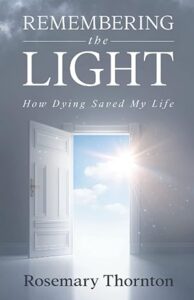
I recently interviewed Rosemary Thornton, who wrote a book about her near-death experience, which is a great book, and yeah, she talked about how she had been a recipient of that. I’m not going to say victim, but you know, recipient of medical Hexing, where she was told by doctors, like, you know, you’re not going to make it or whatever, and that’s not true. Like you can’t. Nobody has the right to say that there is no hope. Anyways.
Yeah, I agree with you, and I would never say that to anybody who was struggling with their health. And I mean, there are things that I haven’t seen. For example, whenever someone wants to get off thyroid medications because the autoimmune process has destroyed their thyroid gland, I can tell them I don’t have much experience with this, but here are some things they can do to get better.
And in the last 13 years that I’ve been doing this, my disclaimer has always been, you can generally potentially get off of thyroid medications if you do the right things, not a guarantee. But if you’ve had your thyroid surgically removed, it probably is not going to happen. So. And I just talked to another healthcare professional who had a patient grow back their thyroid after having it surgically removed. So I’m like, Oh, I guess more things are possible than I thought, right?
Yeah. I was just thinking about that, like, I wonder if it was Dr. Amie Hornaman, who told me on, because I interviewed her, the thyroid doctor on the show a while back. Maybe it was one of her patients who had her thyroid grow back, or maybe it was someone else, I can’t remember exactly, but somebody had their thyroid grow back, and it’s like, wow.
I interviewed Dr. Eric Balcavage. I don’t know if you interviewed him. Amie and I are friends, too. So there are a lot of us thyroid posse friends that get to nerd out about our cases. So I’m not, I’m not sure if she’s had a case like that, but I’ll have to ask her next time I see her.
You really need to take charge of your own health, and sometimes it might take seeing different practitioners to get the answers you need. Share on XYeah, yeah. Because I don’t, I wish I could recall who it was, yeah, might have been somebody like a psychic, or somebody that I interviewed, like somebody not at all related to the medical profession. Anyways. So yeah, it’s like so much is possible. And in fact, speaking of Rosemary Thornton, whom I just interviewed, all traces of her cancer after her NDE, she calls it a temporary death, because she actually was legit dead, like she wasn’t near death, it was she, she was completely gone, and she bled to death. But, you can’t restart the heart in the normal way when somebody doesn’t have, you know, pulse, and you do chest compressions, you can’t do that with somebody who’s bled to death, because that just pushes more blood out. And so she couldn’t be resuscitated in that way.
But, yeah, when she came back, and she was told up in the heavens, I’m completely healed, or, you know, you’re completely healed physically and emotionally and so forth. She knew that the cancer was gone, like, and she had all the scans and all the medical records to prove that she had cancer, but yet they couldn’t find it. They did really, like, invasive biopsy to like, no, it’s got to be here. It’s got it. And it was like, pink and like, never, like, no cancer had ever touched her.
It’s interesting. I’m from Poland, and people in Poland tend to have a lot of faith. I have a couple of relatives who had really scary health situations and were getting evaluated for them. One of them went to the Catholic Church daily to pray and had masses in her name, and then the health issue went away. And another one was having some issues, and she had a dream where there were like little spirits working on her that made the health issue, almost like surgically working on her. And she just kind of had this out-of-body experience, and she was watching them, and then the health issue was gone after that fact, too. So fascinating stuff.
Yeah. That reminds me of Jerry Bedlington, who I interviewed on the show, Angel Team Healing was his company, and he had all these angels, like legions of angels working with him that he could deploy like seemingly immense, untold numbers of angels. And they’re different types. And there were these types of angels that were micro teams, so they were small enough to be in the bloodstream and stuff, working. Oh, wow, stuff. And he would deploy them, and people would have miraculous recoveries and stuff, I wonder.
And you know how I heard about Jerry Bedlington? Through mutual friends. I’m not gonna say who it is, because he didn’t say that I could say his name, but he’s basically how we met, through your, through your husband, being at, yeah, when you have a world so, you know, I’m talking about, well, yeah, you know, it’s like there are no coincidences. Everything is, everything’s a rigged game.
So, but yeah, if you think about, like, how miraculous the healing is, it’s not just material science, you know. It’s like, there, there’s stuff happening in the ethereal realms, of course, I mean, because we’re not what’s that quote? I think Wayne Dyer said it, but maybe he got it from somewhere else. We’re not human beings having a spiritual experience. We are spiritual beings having a human experience. Beautiful, yeah.
So I’m curious, like, how? Did you? It’s in your book, so I don’t want you to, like, spend too much time. I would get people to talk to check out your books. But you found ways to reverse the hair loss and the IBS and the chronic fatigue and gosh, what else did you have, acid reflux, carpal tunnel and depression? Like, wow, that’s a big list, and you got remission of all of them. Like, what was your secret? Like, how did you come across the healing modalities that made the most difference for you?
If you only do the physical parts and you miss the emotional part, you’re going to get yourself back into another situation.
Gosh, I think it was a lot of trial and error, like just trying a bunch of things and really committing to making things happen. I eventually learned that the categories will be food sensitivities, nutrient depletions, infections, impaired stress response, impaired detox pathways and issues with the gut lining, really addressing a lot of these different things in myself and other individuals. This typically produces a remission.
When I was first trained in pharmacology and more conventional medicine, it was more like, Okay, there’s one cause for one disease, right? But the body doesn’t really work like that. It’s not like you have your left hand and your right hand and they don’t communicate. There’s often a lot of broken things for you that need to break, for your body to shift into, like a disease state and not feeling your best.
So, for example, in the example of irritable bowel syndrome, there’s a chance you’re sensitive to the foods that you’re eating, and there’s a chance that you don’t have enough digestive enzymes on board. And there’s also a chance that there’s some kind of infection in your gut lining, causing inflammation, making you more sensitive to your foods, depleting your digestive enzymes and depleting your nutrients.
And so if you were just to treat the infection, there’s a chance you’d feel a little bit better, but there’d still be those digestive enzyme issues, nutrient depletions and so on, that aren’t necessarily going to get better on their own. And so you really need to intervene and address all of the different aspects of what’s out of balance with people who have been under a lot of stress for a long time.
Again, I see the same thing. They’re going to be super, super depleted of a lot of different nutrients, often vitamin C, so their immune system is dysfunctional. Their gut lining is going to be compromised. So I’m recommending Saccharomyces boulardii specific probiotics to get their gut immune system more in balance. Their mitochondria are going to be depleted. They’re probably going to have some circadian rhythm disturbances and blood sugar issues. And so we try to address all of the things that are out of balance.
I find that educated, empowered people have the best health outcomes. Share on XAnd then, of course, we do want to address the stress response component of it, and that is something that, if you’re constantly, let’s say, having negative thought patterns that, in itself, can put you in a stress loop, right? And so rewiring your thought patterns can be a big part of the healing for me. I think it started when I tried to heal myself. I wrote something, and it was I’m Isabella wins, and I’m in charge of my own universe. And I kept saying that over and over to myself.
And then I also had the mantra that I really love. Every day, in every way, I’m getting better and better. But of course, it wasn’t just doing those things right; that was kind of the mindset of it. And then it was figuring out, like, how to keep going. How do I persevere? And it’s always wonderful when you have small successes. So I found, for example, that getting off gluten and dairy helped with IBS and acid reflux.
Within a few days, I was like, “Oh, wow. I found something that works.” And I had tried, you know, rubbing coconut oil on my thyroid. And I tried a bunch of different things that weren’t really working, but I just kept saying, “Okay, I’m going to keep trying. I’m going to figure this out.” I tend to be a little bit persistent, so I think that helped too.
Yeah, well, do you do muscle testing? So what is that called, applied kinesiology, I guess, where you can test on yourself, or you get somebody to muscle test you to see if, let’s say, a particular supplement, a particular medication or a particular food is good or not good for your biology or for your system.

So I would say being very. A skeptical pharmacist who wasn’t a part of my initial healing journey. It was more like research and physical testing. Interestingly, though, when I got pregnant with my son, for some reason, and maybe you know why, but my intuition just was really, really strong with that one, and the force was very strong with that one. And then I was able to, like, connect to that, and feel out what I needed and what I didn’t.
It was quite remarkable. I feel like, when a woman is pregnant, there’s this humongous intuitive component. I kept craving burgers. I never really ate burgers, and I would cry if I didn’t have exactly two burgers a day when I was pregnant. And it turned out that I was iron-deficient, right? And so that was my body’s way of getting more burgers on board. And then when my son was born, we had a consultation with a pediatrician, because he wasn’t meeting some milestones, and the pediatrician was like, I think he could benefit from something called carnitine. And the biggest source of carnitine was in red meat, of course, right?
So that’s kind of how you get it from diet. And sure enough, that was a big game-changer for him. And to this day, the kid loves burgers like that. As soon as we introduced him to burgers, he was, he was like, one, and he would say, gerger, gerger. And so it’s really interesting, because I never had been like that big of a fan of red meat before that, but I just had this, like, strong intuitive drive of, like, you need to eat burgers.
If you have any kind of health challenges, you really need to take charge of your own health. Share on XAnd then I was also really tired living in Colorado, and I just had dreams about going to the beach in Playa Del Rey, California. Every night, I had the same dream. And then I told my husband, I’m just gonna go to California. You could come. And he’s like, You’re crazy. You’re about to have a baby. I’m like, whatever. If you don’t want to go like, you do you like, I’m going, right?
And so I went to California for a few days, and I just felt amazing just being on the beach, and all my strength came back, my brain was back on board. And I just feel like there’s something that happens when we connect with our intuition and let it in. And I will say, I’m not always open to it, but I was when I was pregnant.
That’s cool. I love that story. And my favorite recurring dream story is actually the basis for the book The Alchemist. Did you read The Alchemist?
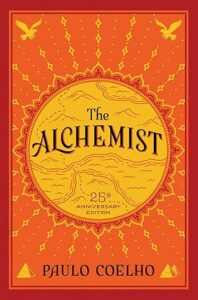
Yes, one of my favorite books. I’ve read it many times. I’ve actually read pretty much all of Paulo Coelho‘s books, I think, unless he’s written some more in the last five years.
Okay, yeah, I’ve only read that one and I’ve also listened to it. The audiobook is fabulous. It’s Jeremy Irons, the actor, narrating it. Really good, really good. So, anyway, the book is based on a true story. And by the way, guess how long it took Paulo to write that book, this book that’s sold, what, 500 million copies, or some insane number? Guess how long it took him to write?
How long?
12 days. Oh, interesting. Yeah, total download. So this is the true story behind the book. It is a guy named Isaac who had a recurring dream that there was buried treasure underneath the Charles Bridge in Prague. So he would keep having this exact same dream over and over again until it got to the point where he’s like, okay, fine, I’m gonna go, you know, walk for however many days he was living in Krakow at the time. So it was not a short jaunt to get to Prague, but he made it all the way there, and he found that the bridge was guarded every night he’d come, and it was still guarded.
And eventually, he took a chance that he’d get caught, and sure enough, he ended up getting caught. And so the soldier who caught him was like, “What are you doing? You know, this is crazy. What are you doing here?” And he’s like, “Well, I’ve got nothing to lose. I guess I’ll tell him the truth. I keep having this dream that there’s buried treasure here, so I’m here to get the treasure.”
It’s like, you know, you don’t go follow your crazy dreams. I keep having a dream too about this guy, Isaac, in Krakow, who’s got buried treasure under his house and under his stove. You think, I’m gonna go to Krakow, Poland, like, get out of here.
And he lets the guy go. And he’s like, of course, he knows now that’s where his treasure is. It’s in his own home. And sure enough, when he got back to Krakow, and he dug underneath his stove, there it was. And to this day, there is a synagogue named for Isaac, which he paid for with some of his treasure. Isaac’s synagogue in Krakow.
Oh, interesting. I didn’t realize that it took place in Krakow. I was just talking to my husband about living in Krakow for a little while yesterday.
Oh, well, if you go back anytime soon, go check out the Isaac Synagogue. It’s in Wikipedia. So yeah, it’s still standing amazing. So, anyway, that, yeah, that, that idea of a recurring dream, like, don’t dismiss it like we were talking about this action before the recording, that if intuition comes and you ignore it, then you get less of it, or it just shuts off completely. But if you act on the intuition that you get, then you’ll tend to get more, and it really is powerful. It’s like being a superpower. It’s like being able to see around corners.
Yeah, it’s interesting, because I credit a lot of my success to, I guess, perseverance and doing a lot of research and, I guess, trial and error. Still, there have been some things that came just from my intuition or just by pure accident, right, that have made a really big difference in helping people heal.
Yeah, we are all endowed with these incredible gifts, supernatural gifts, but we tend not to be able to believe in them, because it’s not socially, you know, accepted, not part of the social norm. So we tend not to develop or give credence to these supernatural abilities, yeah, but definitely when you are pregnant, I believe that that level of intuition is just through the roof. Yeah, it was incredible.
It was a little tough after having my son, because I was like, ‘Where is all of my knowledge?’ Where’s all my guidance, right?
You can get it back. Yeah. So what about, like, you know, there’s these epidemics of, you know, things like ADHD and autism and and and dyslexia and so forth that seem to be, like, really hitting the children hard in recent years, much more so than ever before. Just seems like it’s an epidemic proportions. I’m curious what your take is on that.
Well, I mean, it’s really interesting that there are, like, so many kids diagnosed these days, and then people will say, “Oh, well, we have better diagnostic methods.” We have better tools for these things, and I think that’s part of the truth, but another part is the toxins, the nutrition and potentially the environment we’re in, and I think all of these things can really rewire us.
So I have a theory called the safety theory of why people develop chronic health issues, and oftentimes, if you’re feeling unsafe, your body shifts into that fight or flight state, and that doesn’t necessarily allow you to thrive the way that you’re meant to thrive. For children, that can mean you don’t develop the way you’re supposed to.
So, as far as modalities for helping people to feel safe and resolved with past trauma and so forth. What are some of your favorite modalities that you’ve either had work for you or for clients?
Well, you know, I do love things like mantras and affirmations, but I feel like they only take you so far. I think they’re the foundation of thinking positive thoughts. But if you have a lot of trauma in your life, or even these thought patterns and brain waves that are not positive, then you need to do a little bit of deeper work. Two of my favorite modalities are EMDR and neurofeedback.
So EMDR is really kind of an interesting therapy. It was developed by Francine Shapiro, who was a psychologist who noticed whenever she would take a walk in the woods and kind of look from left to right, she would feel better, like her thoughts were going on during these nature walks after processing things, right? And so she wondered if she could somehow duplicate that in working with her patients, and rather than having them walk in the woods, which I think is always wonderful, like taking a hike, that’s gonna heal a lot of things, if she sat with them and she guided them to move their eyes from left to right. At the same time, they process different traumas and things guided by a therapist.
And she was amazed at how many things could be resolved. I feel like the traditional psychotherapy model is that you feel it, to heal it, and you can spend years talking about the same thing without really making much progress. I would say maybe you feel like you’re making progress, but it still lives inside you with the same raw emotion every single time. And you kind of keep reliving it, and it keeps almost re-traumatizing you.
EMDR rewires your brain so that the same situation that happened to you when you were in seventh grade, and somebody made you feel ashamed, doesn’t hold any value anymore.
Whereas EMDR rewires your brain so that the same situation that happened to you when you were in seventh grade, and somebody made you feel ashamed, doesn’t hold any value anymore. You kind of look at that and you’re like, wow, you know that that seventh grader that was so mean to me, they were just in seventh grade like this didn’t say anything about me as a person, my values who I’m meant to be like, I do not need to carry this shame with me for the rest of my life.
And so I feel like for autoimmunity, people do carry a lot of these traumas with them, and reprocessing those traumas can really send a person into that safe state where they feel safe in their bodies, they feel like they can trust themselves again. They feel like they can trust the world. They feel like they deserve love; they deserve to be cared for. And then that kind of can really transform the self-care they bring to themselves. And the other modality that I really love is neurofeedback. This is a little bit more techie.
So the way that I’ve done it is you connect electrodes, essentially sensing electrodes, to your brain, and then you connect. The machine reads your brain wavelengths, and when you are doing something, let’s say when the brain waves are chaotic or dysregulated, you’re going to be getting feedback from the machine.
So it could be you’re listening to a nice song, and then the music interrupts when your brain waves are chaotic, or maybe you’re watching a movie. The movie gets darker and quieter, or starts flickering, when you’re in that chaotic state, but when you’re in a calm, focused state, the music is coming through perfectly, or the vision is coming through really nicely.
So it’s been really fascinating, because it could rewire some of that stress response where people get stuck in anxiety over thinking, people can have issues with insomnia, depression, panic attacks. I’ve even seen children reversing like learning disabilities or learning disorders like ADHD diagnoses going away, dyslexia diagnoses going away. One of my friends, Dr. Roy Steinbock, who’s an integrative pediatrician in Boulder, Colorado, mentioned that about 50% of the time he sees neurofeedback effective for children. Yeah, that’s amazing.
I’ve had some really positive experiences with neurofeedback myself. I did 40 years of Zen, and that’s a week-long Neurofeedback program that Dave Asprey runs through his company. I had positive childhood memories, because I had a really rough childhood. I have positive memories just bubbling up from the experience of the neurofeedback that I hadn’t had since childhood. That was really beautiful. Yeah, yeah, that’s really cool.
And also when you listen to the sounds of the crashing waves when your brain is chaotic, and then the calm waves when it’s in a peaceful state, and then the gongs that happen when you’re in your two brain hemispheres are in synchrony. So, yeah, it was really cool. So I knew that stuff was happening, but I couldn’t, like, control it. I just knew that my brain was handling it in the background. I just kind of, you know, let go.
Incredibly, you were able to recall some childhood memories. What a gift from that.
Oh, and it gets even better, because I then, maybe it was a year later, or, you know, I don’t know, six months or whatever, but I was at Dave’s conference in Orlando, at the Biohacking Conference. On the drive home, I had my wife, my son, my mother-in-law, and my sister-in-law, and they were all asleep. It was a long drive back to Miami, like, four hours or something.
And so I couldn’t listen to podcasts or music or anything. So I just started talking to God in my head, and I asked for more positive memories from my childhood, like the ones I had from 40 Years of Zen, and they just flooded in. And these were memories I had not had before, like fresh memories from my childhood that I had not accessed since then, and it was like 10 times as many as what I had gotten at 40 years of Zen. And it all just came like a flood after I asked God for that. So that was incredible.
That’s wonderful. I believe 40 years of Zen might be coming to Austin soon. So I’m excited. I’m going to try to do that. And I feel like. Yeah, it’s a great program. Yeah, yeah. I feel like anytime you can really shift your brain patterns, I think it’s a really great thing. Whether you’re somebody who’s a high performer or somebody who has had mental health issues or chronic health issues, you might think that your brain is just fine, that it’s your body that is, you know, giving you trouble, right? But there’s a big connection there. And so I feel like a lot of times people do benefit from that brain activity and optimization, even when the symptoms seem purely physical.
Okay, so this is fabulous. I’m really grateful for you sharing, like, going a little bit off-script from what you’re probably used to on other podcasts. But yeah, this is, this is fabulous. If you wanted to leave our listener or viewer with one last wisdom nugget, what would it be?
You really need to take charge of your own health, and sometimes it might take seeing different practitioners to get the answers you need.
I feel like if you have any kind of health challenges, you really need to take charge of your own health, and sometimes it might take seeing different practitioners to get the answers you need. Definitely, I mean, educating yourself is going to give you the most power and help you feel your best in the short and long term. I know a lot of times people look for a savior in another person, and another person can’t really be your Savior.
Oftentimes, you do need to help yourself, right? And I feel like there’s a quote where God, somebody asks God to save them, and God sends them, they’re in the middle of a storm, and God sends them a boat, and they basically, they’re like, “Well, no, I want God to save me”. And they keep asking. And then God comes back and says, “Well, I sent you a boat, right?” Like, so you do need to do the work yourself. You want to get better?
Yeah, yeah. I love the way Tony Robbins frames it, saying, ” You’ve got to be a participant in your own rescue. You know, if somebody is swimming towards you as you throw the life preserver at them, that’s a really good sign. That’s the person you should be throwing it to if you don’t have enough life preservers for the number of people in the water. But being a participant in your own rescue is one way to frame it. And it sounds like what you’re saying is that you also need to be kind of the CEO of your own health. Absolutely.
I find that educated, empowered people have the best health outcomes.
And I really encourage people to get educated, and that’s why I love to write books, because I find that educated, empowered people have the best health outcomes, especially, you know, rather than just outsourcing somebody else.
Yeah, awesome. Well, thank you so much, Izabella, and congratulations on all your success, the amazing, you know, life-changing wisdom you’ve shared with people, and the lives you’ve saved.
So if our listener or viewer wants to potentially work with you, I don’t know if you take on private clients, or if you’ve got group programs or anything like that. Do you have anything where they could work with you in some capacity? Or do you want to just send them to, you know, get your books, and perhaps if you have courses or whatever?
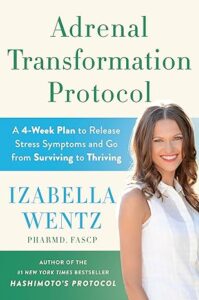
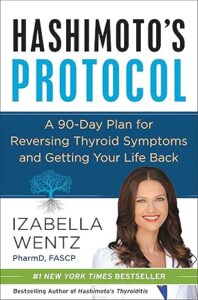
Definitely, my books are a great place to start. So Hashimoto’s Protocol is my most popular one. Adrenal Transformation Protocol is all about the stress response and then finding and treating the root cause of irritable bowel syndrome is the one that’s the most recent one on IBS. So all of these books can help people overcome their health challenges, depending on what challenge they have. I do work with clients. I group settings, and then on an individual basis. People can learn more about that on thyroidpharmacist.com. Typically, I’ll release a new group program every other month or so. I have a Hashimoto’s Program. I have a Gut Recovery Program, and then a Fatigue and Brain Fog Program. We didn’t talk much about detox pathways, but that’s also another. I don’t have a book on that, but I have a program on that.
All right, it’s thyroidpharmacist.com. Are you active on social media? And if so, which platform should we drive our visitors to?
I’m on Instagram, Facebook, and YouTube, and I also have a podcast called the Thyroid Pharmacist Healing Conversations podcast.
Awesome. Well, fellow podcaster, that’s awesome. All right. Well, thank you so much. Thank you, Isabella. Thank you, listener. Go out there. Make it a great week. We’ll catch you in the next episode. I’m your host. Stephan Spencer, signing off.
Important Links
Connect with Dr. Izabella Wentz
Books
Businesses/Organizations
Film
People
Previous Get Yourself Optimized Episodes
YouTube Videos