

In this Episode
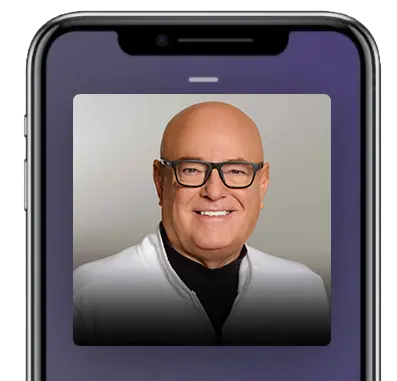
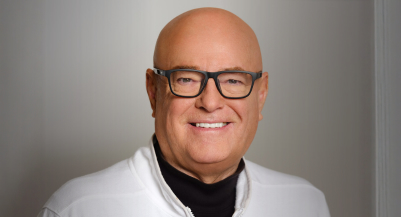
- [02:52]Dr. Don Wood shares how his wife’s childhood trauma caused extreme emotional sensitivity, which he learned to navigate, and how he later helped their daughter through serious health challenges.
- [08:07]Dr. Don Wood explains how unresolved childhood trauma drives chronic inflammation and low immunity, leading to serious illnesses like Crohn’s and hemosiderosis, and how he developed a program to resolve trauma and restore health.
- [12:39]Dr. Don Wood defines trauma as Capital T, major events like abuse or accidents, and small t, everyday emotional wounds that quietly shape the subconscious.
- [15:08]Dr. Don Wood advises that to avoid causing emotional concussions and recognize that the subconscious interprets everything literally, taking jokes, sarcasm, or careless comments at face value.
- [19:00]Dr. Don Wood shares that, unlike his six siblings who grew up in abusive households and struggled with addiction and illness, he thrived because he was adopted into a loving, stable, and nurturing family.
- [26:31]Dr. Don Wood explains that his program first educates and optimizes the brain for healing, then clears key traumatic events, and finally enhances performance.
- [29:26]Dr. Don Wood explains that his approach doesn’t rely on hypnosis or lengthy therapies but instead primes the brain in an alpha state so it can self-heal.
- [38:01]Stephan recalls a Tony Robbins exercise where a negative memory is visualized shrinking, fading, and sent to the sun, creating a lasting shift, even though the exact memory is forgotten.
- [41:48]Dr. Don Wood explains that hyperbaric oxygen therapy boosts healing by increasing blood flow, reducing inflammation, activating thousands of genes, and generating stem cells.
- [47:33]Stephan describes a hypo- to hyper-oxygenation protocol using a mask like LiveO₂, where brief low-oxygen exposure during exercise is followed by a burst of pure oxygen, priming cells to absorb oxygen more efficiently for recovery and performance.
- [50:56]Dr. Don Wood explains that aftercare involves 8–10 minute audios that guide the brain into a relaxed alpha-theta state, reinforcing new neural pathways and sustaining healing, making his program faster and simpler.
- [53:15]Dr. Don Wood explains that the Inspired Performance Institute offers online and in-person programs, with the option to apply your enrollment toward in-person sessions if more support is needed.
Don, it’s so great to have you on the show.
I’m glad to be on. We waited a long time, so this is finally worth it.
Yes, yeah, we’ve been talking about this for a while. Let’s start with your hero’s journey, because you do amazing work, and yeah, you have a whole mission around this that started from some challenges, maybe not in your life, but in a loved one’s life, and you wanted to make an impact. And so here you are changing lots of people’s lives because you wanted to help a loved one. So let’s talk about that.
Well, it really started with my wife. She was my girlfriend at that time, and when I met her, I didn’t realize it, but she was experiencing a lot of trauma, so I was always trying to figure out why she would start to tear up when I would say, “Well, no, I don’t really like that.” And she would tear up and say, “Why are you mad at me?” And I wasn’t mad at all, like I just didn’t feel any anger at all. And I would say, “What do you mean? Why do you think I’m mad at you?” And she’s, “Well, the way you said that, you’re sounding like you’re getting mad,” and that made no sense to me, because I knew I wasn’t getting mad, and she was convinced I was.
So I was always trying to convince her that I’m okay, I’m not mad. But what I didn’t understand is that she had listened very, very carefully to the way people spoke. So if I had a little tension in my voice, because I was tired, that sounded like I was yelling at her. She was so sensitive to sound. So I kept trying to change the way I spoke, trying to get the right words, and it would still activate with her.
The key to solving addiction is to solve the trauma first. The survival brain will keep reaching for the same solution until you do. Share on XSo I just learned to live with it, manage it, cope with it, and do the best I could, because she was a great person, and she finally disclosed it to me before we got married. Oh, when I proposed to her, she said, “I have to tell you something. If that changes the way you think about me, I’ll understand.” And I was like, “Oh, boy, what’s gonna happen?” Like, what is she going to tell me? And she told me that she was sexually abused as a child, and I said, “Oh, well, that makes some sense now, like, why you’re so sensitive,” but I still didn’t understand it.
By the way, we should probably preface this by saying that you have permission from her to talk about this publicly, because we don’t want to disclose any private, sensitive information, you know, somebody’s confiding in you, you know something about their past, their history. You don’t want to disclose that without their permission.
Yeah, oh, yeah. She’s allowing me, but she said, “If that changes your mind and the way you think about me, I’ll understand.” And so I said, “No, that doesn’t change my mind about how I think about you.” So then she said to me, “I have one other request, and that you never tell anybody what I just shared with you.” And that didn’t make any sense to me, because I said, “Why are you ashamed of it, like you didn’t do anything wrong?” She says, “Well, that’s just how I feel, and if you could agree to that, then I’ll marry you.”
So I agreed to it, and we kept it secret for a long time, and now everybody knows it because she’s fully healed. So then we had three beautiful children. We’re 30 years old. We’re living in our dream house. We’ve got the two and a half acres, a dream home, 6000 square feet, a great business that’s doing really well, and she’s not enjoying it. And I said, like, “Why? What’s missing here? What are you not enjoying?” She was grateful and appreciative, though. It wasn’t like she was giving me a hard time. She just didn’t look like she was enjoying it.

And she said, “I don’t know what it is.” Well, what she was doing was waiting for the other shoe to drop, when’s it going to come crashing down? And she didn’t understand that. I didn’t understand that. And even for years afterwards, we still didn’t understand it, but she learned to manage with it. So we have three children. Our middle child is Ashley, and she was diagnosed with Crohn’s at 13, so we didn’t know what Crohn’s was.
I was in the financial services business. I was in insurance, mortgages, and real estate, so we started doing research on it. And the only thing we could come up with is what they told us: take her off gluten, take her off dairy. And they said there’s no cure for Crohn’s. We don’t know what even causes Crohn’s. She’s going to have to learn to live with and manage it the best she can.
And they took out 24 inches of her intestines during four operations. So then she was going along, you know, struggling with that. She was an actress, and she was living out in LA, and one day, years later, her lungs started filling up with blood, so she got rushed to the hospital. They kept her in the ICU for about three and a half weeks. They came up with a diagnosis of Idiopathic Pulmonary Hemosiderosis, which is not another autoimmune disorder, and that’s where the lungs would fill up.
And again, they told us there was no cure for it. We don’t know what causes it. So that’s when my wife said to me, “You need to figure this out, or we’re going to lose our daughter.” So I went back and researched, got my PhD, researched and figured it out, and developed the TIP program.
Yep, what does the TIPP stand for?
The Inspired Performance Program. So the idea is, once we get rid of trauma, you can reach a higher level of performance. So you get to the tip of your performance, right?
So let’s talk about what happened with Ashley on her healing journey. How did she get from being on a pathway towards an early death to thriving?
Well, it was what I started to research, and I didn’t know. We didn’t know she had trauma. So I started researching, and I kept coming up with all these people with autoimmune disorders and illnesses that were related to trauma. So we sat her down, and we said, “Is there something we don’t know about?” And she said to me, she said to us, “I was sexually abused when I was six, between six and eight,” and then that made sense, as Bridget had it, and she had it, so I had to then figure out a way to deal with the trauma.
So what I did was we just kept watching her, and she was also addicted to pain meds, because they had her on so many medications here, anti-anxiety meds, antidepressants, painkillers. So she was addicted to all that stuff on top of the Crohn’s and hemosiderosis. So we had a big battle to fight, and we did, and we eventually got her. What I discovered is that unresolved trauma creates inflammation. The sun keeps on coming in, which creates trauma. And the trauma creates inflammation. The genes that regulate the immune system and inflammation go high. Immunity goes low. So that’s just a reaction to trauma.
So inflammation goes high to protect the system. So she would end up with high inflammation. It’s a cell danger response. It’s designed to protect the cells. And then immunity goes low, because we don’t need to fix anything right now. We need to survive. So it goes into that naturally. So high inflammation, low immunity, you can drive a truck full of disease through that.
Trauma keeps looping, and the subconscious operates in the present.
If it were only temporary, right, which it should be, then it would balance out when the person started healing. But it doesn’t. Trauma keeps looping, and the subconscious operates in the present. So it sees the trauma from 5, 10, or 20 years ago as if it’s still happening, and it keeps the cell’s danger response intact. So they always have high inflammation and low immunity.
And they say inflammation is the root cause of all disease, but that’s not necessarily true. It’s chronic inflammation that does when it stays on, so it affects the genes. It also affects genes involved in neuroplasticity. So people don’t learn as quickly or remember as much. It’s because the genes for neuroplasticity are down.
So if a lion is chasing you and you’re reading a book, you’re not going to be able to absorb very much of it. Your mind will be focused on survival. So survival is always the subconscious mind’s main mission. And so if there’s a survival threat, the subconscious takes over and runs the threat. So she ended up with that, and she ended up with it for about three to four years, she was dealing with hemosiderosis, until I discovered the trauma and resolved it.
So I came up with the program in 2009. I started researching in 2013 and established it. Then I took her through it. Then, in 2015, we established the inspired Performance Institute and resolved the trauma. And we don’t know when the crone stopped or when the hemosiderosis stopped, but it stopped. She’s never had another flare-up, but we’ve had other cases.
It’s not inflammation alone that drives disease. It’s chronic inflammation that never turns off.
And that’s amazing too, because I guess they say that Crohn’s is incurable.
Yeah, but it’s because, and this is what’s fascinating about it. The doctors are smart, but they never get any training in trauma, so the gastroenterologists who were looking after her had just never figured out what the cause was, because they never understood trauma. So the trauma was creating the inflammation. But if they’ve never studied it and never looked at it, well, of course, they’re not going to see it.
Yeah, can. Can you define for our listener or our viewer what trauma is, and maybe distinguish the capital T Trauma from the small t trauma?
Yeah, capital T Trauma is a sexual abuse, an accident, anything that’s life-threatening, that’s obviously trauma. But there’s a second trauma, which is what I call emotional concussions, and they’re not like, slam on in your face, but it’s the little things that happen in your life. So, a teacher who tells you you’re not very smart, or a coach who tells you you’re not good enough, those things stick around in the subconscious, and they continue to operate. So somebody could say, “Well, I’ve never had any trauma.” I get that all the time. But then, when you sit down and you start looking at it, you discover little things that have happened in their life that have created these emotional concussions. And those still operate,
And they’re cumulative, right in terms of their impact; if you have a lot of those, that can be really damaging, versus just a few.
Yeah, and they can be just as damaging as the big T Trauma. So, you know, somebody comes along, and they say, “Well, I’ve never had any trauma.” And then you start discussing with them that there are these little things that have accumulated over time, like, I’ll give you an example. Now, this is Bridget, for example, so she’s already got trauma, and this was an emotional concussion.

So she talked about when she was six, she was invited to a tea party by some of the mothers in the neighborhood. So her grandmother dressed her all up really pretty, and she went to the tea party. And when she gets to the Tea Party, the mothers say, “Oh my goodness, Bridget, you’re going to be a real Heartbreaker when you grow up.” And they all agree, so they’re complimenting her. She said she felt sick. She told me this when she was in her 20s. She felt sick to her stomach and went home. What she heard is that she’s going to break people’s hearts, and that’s the last thing that she wanted to do.
So that’s an emotional concussion, even with the best of intentions, right? You can create these emotional concussions because, as children are very young, they’re very impressionable. Between zero and seven, they take in everything literally. So they take in, don’t discern, don’t judge, don’t do anything. They just take in the information, and then it creates these emotional concussions.
Yeah, that’s a problem. So how do you, as let’s say, a parent or a boss or a spouse, how do you make sure that you’re not inflicting these emotional concussions on your loved ones and your team?
Well, you really have to be aware of what you say. A lot of times, we just pick up sayings, use them, and don’t realize the impact they’re having. So it’s very beneficial to every once in a while, sit down and talk to your loved ones or your employees, and just say, like, “Is there something that I said? Do you understand what I said? Did I make any miscommunication?” Because people won’t tell you.
If there’s a survival threat, the subconscious takes over and runs the threat.
When I was little, my parents always said it was difficult to make ends meet. Well, I never understood what ends meet were. So I thought they had trouble sticking meat together. As ends meet, but I never asked, and you know, so now that’s not a trauma, it’s not even an emotional concussion, but it was showing you how words can mean things to some people, and you don’t understand that they get that. So it’s very important to communicate, look at what you’re saying and how you’re saying it, and be very, very specific with the language you use.
Yeah, and sometimes we may cause emotional concussions to ourselves, maybe by going through critical self-talk or being sarcastic or self-deprecating. Our subconscious doesn’t really understand the nuances of sarcasm or irony, and so it takes it at face value. And if you say, “Well, Boy, was I such a loser today,” that’s what you’re telling your subconscious mind, even if you’re laughing and joking at the time you’re saying it.
Yeah, your subconscious is literal. It doesn’t see anything as good, bad, right or wrong. So it takes in the information, as you said. And then we consciously think that’s not damaging. But your conscious mind is not in charge of survival. And so if that comes up, if that saying that you said comes up as a survival threat later on, your mind remembers that and then uses that as a resource. And it’s fascinating. When you understand how the brain works and how language works, it’s very critical, and yet we take it so flippantly, like, “oh, there’s no problem. We just, I just was joking,” but the person took it literally,
Yeah, and especially, it’s impressionable, not just for young people, but for those of us who are in a high, heightened emotional state that becomes much more impressionable. The negative is just kind of a side comment or whatever, and then that sticks with us, even if, you know, we kind of laugh it off or seem not to be affected by it, it really sticks.
Yeah, and that’s what people don’t understand: you are trying to survive at all times; your mind is survival-based; it takes in all this information, and then it just uses it as resources. So that’s why it’s so damaging. When children are dealing with constant criticism or living it, or watching video games that are constantly violent, right? They’re then just absorbing all that, and it really sticks. And that’s what we do with TIPP, we get some of those things that are stuck right unstuck. So that’s how we clear trauma.
The subconscious mind doesn’t recognize that the past is over—it experiences trauma from 20 years ago as if it’s still happening right now. Share on XYeah, and let’s talk about that. But before we do, I’d love to get a little bit more understanding about your childhood and how you were able to thrive, and yet, you have six siblings who all, all of them did not thrive. You were the lucky one in the middle there. So can you kind of walk us through that?
Yeah, that’s a fascinating story, and I didn’t find out about it until a few years ago. I was always adopted at birth. So I always knew I was adopted, and I was adopted by these incredible people, my parents, when I grew up, from right, from the hospital I was taken from. So they never argued, never fought, never hit us, and if we got disciplined, it was always done without anger. So I just assumed everybody lived like that. I didn’t know that this was, the anomaly. So I’m growing up with that.
And then I found out when, when I did the research to find out what happened with Ashley, that’s when my wife, now my mother, had told me that our family doctor was my grandfather, and he came to them and said, “I have a special child. I want you to adopt.” And my parents were in their 40s. They said, “No, we don’t really want to adopt another child.” He says, “No, I really want you to adopt this child.” And so then they got the impression that it was his daughter who had had a baby. And so they agreed to adopt me.
I only found that out when I was 18, so I thought, well, now it makes sense why our family doctor came for breakfast on Sunday after church. And we always went to our doctor’s farm, you know, for trips. And so it made up that he was very involved in my life, and up until he died when I was about 10. So that’s what I always thought.
So when my daughter got sick and. And Bridget said, “You need to figure this out.” I thought, well, I need to find the family and find out if there’s a family history of it. So I couldn’t find what I thought was my mother, but I found her niece, and I contacted the niece, and I said, “Would you help me and ask my aunt, or ask your aunt, which I thought was my mother, if she had any family history of this?” And so she says, “Okay, I’ll check it out.”
Between ages zero and seven, children absorb everything literally, simply taking in information that can create what we might call “emotional concussions.
So she checked it out, came back, and told me my aunt denied it. She’s not your mother, and she doesn’t understand why her father threw her under the bus like that. And I thought, ” That’s a very strange comment, like, “How did he throw her under the bus?” And so anyway, I was shocked, because I thought, “well, this is a story I’ve understood all my life, like, did my mother lie to me? Did my mother not know, or what was the reason for it?” And then a few weeks later, she calls back, and she says, “My aunt called me back, and she says she researched it, and there’s no one in the family that has that.”
So now I’m really confused, because I’m thinking, is she telling me she’s my mother or telling me she’s not my mother? But there’s definitely a family connection. So I didn’t know what it was, and then, years later, we did the DNA test and found out that he wasn’t my grandfather. He was my father, and he had had a child out of wedlock with my mother, who was a very young 20-something-year-old. She had three children, and he had gotten pregnant. He got pregnant with her. She got pregnant with him. And of the three, she had three children before I was born, and the three children that were born before me, she was living in a very, very violent household. It was, it was terrible.
So she took constant beatings, and she and the children did too. So she just walked out, leaving the three children. She just disappeared. They never knew where she went. And I discovered all this after. So then she got married, or got pregnant with me. She gave me up for adoption. Dr. Rowley delivered me. He was the doctor, so it was my father who delivered me in a private Maternity Hospital in Toronto, and wrote on the birth certificate that the father of the other three children is not the father of this child. So they could never have anticipated DNA coming along, and then she got married two years later, and got into an identical marriage, and had three other daughters.
identical in that it was also abusive
All very abusive, full of addiction. And, yeah, that was just the way of life, you know. So she went from one abusive relationship to another, which is typical, so I did the research, and I found out. I talked to the one brother who was alive on the first three, so the first three children that were born, two have died of cancer, and the third one has a heart condition. I talked to all three of them and they were all addicted. They all had addiction issues.
The three that were born after me, two have died, and the third, and all three of them had addiction issues. So six of the seven children that were born into that with that mother, we’re addicted. I was the only one who was never addicted. I’ve never had a drink in my life. Never touched a drug in my life. And what was the difference? I had a nurturing household.
And I’ve said all along that I truly believe that my life was predicted to be like this. It was destined to be like this. I was the model for the TIP Program so that everybody can live this life. You just need to regulate your nervous system. And so if you regulate your nervous system, you stay in homeostasis. So, my brother, my sister, and I, from my adoptive family, have never been sick or hospitalized.
Now, I play hockey. I had 60 stitches in my head and six concussions. So I’ve been hospitalized, but it was four injuries, so none of us has ever been really sick. And my sister’s seven years old and my brother’s 10 years old. So it was a testament I couldn’t have created that experiment. You know, if I tried to create an experiment like that, it would take 50/60 years, but it’s perfect because it shows that the genetics are altered right by our environment, and my genetics weren’t. So I stayed healthy all my life, and that is just a testament to the nurturing environment in which I grew up.
But yeah, so let’s talk about how to address this. If you have the capital T trauma or the small t traumas, regardless, you need some nervous system regulation. You need to get out of fight-or-flight and into homeostasis, and to rest and digest parasympathetically. So how do you do that? How does your program work? And how does somebody who doesn’t go through your program achieve this?
Well, most people will go through typical therapy. You know, not most people, but a lot of people go through typical therapy. But therapy doesn’t really work on trauma, not very well anyway, it takes a long time through typical therapy to get trauma resolved, because when you’re in a traumatic event, you’re in a heightened state, so your brain is operating in a beta brainwave state.
So if you have a trauma and you’re in a beta brainwave state, then the mind is very, very active. It’s taking a lot of information, very high definition. So a traumatic event is stored in high definition. So that’s why you go into therapy, and you start working on it. You’re not in there long enough to get anything really done. So you’re reliving it, over and over and over, and getting very little done.
Everybody works perfectly fine. It’s just got some glitches and error messages built into it.
What I do is I spend most of the time, the first two hours, we do a four-hour program. The first two hours are all science and education, so they learn what the brain is doing and how it works, and they understand that there’s nothing wrong with anybody. Everybody works perfectly fine. It’s just got some glitches and error messages built into it. So I take people through the first two hours, then the brain gets in. Well, this is perfect for your optimization. I say the brain gets into optimal condition to heal after two hours, and we haven’t even talked about your trauma. So in two hours, the brain gets optimized to heal, and then I start working on the trauma.
By that point, now, the mind is very relaxed and very safe, and it feels very comfortable with the information that it’s learned. It says, “Well, this makes a lot of sense.” I get that all the time. People say, “Well, this makes so much sense,” right? Of course, I would have had the trauma, right? And so we get that optimization done, then we work on an hour of trauma. So we’ll do three events. You clear the three events, and then the fourth hour is spent working on performance.
Once we clear the trauma, we want to optimize the brain for higher performance. Everybody has another gear. Everybody has another level of performance, and you can’t get to it without clearing the trauma first. So you have 100% energy available every day. How much of that energy is going to resolve the trauma? And so every day, if you’ve had trauma that your mind is focused on that trauma, trying to resolve it, and yet, there’s nothing you can do unless you optimize it.
So let’s talk about how to optimize for trauma healing, and then how to do the healing. Are you talking about EMDR (eye movement desensitization and reprocessing)? You’re talking about DBT, hypnotherapy, or NLP, like Neuro Linguistic Programming. What sort of modalities are you using to prime the mind and the nervous system to take this healing in, and then what are you doing to actually achieve the healing in those couple of hours after?
Well, all those I studied, all those EMDR and everything else, and there are some good things in them, but I find that they take too long. So I was trying to get it done fairly quickly. So I said the only way to get it done quickly is to set the brain up so it heals itself. I don’t heal them. They heal themselves. So the brain is designed to heal, but it won’t when it’s in a fight-or-flight state, and it heals very slowly then.

So you know, if you break your leg and then start running on it again, it’s not going to heal very well. It’s not going to heal properly. So what I do is I get the mind, in essence, to settle down, and then in those two hours, it feels so safe, because I’ve described exactly what you’re going through, and then people understand, wow, of course this would happen. And one of the things that I say. Very early on, there’s nothing wrong with you. There’s nothing wrong with your mind. Your mind is working perfectly fine, given the information it has. So people say to me, “I sabotage myself all the time,” and I say, “It’s impossible.” The brain can sabotage itself.
It’s survival-based. And people will say, “Well, why do I do these crazy things when I’ve got this?” Well, your brain is trying to survive, and it always wants to survive. Now it doesn’t see a future. It only sees now, the conscious mind can think of a future, right? But the subconscious mind operates in the present, and so it’s always focused on a solution. Now that’s why drugs and alcohol work, because if somebody’s got emotional pain and they take a drug, when does the pain stop? Now, immediately, and then, it doesn’t see a future, so it doesn’t see consequences.
So the subconscious mind solved the problem, then you built a code of repetition that reinforced it, and the next time the mind ends up in pain, what does it do? It automatically goes to the code. And what’s the code? Take the drug, and it takes the drug. And that’s why addiction is so confusing to people, because they’ll say, “Well, I can’t understand why I keep using. I say I’m not going to use it anymore, and I’m not going to use it anymore, and then I go ahead and use it.”
Well, the survival brain, right, overrides the conscious mind, because it operates 95% of everything, and it’s going to do what it thinks is in your best interest. It doesn’t see it as good or bad, right or wrong. It’s literal, so that the addiction is a solution to the pain. So the key to solving addiction is to solve the trauma first, and then change the codes, and then the codes will override, right? We’ll start developing new neural pathways to do it differently, but it can’t do that if the trauma is still running.
The brain heals itself by building new neural pathways, but it can’t do that while trauma keeps it stuck in survival mode.
Gotcha. So what are some of the suggestions, maybe hypnotic suggestions, or whatever that you give your client to help them to heal themselves after they’re primed for this, this rapid healing?
So I don’t use hypnosis. I studied hypnosis, and hypnosis goes much deeper than I go. They go into a theta brainwave state. And so I don’t need to go into that, I just get them into an alpha brainwave state, so they’re very aware of everything that’s going on. They’re involved in the process. And then, after two hours, I use a series of very gentle, simple techniques that just update the mind. So the trauma, I’ll say, “Can you give me a 32nd to two-minute highlight reel of that trauma?” So then they can either do it, discuss it, or just see it.
I don’t need a lot of time, someone I don’t even know, to understand what the trauma is. They don’t even tell me what it is, because it’s their mind that’s healing it. It’s not me healing it. So they go through, for example, I’ll give them a task to think of the trauma and 10 pictures. And then I say, “But give me the first picture, it will be something positive from your life.” So, can you think of a positive event in your life, a picture of something positive? And then they say, “Yes, okay, I got that.” I said the 10th picture would be the same. Give me a positive picture.
So one in 10 we know are positive pictures. Two through nine will be the event itself. So then I take them through a series of looking at pictures while they’re in alpha brainwave state and alpha-theta, and then the mind updates it. It removes the high-definition, very intense content and then downscales it to a lower definition, right? So, if I asked you what you ate for dinner last night, could you tell me?
A curry with rice. It was delicious. My wife, Orion, made it.
So you looked to your left and saw pictures of what you ate. Okay, right? That’s how you stored the information about last night’s dinner. We’re the only animal on the planet that does that. We store explicit details about events and experiences. So last night was stored as a fairly low definition memory, right? It’s not going to activate your nervous system, but if that was a traumatic event, all your senses are heightened, you know, sight, smell, hearing, so all of that is intensified in that memory. That’s what activates the nervous system.
When the mind recalls a traumatic memory, it sees so much detail that it thinks it’s happening now.
When the mind recalls that memory, it sees so much detail that it thinks it’s happening now, and it activates your nervous system to put you into fight-or-flight mode, even though nothing is happening that happened 20 years ago. So when I would say to Bridget, like, “No, I don’t like that,” I thought she was responding to me. She was responding to all the trauma throughout her life, and she would see pictures of all the people when she heard that voice. What it would do is activate the memory, and then she’d be seen in real time.
That’s why she would cry, not because of me, but it took a long time to figure that out. I always thought it was my fault, you know. So, couples who are in a relationship, the other couple will say, or one of the couples will say,”I can’t believe I keep getting her upset.” I’m not trying to get her upset, right? And the other person is convinced you’re getting them upset, and they just don’t communicate.
But when I once understood that it wasn’t me, it was the activation of her nervous system based on my tone, then I could solve it, right? Because I realized, Oh, this is solvable. We just have to get to the memory, reduce its intensity, and then, by the time they’re finished, they can think about it. They don’t forget it, but it’s so low-resolution that it doesn’t activate the nervous system.
So when people say that to me, that triggers me all the time. I never liked the word trigger. Trigger sounds negative and violent. I don’t believe your mind is negative and violent. Is trying to protect you. So what I say is, it activates your nervous system. Doesn’t trigger your nervous system or memory doesn’t trigger you. It activates you. So we have to figure out which high-definition memory is activating the nervous system and reduce its intensity. And then once we do that, the mind’s got the technique down, it starts going through all the events in your life that are similar or the same, and starts doing it on its own. So it’s fascinating.

Yeah, I remember this exercise that Tony Robbins did. I think it was Unleash the Power Within, or maybe it was a Date With Destiny. But anyways, he had you visualize something that was a negative memory from childhood or whatever, and then he made it smaller, like made it small. He asked you to visualize it getting smaller and smaller and getting fuzzier and lower definition and black and white, and then he has, you kind of throw it into the sun, or send it to the sun to burn up, get it really, really tiny, and then send it to the sun.
And that process, I think, worked because, I mean, this was well over a decade ago, I went through this process, and I still remember it. I just thought, wow, that’s really cool. It does feel like it did something, yeah, and when you think about it now, does it feel different? Yeah. Well, I don’t even remember what the thing was that I sent to the sun.
And that’s, it’s amazing how brilliant the mind is but the brain is the only organ that doesn’t heal itself. It takes an intervention to heal it. You have to go in and do something to heal it. Even a concussion doesn’t heal itself, right? So people who have concussion protocols, they’ve suffered for years with this protocol that they’ve dealt with, and then they have to go in and use hyperbaric oxygen therapy to relieve it. Right? It takes an intervention to heal the brain, but the brain heals everything else, but it doesn’t heal itself very well.
Interesting, so, so tell me what sort of modalities you’re using to help retain the new programming, the new coding. You mentioned hyperbaric oxygen. That’s part of the protocol. Like, what sort of tools and modalities are you using?
Yeah, we use the PEMF mats, which use infrared light. But those are all the things afterwards. Like, once the system is calmed down, we just train it to stay calm. We have a theta chamber that they go in and they spin, and it produces a theta brainwave state, that’s the processing state, that’s where the mind processes all the information.
So when you go to sleep at night, you go into theta brainwaves, and theta brainwaves is the processing so once you’ve got the technique down, you want to then process it. And that’s what the theta does. Now you naturally go into theta anyway, but this speeds it up.
What people call a trigger is really an activation of the nervous system.
When you say, theta chamber, it’s something you lay down in.
And, yeah, you lay down it closes, which a lot of people, if they got claustrophobia, they say, “Oh, I can’t be closed in a little, tiny environment like that,” and spin or they get dizzy, right? But you don’t feel the spin. You feel it start and stop. But once you’re in that state, you’re just in a sensory deprivation state, and the mind doesn’t even know it’s spinning. It has no idea. That it’s spinning
Why? Why spin them?
Because that’s what produces the processing. So they’re in that sensory deprivation state, and the mind will process, and it puts them into a theta brainwave state.
Okay.
So that’s how it works.
And this is the hyperbaric oxygen chamber. That’s another different modality. That’s another pod for them to go. Feel like they’re in another coffin, perhaps. And how long are they in that for? And how many sessions do you recommend? How many sessions of the theta chamber do you recommend as part of solidifying the healing process afterwards.
High inflammation, low immunity. You can drive a truck full of disease through that. Share on XWell, the latest chamber they don’t have to go into as often, so they go into it after. And then maybe, if they’re there for two days, they’ll go into it a few times. The hyperbaric is basically putting more oxygen into the system under pressure. So you have to, you have to do about at least 20 to 40. So we’re introducing them to it. They feel better, right? It activates over 8000 genes in the first session.
So you’re getting the genes to start doing something. They’re starting to be stimulated and activated. But it takes, they say, a minimum of 20, up to 40, to really get the cumulative effect of it. And the more you do it, and you can stay in them as long as you want, like some people will sleep in them, you know, but you have to be in it for a period of time, because it accumulates. It pushes more blood flow into injured areas so it reduces inflammation. It then just creates new stem cells, gets the blood into the plasma, all those things.
My son had three head injuries, one in elementary school, one in middle school, one in high school, and each one, he started going down, and they said, “Oh, he just has major depression. And I said,” No, I think he has a traumatic brain injury.” And they said, “Well, no, his MRIs look fine, he’s fine.” And I said, “Well, can you give me a spec scan or an fMRI, which shows the functioning of the brain?” And they said, “Well, why would you do that? Well, if the MRI looks fine, there’s no need to do that.” And they didn’t understand the same way. They didn’t understand that Crohn’s is curable, right? Is that because the MRI looks fine, it doesn’t mean that the function in the brain is fine.
So you have to do a specific scan. It’s a spec scan or an fMRI, a functional MRI that shows the blood flow in the brain. And that’s when we saw him. After this third handed injury, he started having all kinds of issues. He couldn’t focus, he couldn’t remember. He had anger issues. And then we put him in hyperbaric. We sent him to a hyperbaric specialist who did? He’s world famous for hyperbaric oxygen. So he put him in, did a spec scan on him, put him in the hyperbaric and did another spec scan on him, and showed blood flow starting to move into the injured areas. That’s what he needed. The brain won’t repair itself. So you have to do something to get more blood flow into the brain. And hyperbaric oxygen is one of the best kept secrets in medicine.
Well in Israel, they’re great at it. They’re pioneers of it. They are hyperbaric and they say it is actually short. It lengthens the telomeres right after, like 40 sessions, so you live longer, and so the Israelis are way ahead in hyperbaric oxygen therapy and everywhere in the world, but the United States uses it, but the United States only used it in three cases, drownings, wounds and aftercare for operations. But in Russia, they have 17 protocols for it. They use it all the time. So if you’ve had a head injury, or you’ve had any kind of an injury, hyperbaric oxygen is the best, the best thing to do.
Does it make your ears pop? Like, when you’re on an airplane?
Yeah, it’s like getting on a plane, so you have to then clear it. So we just tell people to keep clearing their ears. So keep swallowing your ears. Yeah, keep swallowing, chewing gum, or anything like that, and it’ll pop right, right?
The brain heals everything else, but it doesn’t heal itself very well.
And so, it sounds like you came up with this hyperbaric oxygen protocol as some aftercare because of the success you had with your son, right, using it, and then you incorporated it into all the trauma healing stuff.
What we found out from experimenting, we didn’t know, like everybody just told us, you know, there’s no cure for any of that. He’s just going to have to live with that, you know, he’s got, you know, major depression. And I just didn’t believe that. I said there’s got to be another answer. And we just kept searching for answers. But I think the advantage was that we were, at least I was in the beginning. I was looking for answers that they didn’t see, because if I just learned to do what they thought they did, I was going to repeat the same things. So I had to learn all the education and then learn from what they missed? And what I discovered is that they missed a crucial memory. And then with the hyperbaric oxygen, they had to learn that it just takes more blood flow. That’s a simple, simple reason, right?
So, is this hyper-oxygenation or hypo-oxygenation?
Hyper. So they put more oxygen into the system, right? Because it’s not getting enough oxygen to the injured parts of the brain. But then it deals with the same thing with wounds. So, if you’re dealing with wounds, what’s the best thing to use? Oxygen? Right? Getting it into an oxygen-rich environment to heal faster because it reduces inflammation and increases blood flow. So you get more blood flow, you’re going to get more healing.
So there’s a protocol. I actually interviewed Tom Butler many years ago about this protocol: hypo-oxygenation, then hyper-oxygenation. So it was really interesting. I tried the device out at Dave Asprey‘s Biohacking Conference. Yeah, it’s called LiveO2. So you wear this mask, this face mask hooked up to oxygen, but you’re not breathing through anything else other than through this mask, so it kind of covers your face, and they turn down the oxygen levels.
So you’re drinking, you’re taking in more nitrogen when you’re breathing in less oxygen while you’re on like a standing bike, like a, you know, cycling in place, and then after a certain period of time, whether it’s a minute or two minutes, I forget, but they turn up the oxygen level. So it’s pure oxygen you’re breathing in after you’ve been exerting yourself. It’s kind of like, running up a hill not having enough oxygen, and then suddenly you get this big burst of oxygen coming in, and your cells, apparently, are very primed to take in that oxygen and that last kind of boost. Are you familiar with this technology?
Yeah, I’ve heard about that. So I’m not sure about that. I guess it works to some degree, but I don’t know if it’s advantageous. If you have somebody who’s got low oxygen levels or hypo, then that would be a suspect of whether or not that would be good for them, right? But if it’s only for a minute or two, then it’s not dangerous, yeah.
And there are multiple cycles. It’s kind of like HIIT, you know, High-Intensity Interval Training, yeah, but it’s with Hypo-oxygenation and then hyper-oxygenation. I thought it was really cool. And the lady who was demoing it to me at the Biohacking Conference was actually a very happy customer who became a staff person. She had debilitating injuries from a car accident. She was in such terrible chronic pain, and the only thing that she was able to get to solve this issue for her was the LiveO2 device after trying many, many other modalities.
And so she was such a big fan, she wanted to work for the company, and so she was demoing it to me and having me try it out. So I actually had her come on to the podcast as well to talk about her story. But it was mostly Tom talking about the technology and how it worked. It’s really cool.
The mind can shrink high-definition trauma into low-resolution memories, keeping the memory but calming the nervous system
It makes some sense. I don’t know if they’ve got studies to prove that it works. I don’t know how well it would work, but it could, you know, by depriving the system of oxygen and then pushing it faster. And I could see that being, you know, possibly beneficial, but I don’t know if you need it. It’s good. It’s good. It’s a good thing. I’ve never experienced it.
So yeah, anyway, I don’t mean to go too far off topic here, but the idea is that there are some aftercare modalities you incorporate into your process that help. Cement in the healing and makes the recording stick.
Yeah, and then they just listen to the audios for 30 days, but they have lifetime access, so people have been listening to them for 10 years.
What are these audios? Can you describe what that is?
The audios are designed. They’re about eight minutes long, eight to 10 minutes long, but they’re just sort of getting you into a deep alpha, theta brainwave state, and then just more information. We’re building new neural pathways. And so that’s what they do. And then they just continue to listen to that information, keeping them relaxed, and it’s training the brain to stay in that relaxed state.
And so if somebody doesn’t go through your program, what would they do instead? Are there any equivalent audio recordings on YouTube that they can access for free? Is there a program or protocol that they could get a local practitioner to assist them with, like an osteopath, chiropractor or some sort of hypnotherapist or something, or is it really your process that is the thing for them to go through?
The only thing I can say about our process is that it’s the fastest out there and really very effective. There are other effective programs that you can do, like EMDR, which will work, but it takes a lot of sessions, and there’s a lot of going through the trauma itself. What I’ve designed is a fast, simple way to do it, and it works really well. But I’m a believer in anybody who provides healing, and it works, right? Use it right? So, I just find ours is the fastest and simplest to do.
There’s nothing wrong with you. Your mind is working perfectly fine, given the information it has. Share on XAwesome. All right, and so how do they sign up? Where do we send them to learn more and potentially work with you and your team?
Just go to InspiredPerformanceInstitute.com. They can book a call with one of the TIPP advisors, and they’ll take them all the way through, or they can just check it out online. Then they can look at all the different options and what’s available in person. Or they can come and see me for one, two or three days, but we also have an online program, so it’s just a version of it that they can go through on their own, and a lot of people are doing that, and it’s very cost effective, too.
It’s only $1,500, so they do it once. If it works, great; if it doesn’t, and they feel they still need more time, we’ll credit the price they paid for that towards an online program.
Towards an in-person program,
Yeah, towards an in-person, yeah. So they don’t lose it. They can just try it. And a lot of people, we have functional medicine doctors who use it. He has everybody go through the program before he starts working with them, because he says, “I’m going to get a lot more healing done when their nervous system is regulated.”
Yeah, cool. All right, Don, thank you so much. This was very informative and inspiring, and thank you for sharing all the intimate details of you and your family members, childhood and lessons learned and so forth, with their permission, of course, so that we could learn and grow through that as well. So thank you so much.
Well, the good news is that Ashley has no Crohn’s, no lung disorder, so they’re both gone. So we just didn’t know how long it took, but it’s amazing how she survived it.
Yeah, awesome. Well, thank you, Don Thank you, listener. Make it a great week. We’ll catch you in the next episode. I’m your host. Stephan Spencer, signing off.
Important Links
Connect with Dr. Don Wood
People
Businesses/Organizations
Previous Get Yourself Optimized Episode
YouTube Videos