


In this Episode
- [03:20]Jim Sugel discusses his personal struggles with alcohol and drug addiction and how his experience in 12-step programs inspired him to apply the principles to smartphone addiction.
- [12:56]Jim outlines the first step, admitting powerlessness over smartphone addiction and the unmanageability of one’s life due to it.
- [25:04]Jim explains step two, coming to believe that a power greater than oneself can restore sanity, and how this concept applies to smartphone addiction.
- [35:46]Jim describes step four, making a searching and fearless moral inventory of oneself, focusing on smartphone use and identifying resentments, fears, and sexual conduct.
- [41:48]Jim expounds step six, making a list of all persons harmed in connection with smartphone use and becoming willing to make amends to them all.
- [44:21]Jim elucidates step eight, making a list of all persons harmed and becoming willing to make amends to them all.
- [50:15]Jim views step eleven, seeking to improve conscious contact with one’s higher power through prayer and meditation.
Jim, it’s so great to have you on the show.
Thank you, Stephan. It’s really good to be on the show.
Yes, we know each other way back; you were a coaching client. I’m really excited to discuss the topic of your book today, which is all about smartphone addiction and how to break that harmful habit. I’d say that, wouldn’t this also apply to social media addiction, Netflix and YouTube and all that sort of stuff as well?
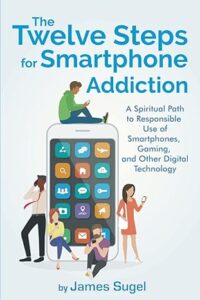
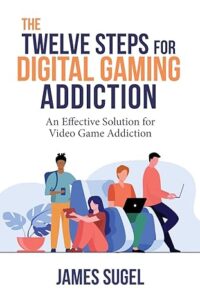
Oh, absolutely. The book is titled “The Twelve Steps for Smartphone Addiction.” I don’t know if you’re aware. I actually published another one, The Twelve Steps for Digital Gaming Addiction, to that specifically as a separate addiction, because it’s really considered something separate. It absolutely would apply to internet addiction, social media addiction, and very similar principles.
Okay, awesome. I’m excited to get into this. Let’s talk a little bit about background. How did you end up applying the 12 Steps, which are usually applied to Alcoholics Anonymous and Narcotics Anonymous? I believe. Why don’t you give a bit of background on how this book came to be?
I actually have had problems with other addictions. As I mentioned in the forward to the book, I give a little bit of my story, my background and my struggles with other addictions. I did actually have a problem with alcohol, and I am having problems with alcohol and drugs. It did in the past, but now I’m 22 years clean and sober. That was one of those things where it’s hard to say exactly why one person is an addict or alcoholic, and one other is not, because neither of my parents was, but my brother and I made up for that.
We just had something where my brother was a couple of years older than me, and when we were in high school, he was drinking and easing. I got into that, and eventually got into some trouble, and got sober for a while. Then I went to college, did very well, got a computer science degree, and eventually, I was doing really well, going to 12-step meetings.
When I relapsed again, I was drinking and using for a couple of years. That was after I moved out here to California from Chicago that really convinced me, then later in life, that even though I had been sober for a few years and I drank again, I had told myself I could control it, but it turns out I couldn’t, so I came back into recovery and now have been clean and sober 22 years.

I will mention, too, that unless you want to proceed with a question, I was just going to say I really did, interestingly, have kind of. video game addiction of my own, which would be before cell phones originated, obviously. But when they had the video arcades, and during a time I was clean and sober from alcohol and drugs, I was younger, I was in college, I actually sort of transferred that to some extent to that video game addiction, but it was a little different. Then you couldn’t play games all night because the arcade would close, and personal computing devices didn’t exist to the extent they do now. I had that as well.
Would you say that you were smartphone addicted for a while, and that’s why you wrote the book?
A really good question. I think what happened with me is that when I got a smartphone, an iPhone, I was a tech person, a tech guy like yourself, and so I got an iPhone right away, in 2007 and loved it immediately. It was ga roundbreaking device. One could argue that one could change the world. I did notice that I think it was a little bit of an addiction that developed over time, as the technology developed, so social media didn’t really exist. With the first iterations, the speed was much lower, and there were fewer features.
Connectivity wasn’t as pronounced as it is now, but as the especially social media, came on board, I did really notice that addictive tendency, because I was in a 12 step program at the time, and so I did notice that kind of really quickly, I think, before it was as public as it is now, and yes, so I would say for sure I became addicted. Still am to some extent, because I was able to apply the 12 Steps to the addiction, I was able to sort of forestall some of the more negative consequences. Then it came to me to produce this book and apply the steps to this addiction in the way it’s been applied to others.
If you really have to compel yourself to stop, that's a good sign there's an addiction at work. Share on XWhy would somebody who says they are not at all familiar with A., the Big Book, and the 12 Steps? Why would it be applicable or relevant for them to apply the 12 Steps to their smartphone addiction?
I think one is first, if we realize, if we think, we have a problem with any addiction, and addictions can be to substances, but also to behaviors. Something similar to smartphone addiction would be more like gambling, and there’s a Gamblers Anonymous, where they apply the 12 Steps to gambling. There’s also Overeaters Anonymous, which would apply the 12 Steps to overeating. You also have Sex Addicts Anonymous.
All of these are a little bit more similar to smartphone addiction than drug and alcohol addiction. They don’t necessarily have the immediate, severe, fatal, or potentially fatal consequences that drugs and alcohol have. I think with most people, they think about drug and alcohol addiction and AA, and NA, and it seems like, “Oh, yeah, well, those people need that, but sometimes we forget that the 12 steps have been applied to many other addictions as well.”
The answer is that the 12 Steps have proven to be arguably the most effective method for treating addictions in human history, and it’s worked very well for other addictions, as I said, like Overeaters Anonymous or Gamblers Anonymous. I’ll get into some of that a little later on, and those are the ones I use more as a template for how to construct the 12 Steps for smartphone addiction, somewhat more than AA or NA, just because of the similarities there.
The answer to your question is, as to why the person who has no experience with AA or NA would apply the 12 Steps to this addiction, is that they really do work. One of the things we say is what’s said in AA, and NA often, even the person who comes in, even though they have very severe consequences with the addiction in their life, often they’ll still be somewhat in denial, and they’ll say, “Why do I have to go through all this work?” It’s by doing the work, meaning working through the 12 Steps, that we get the relief from the addiction.
Let’s walk through each one of the steps, and you could then apply it to how a smartphone user who wishes or would prefer not to be on their phone quite as much. I don’t want to label somebody. Have them kind of shut off to the possibility here of this helping them, and they could easily just be listening to this for a loved one that they want to help, a colleague, a friend, family member, their significant other, somebody in their life, that their lives would be significantly improved by spending less time and less energy, less attention on their smartphone.
Of course, we would start with step one, but to kind of preface that, one of the things we often find, and is very true, as I mentioned a little earlier, but with the addict and the alcoholic, is that there’s always that bit of kind of denial, because no one likes to think they’re different than other people. With there not having been, obviously, as much experience and research on smartphone addiction as there has been on alcohol and drug addiction, but they’re starting to be some body of literature, and it appears that, depending on a study by Deloitte.

It was in 2019, and that one is kind of the best one I found. That one, in terms of asking adults, and this was many 1000s, they said 46% of respondents said they spent too much time on their cell phones, on their smartphones. That’s not to say that 46% of users are addicts, probably not right. There was another study, and it was a specific one in Saudi Arabia, and they determined that 19% were addicts, who had self-described as addicts.
What we find, in general, is that it’s hard to have exact figures, addiction, alcoholism and drug addiction, because it has to be self-reported to some extent. A lot of times, people are hesitant, hesitant to say that in a public forum, in a survey or something, but it’s believed that it’s around 10%, so we would sort of extrapolate, and it seems to be around the same with other addictions, that 10% of the population have that propensity and become actual addicts.
Some are problem users. Let’s say it is 10% for whatever reason, and then there are going to be a lot of other people who do have, as you said, they’re just sort of problem users of the technology. They have a problematic relationship with the technology or the behavior, in this case.
If the person goes through those questions and is honest, they’re pretty much going to see if they are an addict or not.
With step one, it’s interesting that this is the same in AA, and NA step one is that we had admitted we were powerless over alcohol, that our lives had become unmanageable. Interestingly, that word, like I am an alcoholic, is not in that step. It’s really talking about your being powerless over that substance or behavior. For smartphone addiction, we say we admitted we were powerless over a smartphone addiction, that our lives had become unmanageable. When we talk about that, we’re really talking about powerlessness, which then leads into steps two and three, where we find that power greater than ourselves that can help us. Now with step one, really one of the things, one of the ways alcoholism and addiction would be described in traditional programs.
Sometimes they’re described as self-diagnosing diseases, meaning that until the individual actually admits they’re an alcoholic or addict, there’s really not much that can be done, because they’re not going to want to treat the underlying addiction. In this case, what we do in step one is we go through some of the potential issues.
I have a set of questions in the book “The 20 Questions for Smartphone Addiction.” This is similar to there being sets of questions like that for all the other 12-step programs that I mentioned. AA has one. Na has one. Gamblers Anonymous has one. Overeaters Anonymous has one. They’re sort of based on that and these questions; if the person goes through those questions and is honest, they’re pretty much going to see if they are an addict or not.
One of the features, as we’ll get into a little later. One of the reasons, the kind of defect of character, as we call it, behind addiction in general, is selfishness. One of the things we’re trying to do here, and if you think about it, one of the things that the addict, or even the person with a problematic relationship to the technology, is selfishness in the use of the smartphone, so they ignore people.
They use the phone in inappropriate moments when they should be paying attention to something else, and they may even use the media and apps on the phone in a selfish manner. That step one, in a sense, is not saying immediately that I’m an addict, but it’s saying that I’m powerless over the smartphone, and that, in regard to the use of the smartphone, it has caused some level of unmanageability in life, meaning problems with relationships.
It may be with parents, it may be at work, it may be at school, but the use of the technology has caused some problems that have become unmanageable because the person is unable to fully stop or control the use, and again, that’s probably the defining characteristic. I’ve taken a long time to get to this, I think, but one you would define addiction as a craving for a substance or behavior, and the user is unable to stop or control, even given long-term negative consequences. In this case, there are some negative consequences we want to identify that the person has, and in spite of that, they can’t fully control or stop the use.
Now I just want to preface this by saying that it’s built into at least the iOS, Apple’s operating system for the iPhone, the screen time feature, you can actually see how many hours a day you are on your phone, and it is shocking. It is terrible. The average, according to some studies, is upwards of five to six hours a day. It’s crazy. If you apply that to making your life better, instead of being on your phone, you have a different life.
I’m powerless over the smartphone, and that has caused some level of unmanageability in my life.
I agree 100%, and one of the ways we will, and we’ll move on to steps two and three to get more into the solution. But really, in step one, what we’re doing is identifying the problem.
How many questions are in your questionnaire? 20 Questions. Could you run through a few of them right now so our listener or viewer who’s maybe at the gym, working out, or on their commute to the office can get a sense of how problematic this might be for them?
I will. I can read through all 20 of them briefly, and the subtitle is “20 Questions: Are You a smartphone addict?” Question mark and number one is, does the use of your smartphone interfere with your sleeping? Number two: Has your smartphone use interfered with or affected your personal relationships? Number three: Do you ever feel remorse about how you use your smartphone? Number four, does the use of a smartphone boost or lower your self-esteem? Number five is: does your use of a smartphone cause financial problems, for example, through gambling, shopping, or the purchase of hardware or software products? Number six, does your smartphone use negatively affect your work performance?
I think we can, I’ll see examples of that. Number seven, do positive or negative reinforcements from your smartphone cause you to continue to use it when you know you should stop? And number eight: Do you lose time at school because of your smartphone? Number nine: Has your smartphone use affected your reputation among your family, friends, school or business? Number 10: Do you try to schedule or control the use of your smartphone, but find that you really cannot? Number 11: Does good fortune drive you to use your smartphone? Number 12: Does misfortune compel you to use your smartphone?

Number 13: Do you feel an obsessive urge to use your smartphone to escape feelings of boredom or loneliness? Number 14: Do you crave your smartphone after a short time without it? Number 15: Have you substituted one smartphone app for another? Thinking, for example, that Instagram is the problem and switching to TikTok or vice versa? Number 16: Do you feel an urge to use your smartphone as soon as you awaken? Number 17: Have you ever stolen to enable your continued smartphone use? Number 18: Have you lied or manipulated others to further your use of a smartphone? Number 19: Do you feel it would be almost impossible to live without the uncontrolled use of your smartphone?
Number 20: Do you use a smartphone to enhance or replace normal sexual relationships, or has your use of a smartphone affected your sex life in some other way? Again, you can see that it’s very similar. A lot of these questions, you could just replace drugs or alcohol or gambling or sex. They would be very similar to other addictions. There’s really no set number of yes answers that will clearly tell a person.
Sometimes in the other fellowships, they say, if you answer like, I don’t even remember what it is, but a certain number that you have a problem with and a certain number you have, you’re an addict. But I think, again, I haven’t done that, but I think if a person reads through this and they answer honestly, they’re going to have a pretty good idea that they have a problem or that they’re actually really an addict.
Addiction is a craving for a substance or behavior, and the user is unable to stop or control it, even given long-term negative consequences.
All it could take is just one or two that are severe enough that, I mean, who wants to have remorse? If you’re having that on a daily basis, and that’s the only one that you answered yes to, I’m sure if somebody answered yes to that, they’re going to have others as well that they’re going to say, “Yes to.” But just that one, for the sake of argument, that’s enough to change. That’s enough to warrant making a shift, because who wants to have a life filled with remorse?
The other question is: Does it affect personal relationships? That’s one, if you’ve looked at some of the studies, that’s very clear. That’s one of the negative consequences, the negative affecting personal relationships, less time spent in personal relationships, and even, as I indicated here, a couple of these questions may seem more severe, like, “Have you ever stolen or have you ever lied?” But people do, especially, I think adolescents and kids, they can more so, maybe, than adults, but they would potentially, let’s say, if the phone use is restricted. Would you steal a phone?
Probably not, I would have when I was a teenager, or would you lie or manipulate to use your device? I think most people would. As adults, we don’t really have those issues so much just because of financial concerns, but with teenagers and kids, there’s the control of their parents, and so for them, it’s more likely that they’re going to do some of those things as well. A lot of the behaviors are very similar to other addictions.
Interestingly, because somebody uses their phone an average amount of time compared to the rest of the population, maybe five hours a day. That is absolutely going to affect your personal relationships, even if you didn’t use your phone like screen time, but you just had it handy all the time, and we’re checking it constantly, even if you weren’t spending significant periods of time on it, just that would affect the relationship.

I know, if I or my wife have our cell phone on the table during a meal, our meal is affected by it, our connection and camaraderie and the depth of conversation is affected by that, even if we don’t touch it, just having it there visible, and if you do touch it and you see a text message, then that brings in a factor that Cal Newport refers to as attention residue. He was an expert, wrote a number of books, like Deep Work and Slow Productivity.
He’s been a guest on my podcast here, and attention residue lasts for like 23-25 minutes. You just check your phone, you read a text, but you set it right back down. That text is occupying brain space for the next 25 minutes while you’re trying to work on the thing that you were already working on, but now part of your brain is occupied elsewhere, and so your productivity, your effectiveness, your presence, and the quality of your thinking go down for the next 25 minutes.
I’ve heard that as well, and I agree 100%. It’s difficult not to use the device in a selfish manner. That’s kind of the crux of the issue when we get to step four, which is the personal inventory, one of the kinds and even step three, one of the primary characteristics we look at in the individual that drives the addictive behavior is selfishness.
This is the same in AA, NA, and most of the others as well. For at some point, we just get to where we want. That’s why we use the word crave. The craving is something a person really can’t control; if it’s a real craving, they’re unable to control it at all. Sometimes, we have control. If you really have to compel yourself to stop, then that’s a good sign that there’s an addiction at work.
Crazy stat here, I just looked up how many touches per hour or per day a smartphone user has touching their phone, tapping, swiping 2617 times per day.
That sounds about right. One of the things we want to do, and we’ll kind of get to this a little later, when we talk about the concept of abstinence, which is in this case, and just to not scare anyone, we really can’t be completely abstinent from the use of a smartphone. It’s unreasonable now for most people, so we define that as using the smartphone in an unselfish manner that doesn’t harm other people. That’s really the crux we’ll get to when defining that usage. But if you’d like, I can move on to step two and three. In step two, we came to believe that a power greater than ourselves could restore us to sanity.
Now that’s phrased exactly the same way it is in most of the other addictions, even though Gamblers Anonymous phrases came to believe a power greater than themselves could restore them to a normal way of thinking. It’s just sort of a less severe way of this concept of insanity. It’s like, “Oh, I’m not insane. I’m just making a phone call or texting.” But we look at it as a specific kind of insanity, where even if we go back to the alcoholic and addict, the more traditional 12-step programs, most of those people can appear to be very normal, until they get into very advanced addiction.
But a lot of people who are addicts in an alcoholic state, they’re functional, they go to work, they do a good job. At some point, the alcohol and drugs, because their addiction is chronic, become progressive. It gets worse over time.
Addiction is chronic and becomes progressive. It gets worse over time. We believe that’s true for smartphone addiction as well.
We believe that’s true for smartphone addiction as well. But because the person is functional, they might appear to be normal, but where the addictive substances are concerned, they have a kind of peculiar form of insanity. The reason we use that term is that’s what was used in the original AA version when they wrote the steps. Even there, what we write about it, it’s specifically in regard to the addictive substance that we have that insanity, that inability to control, even though negative consequences are occurring.
That’s why we use that word. If it seems too severe, it’s again, there’s what you can say, just a normal way of thinking, where smartphone use is involved. The real key concept there is we’ve already admitted where, if we get to step two, we’ve already gone through step one, we see that we have a problem, some sort of problem, with smartphone addiction, and we’re looking for a solution now.
Logically, if you really say that you are powerless over your smartphone use, then it’s a kind of tautology: either you dwell in that powerlessness, or you find some power greater than yourself that can help you with the problem. That’s really what we mean in step two. Step two is phrased a certain way. Came to believe, meaning it’s not something you need to do. Came to believe implies that it may be a process that occurs over time. We just want to be open-minded and willing to the idea that some power greater in ourselves can restore us to normal thinking regarding the other dead addictive behavior.
If you really say that you are powerless over your smartphone use, then it’s a tautology: either you dwell in that powerlessness, or you find some power greater than yourself that can help you with the problem.
You don’t have to be religious or spiritual; you just have to recognize that you’re not the most powerful creature in the universe.
That’s correct. I mentioned this in the book and the discussion on step two, it’s just exactly as you said. It’s that I have a higher power, as we call it in 12-step. You say there’s there, I have a higher power. It’s not me that’s really, as long as it’s not you, and so, it’s a good way to start for some people, because people sometimes do come in as atheists or agnostics, but it’s hard not to say that there’s something greater. The sun is obviouslya greater power. They say there’s a sort of little joke in 12-step. It says, “If you think there’s no power in yourself, go stand in the ocean and try to stop the waves.” The natural world is a potential starting point for someone who is agnostic or an atheist.
Obviously, there is some power grid in yourself. We can also, once we have group meetings for 12-step, often hear people say, “The group itself is a greater power.” In fact, there’s another sort of tongue-in-cheek acronym used in 12-step programs. It’s God, an equal group of drunks. The group itself may be the higher power for someone new to the idea of a spiritual entity. But again, as you said, the beautiful thing about any 12-step program is that when we get to step three, we’ll go on to step four. Now I think in step three, so in step two, we just believe that there’s some power.
We are willing to believe that there’s some power greater than ourselves that could help us with our problem, our addictive problem. Then, step three, we say, made a decision to turn our will and our lives over to our higher power and to our understanding. That’s the beautiful thing about that, is that we turn to that. We say, yes, there is a power that can help me. In step three, we make a decision to actually turn to that power for help and ask for help, essentially. The great thing is that, exactly as you stated, Stephan, there’s no definition of any religious entity or spiritual entity in 12-step programs.
Selfishness is one of the key defects of character that drives addictive behavior — and smartphone use is no different. Share on XThe relationship, the spiritual relationship, the spiritual understanding, is really an individual one. A person who could come in and have a religious background, and let’s say a person’s a devout Christian, that’s great. That can be their higher power. The person can come in and be Buddhist, and that’s great as well, or the person can have no clearly defined theology or religious affiliation. One thing we find is that this spiritual relationship, this spiritual awakening that eventually happens, often occurs over time as the person progresses through the remaining steps.
Awesome. And the creator of the Big Book of Alcoholics Anonymous, Bill W, was he affiliated with a particular religion? Because he wrote it in a way that was very inclusive, very broad, and applicable to pretty much anyone.
Interestingly, they founded AA in 1935, when Bill Wilson met Dr. Bob, who was the number two, and both came from a Christian background. In fact, prior to being in AA, they were in a group, a Christian group called the Oxford group, which was very prominent in the United States in the 1930s they were not specifically treating alcoholism, though they were applying Christian principles to basically any problem someone might have, and it just attracted a lot of people who had problems with the alcohol. A lot of the principles and tenets of Alcoholics Anonymous came from that Oxford group.
Make a decision to turn our will and our lives over to our higher power and to our understanding.
They did actually have a Christian background. You can sort of see some of the Christianity in some of the moral inventory and so forth. You can see some of the Christian influence. But what’s great is, exactly as you said, when the book was written, which was in 1939, after it was published in 1939, it was written in 19 between April 1938 and April 1939 when it was published, and Bill W was the principal author, but he had a lot of insight from other people.
There were some agnostics at the time who were important in the formation of AA in 1938-1939, when the book was being written. A few people really pushed for that inclusiveness. Some of them wanted it to be more Christian. But one of the great reasons I think these 12-step programs work as effectively as they do is their inclusiveness. You mentioned that the higher power is always of one’s own understanding.
That’s really great. What a profound difference that made. Many millions of people’s lives were touched and probably saved because of the fact that they made it more inclusive.
For sure. In any 12-step program, we’re really looking at a spiritual solution to the addiction problem. That’s really what we’re doing here: using 12 steps for smartphone addiction. We really are seeking a spiritual answer, and that’s one of the reasons it works so well: it’s a spiritual solution, not based on any specific religious affiliation. I think all of us have some people who would argue this, but I think all of us have some fundamental inner knowledge or intuition, if you will, that there is something greater than us.

We look at the universe and the beauty and order, and it’s hard not to deny some intelligence outside ourselves, regardless of what you call it. We realize that we’re trying to become more in tune with our spiritual natures, in a sense, and that’s what we do. In step three, where we say, made a decision to turn our will and their lives over to the care of our higher power as we understood him or her, we then have made a decision, in a sense, to try to live on a spiritual basis and apply spiritual principles to our smartphone addiction if we want to move on to step four. Yep, let’s do it.
One way of looking at that made a decision is that there’s actually an old parable that sometimes uses it, said three frogs are sitting on a, and this has to do with the reason we need to do subsequent work after we make that decision to turn to our higher power for health. Three frogs are sitting on a log. One frog decides to jump into the pond. How many frogs are sitting on the log? Most people will reason, “Well, two,” but the correct answer is three, because only one frog decided to jump into the pond. He didn’t actually do it. The reason, and again, it’s somewhat tongue-in-cheek. But the point is that often with addicts, we make a lot of decisions, like, I’m going to stop using my smartphone at work, but we never follow through on it the next day, you’re still using it at work.
Just the decision in itself is really almost never enough to curtail the addiction. It requires some introspection. It requires some knowledge of self, how we relate to other people, and how we relate to our higher power and our spiritual understanding. That decision is important.
We say I’m going to turn to a higher power for help with my addiction, but until we actually do some subsequent work, as I say, some introspection, it has little permanent effect. Step four, we say we made a searching and fearless moral inventory of ourselves, focusing especially on our use of smartphones. Again, that comes from the fact that all of these are phrased similarly to AA, but we’re focusing on smartphone use. We would make an inventory of our use, and, when we really look at that inventory, we would list people we have anger against and what we call a resentment list.
Just the decision in itself is really almost never enough to curtail the addiction. It requires introspection. Share on XThis would list people that were angry against, specifically in this, it could be very comprehensive, like everyone you’re angry with, but some people may want to do this just in regards to their smartphone usage, which is okay, too, and I talk about that in more detail in this chapter. It would be something like your boss at work criticized you in front of your coworkers because of your use of your smartphone. You’re angry at this person. You sit there and dwell on it. You go to work, and you’re dwelling on this person. Who are they to tell me what to do? That would be on your list of resentments, or it could be if your teenager could be your mother and took your phone away.
Anything related to that, where we have anger against someone, we put that on the list, then we have another list, which is our fears. These fears could be many things. Someone took my smartphone away. I’m gonna lose my smartphone. What happens if I can’t use it for an hour? What’s going to happen? What am I going to miss out on? Fear of missing out is a big one there. We have a third component of the inventory, which is the list of our sexual conduct and how that has been affected by smartphone and technology use.
We can clearly see now how pornography is one, and dating apps are, and how that can all be used in a very selfish manner. One of the things we’re really looking at here in step four is where we’re broadly. We’re looking at where we use the device in a selfish manner. You can think about all the examples I just stated. We really are right. We’re used to saying that being at work, at school, or at a dinner table when you should be focusing on your relationship is using the device in a selfish manner. Those would be things we list on the inventory.

Now you mentioned FOMO, Fear Of Missing Out, and what popped into my mind, I thought I’d share. According to Deronka, a pretty famous channel, he said that there is no missing out. In this reality, in this video game we’re playing called life, there is no missing out. It’s all perfect, and we don’t miss out on anything except if you have FOMO, if you have the fear of missing out. Now the universe creates a missing out for you, just like if you were to, let’s say, show up for life every day with a bulletproof vest, the universe would give you an opportunity to use that bulletproof vest.
No, that’s beautiful. I agree 100%, and that’s one reason we’re actually looking at the inventory, and we put it on paper, or you can type it into a word processor, but there’s something about actually making it tangible that brings it into focus, sometimes, especially regarding addiction, as we mentioned before, denial is one of the key aspects. In our minds, we can rationalize and justify. If we’re really honest and we put these things on paper, it’s often hard to deny.
When we move on to step five, we admit it to our higher power, to ourselves and to another person, the exact nature of our wrongs, and that means we just take that inventory and we read it to another person, and our higher power implied the higher power is present when, when we’re doing this right, because they’re always there.
There’s something about doing this again, we might say, “Well, why do I have to? I’ve already written this out. Why do I have to read it to someone else?” Well, there’s something powerful. There’s a catharsis that occurs when we actually interact with another person and admit the things we’ve done that are wrong. I think we’re all familiar with this in many traditions in therapy, and there’s just a great benefit to doing this. One reason again, it’s hard to deny when we write it down. It’s even harder to deny once we verbalize it, and it kind of really reinforces in our mind the negative consequences, the potential negative consequences we’ve had.
We admit it to our higher power, to ourselves and to another person, the exact nature of our wrongs, and that means we just take that inventory.
One of the things we’re really attempting to do in the inventory, and when we get to step six, which is when we’re entirely ready to have our higher power remove our defects of character, is that we have identified behind that this behavior. We’ve said we’re an addict. We’ve said that a higher power can help us. We’ve turned to that power for help. We’ve reviewed some of the consequences of our behavior. We’ve talked to another person, and by that point, we should have an idea of what’s behind that, so we’re in a better position to look at the actual, what we call, defects of character, which are behind the behavior and the selfish use of the smartphone. Selfishness is one of those.
We have other character defects we would, as we know it, could be: anger, lust, envy, and jealousy. These are listed in the book as pride, greed, sloth, rationalization, intolerance, worry, and perfectionism. There’s a list of these in here, and to help us identify, and then we can look back and say, “Oh, wow. When I did that at work, or when I did this in school, that was based on one of these defects of character.” When we get to step seven, in step six, we really identify those kinds of negative, in a sense, spiritual principles. They’re kind of the opposite of a positive spiritual principle. One of the things we do, and I talk about this in here too, in steps six and seven, is when we’re looking at a negative principle, we try to identify some other principle that we can replace that with, and a simple one would be dishonesty.
We replace it with honesty, obviously, and anger can be replaced with compassion for that individual. We’re really looking at developing these spiritual principles and acting in regard to our smartphone addiction on correct spiritual principles instead of these kinds of negative principles. In step seven, we humbly asked our higher power to remove our shortcomings, and the shortcomings just mean those negative principles and defects of character we talked about. That’s really important. We’ve sort of gotten through the moral inventory. By that point, we’ve written it down, talked to someone, and kind of identified the principles, or incorrect kind of spiritual principles, that are driving our addictive behavior. You can see there’s a real spiritual path here when we get to step eight.
Step eight is where we made a list of all persons we had harmed, principally in connection with our smartphone use, and became willing to make amends to them all. What we do in step eight is make a list of those we have harmed with our smartphone use. Again, this is another one that’s difficult for people, even in traditional programs, because no one likes to have to admit they’re wrong or apologize.

But here we do make that list, and we become willing, with our higher powers, to help make amends to them. In Step nine, we say, “Made direct amends to such people, whereas are possible, wherever possible, except when to do so would injure them or others.” We break down the process into two steps. In step eight, we’re basically just making the list and becoming willing.
Then in step nine, we’re actually going to these people and apologizing. We would go, and we would state something like, I realized my behavior with my phone was selfish and self-centered and possibly harmed our relationship through the use of the phone, the smartphone. What can I do to make this I’m going to try not to do this in the future, and what can I do to make this right with you? I’ll let you have the mic for a second, see if you have any further questions. But now we’re up to step nine, and we’ve kind of gotten through the real meat of the program, the personal inventory and the amends.
Is making amends simply apologizing, or do you actually have to make it right? Do you have to compensate? Or is there some sort of atonement there?
That’s a really great question, and the answer is: it’s both, and in that, if there is compensation required, we have to be willing to do that. For instance, there may be, let’s say, stealing involved. You would have to be willing to compensate for that. If time was lost at work, in theory, you would be willing to make up for it with additional work. If the person said, “Yes, hey, you spend an hour a day on your phone, I want you to compensate for that, and so we do have to.” That’s part of the point of being willing, that we do have to be willing to compensate.
One of the reasons we ask that question is that when you may, we don’t just go and say, “Oh, I’m sorry. One reason for that is that many of us have done that a lot of times.” People say, “Oh, you’re ignoring me. Oh, I’m sorry. It’s too simple.” One reason we have steps eight and nine where they are is that we’ve done a lot of introspection by this point, and we should have a better understanding of what’s actually driven our behavior and a greater sincerity about wanting to change. When we go to a person now, we’re actually in a position where we’re sincere, and they can probably see that there’s a methodology.
I don’t know what to call it exactly, but it’s called a ho’oponopono. It’s a type of prayer, an ancient Hawaiian prayer, and it includes four parts. One is “I’m sorry,” and the other is “Please forgive me.” Another one is “Thank you.” Then, finally, I love you. Now it can be in any order, but I’ve heard that one-“I’m sorry” and “Please forgive me”-are separate, because “I’m sorry” by itself is insufficient. Please forgive me. You’re actually waiting for them to reply, whereas with I’m sorry, you could just be, it could be a throwaway comment, like, “I’m sorry I was late. I had blah, blah, blah, an excuse. Anyways, how are you doing?” There’s no real accountability there. There’s no dialog, there’s no request for response or feedback. “I’m sorry, please forgive me,” so profound.

That’s really beautiful. It goes, it goes along. It’s really a principle here, you’re right. If we’re waiting for that person to state anything we may have done that we missed as well, and to let us know what they would have us do to make it right. Steps 10, 11, and 12 are called the maintenance steps in the 12-step program. Step 10 is to continue taking a personal inventory, with special emphasis on our use of smartphones, and to promptly admit when we are wrong. In a sense, what we’re doing is redoing what we’ve already done in a mini manner on a daily basis. We’re looking at our behavior and phone use on a daily basis, as we did in steps four, five, six, and seven. If we do something wrong, we’re willing to make amends right away, rather than waiting and letting things build up.
If we catch ourselves, we monitor our usage throughout the day, notice when we’re using the smartphone in a selfish way, and make amends right away. If we do, if you look at the phone during dinner, it’s right away. You would, “I’m looking at my phone again. I apologize. I’m putting it away right away.” Now I’m trying to work on this program, but we’re all imperfect. Which is one reason we have steps 10, 11, and 12: no one’s perfect, so the chance that you’ll be able to use your phone perfectly is pretty low.
We have these, and then on step 11, we turn back to our higher power. We sought, through prayer and meditation, to improve our conscious contact with our higher power. An hour of praying only for the knowledge of his or her will for us and the power to carry that out. We use prayer and meditation to really try to be in contact with the power in conjunction with step 10. In step 10, we’re monitoring our behavior. In step 11, we say short prayers when necessary. Help me to use my phone in an unselfish manner, help me with this issue, and we try to make that grow our understanding with our higher power.
If I turn to my higher power for help, so that I can live normally in the world, that was kind of a real spiritual epiphany.
When we get to step 12, it says, “Having had a spiritual awakening as the result of these steps, we tried to carry this message to other smartphone addicts and to practice these principles in all our affairs.” Here is where we say we’ve had the spiritual awakening. We’ve worked through all the steps, and we are now able to help others with the same affliction. We do try to practice the principles we’ve learned, the correct spiritual principles, instead of the negative ones.
It’s awesome. That’s a real accomplishment, getting through the steps we did, and what a contribution you’ve made to humanity by creating this book. Thank you for sharing all that. Now I know we have to wrap up here within just a few minutes. I do want to ask you, though, about your own personal spiritual awakening, or maybe awakenings. Have you had some sort of profound experience where maybe you were able to connect or experience the light or all that is in some fashion, and could you describe it for us?
I have had a spiritual awakening. I think one of the keys to understanding that is that for most people and for myself, it’s it, even if it was kind of a moment of clarity or a spiritual epiphany or revelation, which kind of was, for me at one point where I really realized that I had a problem and that if I turn to my higher power for help, that I could live normally in the world, that was kind of a real spiritual epiphany. But we have to continue working through the steps daily to maintain that spiritual awakening.
It’s kind of one of the key components of the 12-step programs. I have had that, and I continue to the degree that I’m able to put effort into monitoring myself and my own behavior, and most importantly, maintaining conscious contact with a higher power. The one thing I want to emphasize before we end, that’s really, really important, and I cover this in the book as well, is a key component of all 12-step programs, which is service to not just other addicts, but to humanity in general. That’s one of the ways we really maintain that spiritual awakening, that spiritual energy: by trying to give back, both by helping other addicts with our same affliction and, just in general, by helping other people. Helping others is a wonderful thing, and it helps us maintain our own recovery.
There’s a quote from Michelle white dove. I don’t know if she originated it, but “Prayer is talking to God, and meditation is listening to him.”
Maintain conscious contact with a higher power, and be of service to others, we have the joy of good living.
That’s beautiful and very true, and it’s essential for us, and that’s the thing. We’re not cured of the addiction, and to the extent that we’re willing to put in some effort every day and make an effort to look at our behavior, maintain conscious contact with a higher power, and be of service to others, we have the joy of good living.
How does our listener or viewer get your book? Obviously, it’s available on Amazon.
It’s on Amazon, with other sellers, Apple Books, and so forth. You can look for it anywhere. The Twelve Steps for Smartphone Addiction. Then there is another one, The Twelve Steps for Digital Gaming Addiction, for those who have a specific affliction, awesome.
Well, thank you so much. If they want to follow you on social media, or maybe you have a blog or something, where should we send them to learn more from you, connect to you? I don’t know if you work with folks who need help coaching them or anything.
I have the jamessugel.com website. There’s some information about the book there, along with a contact form.
Jim, it was a pleasure. Thank you so much. And now, listener, viewer, go out there and make the world a better place. Share this information with a loved one. Help them get addicted to their smartphone, as well as you work on it yourself. We’ll catch you in the next episode. I’m your host. Stephan Spencer, signing off.
Important Links
Connect with Jim Sugel
Books
Businesses/Organizations
People
Previous Get Yourself Optimized Episode